Video Analysis

Wall Street opened mixed with major averages showing varied performance. Geopolitical tensions are rising with a new US plan to pressure Iran, while a trade dispute between the US and Canada has escalated with new tariffs. Investors are also monitoring high oil prices and upcoming key economic events.
- Dow up 99 points, S&P 500 down 21, Nasdaq down 160. United Health and Verizon shares saw gains.
- US-Canada trade talks collapsed, leading to new US tariffs on Canadian goods (excluding oil/natural gas), with Canada planning retaliatory tariffs.
- Treasury Secretary Bessent to speak on bond buybacks and a new Trump administration plan to squeeze Iran. Nvidia's quarterly results and Fed Chair Warsh's speech are also anticipated.
- Oil prices remain above $85/barrel, with US national average gas prices at $4.10/gallon.

Guggenheim CIO Anne Walsh sees a buying opportunity for 10-year US Treasuries if yields reach 5% and would 'back up the truck' for 30-year Treasuries at 6%. She highlights massive debt issuance for AI data centers and fiscal spending as factors pushing rates up, but expresses concern about 'obsolescence risk' in long-duration hyperscaler debt and overall credit market risks.
- 10-year US Treasuries are currently in a trading range, but 5% would present a buying opportunity.
- 30-year US Treasuries are primarily driven by inflation concerns; 6% would be a significant buying opportunity.
- The sheer volume of debt issuance, both from fiscal spending and for AI data center buildouts, is pushing long-end rates higher.
- Walsh is wary of 'obsolescence risk' in long-duration hyperscaler debt and advises a thoughtful, diversified approach to investing in this space.
- While the high-yield market has improved in credit quality, the concentration of debt issuance in investment-grade for AI infrastructure raises near-term risk concerns.

Earl Davis of BMO Global Asset Management dismisses the significance of using the Treasury General Account for bond buybacks. He anticipates 30-year Treasury yields will hit 6% before 10-year yields reach 5%, and his firm is a 'big buyer' of 10-year bonds at the 5-5.25% level due to lower duration risk. He sees global steepening yield curves as growth-productive for banks and identifies opportunities in financials, aerospace & defense, and energy.
- Treasury General Account funding for bond buybacks is not considered significant or impactful on markets.
- BMO expects 30-year Treasury yields to reach 6% before 10-year yields hit 5%.
- The firm is a 'big buyer' of 10-year Treasuries at 5-5.25% due to less mark-to-market risk compared to 30-year bonds.
- Steepening yield curves are a global phenomenon (led by Japan) that can be growth-productive for banks.
- BMO is trimming US high-yield credit, buying short-duration investment-grade (IG) bonds, and favors financials, aerospace & defense, and energy sectors.

Kevin McGurn, Interim CEO of Trump Media & Technology Group, discusses the Truth API, a data feed for Truth Social, sold to institutional customers. He defends the service against controversy regarding early access, stating it's a standard practice in social media and aims to expand licensing to retail and AI platforms. He emphasizes the necessity of such platforms for free speech.
- Truth API provides a data feed from Truth Social to institutional customers, including high-frequency trading firms, offering a 50-millisecond advantage.
- McGurn defends the Truth API, stating it's a 'tried and true' technology common across social media platforms like Twitter and Reddit.
- Future plans include licensing the Truth API to retail trading platforms and large language models for AI, aiming to bring information from 'Wall Street to Main Street'.
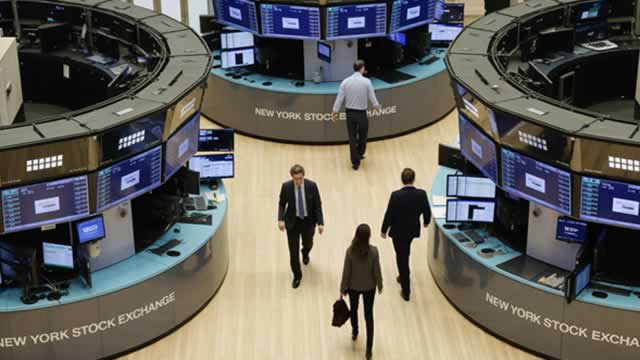
Aadil Zaman from Wall Street Alliance Group argues that AI-driven economic growth, not spending cuts, is crucial for addressing the growing U.S. fiscal deficit. He advises investors to prepare for potential market corrections by diversifying their tech portfolios beyond the 'Magnificent 7' and focusing on AI enablers and beneficiaries across the broader economy.
- The U.S. fiscal deficit is a primary concern, with economic growth, particularly from AI, seen as the solution over spending cuts.
- A 5% or larger market correction is considered normal and healthy after a tech-driven bull run, presenting opportunistic entry points.
- Investors should broaden their tech portfolios beyond the 'Magnificent 7' to include AI enablers (firms supplying power and infrastructure) and AI beneficiaries across the wider economy.
- An estimated $800 billion of hyperscaler spending is flowing into the economy, creating opportunities beyond the original AI winners.
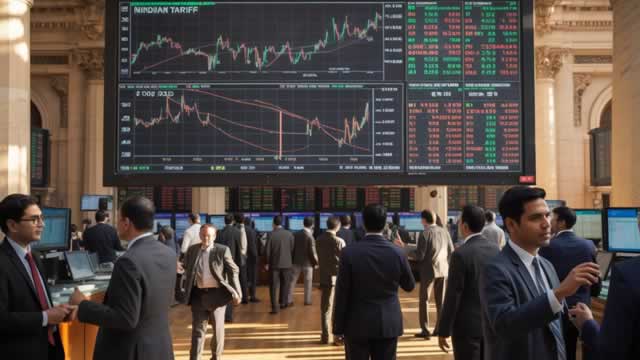
The U.S. is preparing to unveil new sanctions against Iran, dubbed 'economic D-Day,' aiming to sever all economic lifelines. In response, Iran has threatened to halt all oil exports from the Persian Gulf, escalating geopolitical tensions and posing a significant risk to global oil supply.
- U.S. Treasury Secretary Scott Bessent announced an 'economic D-Day' against Iran, targeting its petroleum trade, financial flows, and international registries to isolate the 'tyrannical regime'.
- The sanctions aim to force foreign institutions, including major buyers like China, to choose between trading with Iran or accessing the U.S. financial system.
- Iran's National Security Chief, Mohsen Rezaee, threatened that if the economic war continues, 'not a single drop of oil will be exported neither through the Strait of Hormuz nor from anywhere in the Persian Gulf,' deeming support for U.S. sanctions an 'act of war.'
The video discusses a Chinese humanoid robot breaking Usain Bolt's 100m record at the World Humanoid Robot Games. The hosts debate the event's value as a technological showcase versus a sporting spectacle, with one emphasizing the global tech race and implications for US AI and robotics valuations, and the other questioning its practical utility for human society.
- A Chinese humanoid robot achieved a 9.39-second 100m dash, surpassing Usain Bolt's record, at the World Humanoid Robot Games.
- The discussion highlights the rapid advancements in humanoid robotics, particularly in China, and its role in a global technology race.
- Commentators debate the event's significance for market valuations in US AI and robotics, contrasting it with the potential for robots to perform practical, dexterous tasks.
Jeremy Siegel discusses current Treasury yields, stating that 4.7% on the 10-year is not a 'choke point' for financing. He anticipates a potentially significant market rally if Kevin Warsh provides clear policy criteria at Jackson Hole on Friday, especially with an expected good PCE report on Wednesday. Siegel believes the market is looking for transparency from the Fed regarding its decision-making metrics.
- Current Treasury yields (e.g., 10-year at 4.7%) are not considered a 'choke point' for financing, especially historically.
- The upcoming Jackson Hole speech by Kevin Warsh on Friday is a crucial event, with the market seeking clear policy criteria from the Fed.
- A clear articulation of criteria from Warsh could lead to a 'big rally,' while a non-informational speech might prompt the market to 'test' the Fed.
- Siegel expects a favorable PCE report on Wednesday, potentially at or below expectations.
The US Treasury Secretary is set to unveil a plan for economically isolating Iran, including secondary sanctions on countries like China, India, and the UAE that continue to trade with Iran. This move could escalate into trade wars and potentially lead to Iranian retaliation, despite its oil exports already being near zero.
- US plans secondary sanctions against countries trading with Iran, notably China, India, and UAE.
- Potential for 'trade wars' if China is targeted with sanctions.
- Iran's oil exports are virtually at zero, but it maintains influence over the Strait of Hormuz.
- Saudi oil logistics are already facing threats from Houthi rebels in the Red Sea.

The discussion centers on President Trump's tariff relief for ground beef imports, aiming to lower consumer prices amidst a persistent cattle supply shortage. While the policy offers short-term relief, it highlights long-term challenges for domestic ranchers and meatpackers, including profitability issues and land use competition.
- Trump's policy allows 300,000 metric tons of ground beef imports tariff-free for 90 days, with imports from Argentina already doubling and live cattle shipments from Mexico expected to resume.
- The US beef industry faces a long-term cattle shortage, leading to high prime beef prices, meatpackers losing money on processing, and live cattle futures plummeting.
- Ranchers are incentivized to sell cattle due to high prices rather than rebuild herds, and increasing land costs (e.g., for semiconductor plants) further complicate domestic food production and supply.

IBM's new AI-powered app for the US Open enhances fan engagement with personalized updates, an AI assistant, and dynamic win probabilities. It also provides players and coaches with deep, data-driven insights into match strategy and opponent analysis, leveraging AI for improved performance and understanding of key match moments.
- IBM's new US Open app offers personalized live updates, an AI-powered 'Match Chat' with natural language processing, and 'Serve Quality' analysis using 21 body/racket points.
- The app provides 'Key Moments' insights and dynamic 'Likelihood to Win' probabilities that update with every point, enhancing fan and player understanding.
- Former tennis player Sam Querrey highlights the app's utility for coaches to distill vast data into actionable tips for players, improving match strategy.

The discussion centers on the highly anticipated Jackson Hole Economic Policy Symposium, particularly Fed Chair Kevin Warsh's upcoming speech. Analysts express concern over the interplay between the Fed and Treasury, potential geopolitical tensions with China impacting inflation, and the broader political instability influencing voter sentiment. The overall outlook is one of significant uncertainty and high stakes for financial markets.
- Jackson Hole is deemed the 'most important monetary policy conference in the world,' with high anticipation for Fed Chair Warsh's speech.
- Key concerns include the Treasury's bond market intervention, potential US sanctions on China and subsequent retaliation, and their impact on inflation.
- The political landscape, marked by voter response to 'chaos' and declining approval ratings for the current administration, is seen as a significant factor influencing economic policy and market stability.
- The $40 trillion US debt threshold and the debt-to-GDP ratio are highlighted as critical fiscal issues.
The discussion revolves around the US bond market, Treasury's recent debt buybacks, and the upcoming Jackson Hole meeting. Tony Crescenzi suggests that US 30-year bonds are currently in a 'fair value zone' considering inflation and neutral rates, offering value to investors. Tom Keene, however, expresses strong criticism of the Treasury Secretary's intervention, viewing it as an 'arrogance' that undermines Fed independence and could lead to market fragility.
- PIMCO's Tony Crescenzi believes US 30-year bonds are in a 'fair value zone' with current yields, offering attractive compensation for long-term investors.
- Tom Keene criticizes the Treasury Secretary's bond market intervention as 'arrogant' and an encroachment on the Federal Reserve's traditional role in yield management.
- The conversation highlights concerns about potential market fragility if nominal GDP slows down, and the importance of Fed independence in maintaining market stability.
- The strength of the dollar and its implications for global markets, particularly emerging markets, are also discussed, with focus on the payment system and depth of US markets.

The discussion previews the upcoming Jackson Hole Symposium, focusing on the increasing importance of the event amid rising inflation, global economic tensions, and uncertainty regarding central bank policy. Panelists debate the drivers of rising long-end yields, including debt issuance and resource nationalism, and question the clarity of the Fed's future reaction function.
- Jackson Hole Symposium is increasingly important due to current economic conditions.
- Debate around the drivers of rising long-end yields, including inflation expectations, AI-related debt issuance, and a shift from saving to investing.
- Discussion of structural inflationary drivers like resource nationalism, AI buildout, and decreasing trade freedom.
- Uncertainty about Fed Chair Kevin Marsh's (likely Jerome Powell) speech and the overall coherence of global central bank and treasury actions.
Robert Kahn of Eurasia Group discusses the U.S. Treasury's debt buyback plan, noting its limited market impact and the Treasury Secretary's constrained tools. He warns that unsuccessful interventions could undermine credibility and create tension with the Federal Reserve, potentially pressuring the Fed on interest rates.
- The U.S. Treasury's bond buybacks are small relative to the global market and unlikely to durably change market outcomes.
- Treasury Secretary Bessent has limited tools to influence yields, and failure to achieve market goals could risk his credibility and political standing.
- The Treasury's actions could create conflict with the Federal Reserve, potentially pressuring the Fed to align with Treasury's agenda, which is detrimental to the Fed's independence.
James Sullivan of JPMorgan discusses the surge in global government and corporate debt issuance, leading to significantly higher bond yields and making equities less attractive. He highlights the US Treasury's buyback operation as a temporary fix and warns about market vulnerability due to unquantified AI-driven earnings expectations, despite stablecoins becoming major buyers of US Treasuries.
- Surging global government and corporate debt issuance is driving bond yields to multi-decade highs, making bonds more attractive than equities.
- The US Treasury's buyback operation, exchanging longer-duration bonds for shorter-duration bills, is likened to 'paying your mortgage with a credit card,' indicating a temporary solution to a supply-demand mismatch.
- Stablecoin funds are becoming significant incremental buyers of US Treasuries, acting as a 'US dollar supportive' force.
- Over 40% of S&P earnings growth is expected from AI companies, but only 11% of corporate management teams have quantified efficiency or productivity gains, posing a risk if these expectations don't materialize.
Barry Ritholtz discusses the limitations of Treasury intervention in the bond market, emphasizing that persistent inflation and market forces will ultimately dictate long-term yields. He notes the stock market's resilience but highlights economic struggles for the lower-income population and expresses skepticism about the long-term safety of tech bonds compared to Treasuries.
- Treasury's debt buybacks are a short-term solution, but the $100 trillion global bond market, not the Fed or Treasury, sets long-term yields.
- Persistent inflation, driven by fiscal stimulus and supply chain issues, continues to be a major concern, impacting the lower economic strata and retail sales.
- Tech bonds, despite current appeal, are subject to technological disruption and potential overbuilding, making them less safe than US Treasuries in the long run.

Chinese AI models are rapidly narrowing the performance gap with US rivals, particularly in terms of usage and cost. This trend is causing concern in US tech hubs as Chinese models, often open-weight and more affordable, are gaining global popularity and being adopted by US companies, creating a fierce competitive landscape.
- The performance gap between US and Chinese top AI models has narrowed from over a year to just a few months, with Chinese models surpassing US models in usage on platforms like OpenRouter.
- Chinese models offer significant cost advantages; for example, building an e-commerce site with a Chinese model can be a quarter of the price of using a leading US model.
- Chinese models are excelling in specialized areas like finance and banking support, and their open-weight nature allows for local deployment, making them attractive to companies globally, including major US tech firms.

The discussion centers on persistent high oil prices despite growing global supply alternatives, attributing the issue primarily to market fear, refining capacity, and transportation bottlenecks rather than crude oil production. The analyst expresses optimism about the US's long-term energy dominance, projecting a shift in control from OPEC to US producers.
- Oil prices remain elevated due to market uncertainty and issues with refining capacity and transportation, particularly for diesel, rather than a shortage of crude oil.
- Venezuela's oil production is expected to increase as transportation infrastructure problems are resolved, adding more supply to the market.
- The US is anticipated to become the dominant force in global energy, eventually controlling the market more than OPEC, with a positive outlook on future energy supply and price stability.

The discussion centers on the recent crypto rally, particularly Bitcoin's surge, attributing it to the Treasury's increased liquidity via bond buybacks, which signals currency debasement. Bitcoin's prior low volatility is described as a 'coiled spring' ready to jump, further fueled by optimism surrounding regulatory clarity from the Clarity Act, despite potential delays. The long-term health of the Bitcoin network is also discussed in the context of mining distribution.
- Treasury's doubling of liquidity on long-term debt buybacks is a key driver for the crypto rally, as investors seek hard assets against currency debasement.
- Bitcoin's recent period of low volatility created a 'coiled spring' effect, leading to a significant upside move once a catalyst emerged.
- Regulatory clarity, whether through the Clarity Act or other frameworks from the SEC and CFTC, is viewed positively for fostering innovation and institutional participation in the digital asset industry.
- The shift of Bitcoin mining to more distributed, remote energy sources is seen as a healthy long-term development for the network.