Video Analysis

Matthew Sigel from VanEck discusses Bitcoin's recent rally, attributing it to a historical 4-year cycle and 'capitulation signals' that typically precede strong one-year performance. He suggests that a potential Democrat administration would not harm Bitcoin and addresses regulatory concerns, noting increased visibility and regulation of leverage in the crypto market compared to past cycles.
- Bitcoin's rally aligns with a historical 4-year cycle and a series of 'capitulation signals' observed in the prior three months, historically leading to excellent one-year performance.
- Regulatory changes have brought much of the crypto market's leverage onto regulated rails, reducing the risk of collapses seen in previous cycles like FTX.
- The expert believes that digital assets have the potential to unleash significant productivity enhancements throughout the economy, regardless of the political administration.

Goldman Sachs' Kinger Lau discusses the divergence between China's sluggish consumer economy and its booming AI sector, driven by government focus on high-tech. He anticipates an 'earnings inflection point' for Hong Kong-listed internet giants in Q3, which could boost investor confidence in their AI potential, despite ongoing geopolitical tensions.
- China has strong companies across all five layers of the AI framework, with the government focused on developing a self-sufficient AI ecosystem.
- The Chinese consumer economy remains soft, but the AI economy is robust, particularly due to external demand, creating a divergence.
- An earnings inflection point is expected for Hong Kong-listed internet giants (like Alibaba, Tencent, Baidu) in Q3 (Oct/Nov), which could lead investors to value their AI upside more.
- Equity markets are currently in 'neutral territory' regarding US-China geopolitical tensions, suggesting investors are not overly concerned.

Bitcoin has surged about 25% in the past week, briefly pushing above $80,000 for the first time since May. This rally is attributed to renewed talk of Bitcoin's anti-inflationary properties following Scott Bessent's bond buying plan and positive regulatory developments in the US, including former President Trump's endorsement of the crypto sector.
- Bitcoin's recent 25% surge is its largest percentage gain in approximately three years, pushing its price above $80,000.
- The rally is driven by two main factors: concerns over dollar debasement and Bitcoin's anti-inflationary appeal, alongside positive regulatory signals in the US, including political endorsements for the crypto sector.
- Industry sentiment is bullish, with significant inflows into US Bitcoin exchange-traded funds (ETFs) suggesting a more meaningful and potentially sustainable rally, despite crypto's underperformance earlier in the year.

The discussion centers on Stanley Druckenmiller's and Mohamed El-Erian's strong criticism of Treasury Secretary Scott Bessent's bond buying plan. They argue it's artificial price management, not liquidity management, warning of risks like encouraging excessive risk-taking, discouraging fiscal discipline, and eroding market credibility. The increasing debt issuance from hyperscalers and government deficits, coupled with reduced foreign demand for Treasuries, creates an imbalance that could lead to instability.
- Stanley Druckenmiller and Mohamed El-Erian criticize the Treasury's bond buying plan as artificial 'price management' that distorts market signals and suppresses yields.
- El-Erian warns that artificially repressing yields in the bond market encourages excessive risk-taking, discourages government fiscal action on deficits, and erodes market credibility.
- Significant debt issuance from hyperscalers (e.g., Meta, Microsoft, Alphabet, Amazon, Oracle) and ongoing government deficits are increasing demand for bond financing, while traditional buyers like China and Gulf countries are stepping back.

Economist Jim Paulsen expresses concern that the stock market has 'used up a lot of capacity' with high valuations and complacent investor sentiment. He anticipates waning economic momentum, particularly in consumer spending, which could lead to lower interest rates coinciding with falling stock prices as recession fears replace inflation concerns.
- Stock market valuations (S&P 500 price and earnings) are significantly above historical trend lines, with earnings at unprecedented highs relative to trend.
- Investor sentiment is complacent, with high household equity holdings and low cash, while profit margins and investment spending are at record highs.
- Economic momentum is slowing, especially in consumer and housing sectors, suggesting potential for lower rates but also increased recession fears.

CNBC reports on Wall Street's growing concerns about the 2026 midterm elections, ten weeks out. Key worries include the potential for contested election results, the looming debt ceiling debate, and the implications of a divided government, particularly under a potential Trump presidency, which could lead to increased market volatility.
- Investors are concerned about contested or delayed election results, which could prolong political uncertainty.
- The U.S. debt ceiling is expected to be hit in 2026, potentially leading to political demands for spending cuts in exchange for raising it.
- A divided government, especially with a President Trump, could result in more executive actions and wild market swings, despite investors typically favoring divided power to curb extremes.
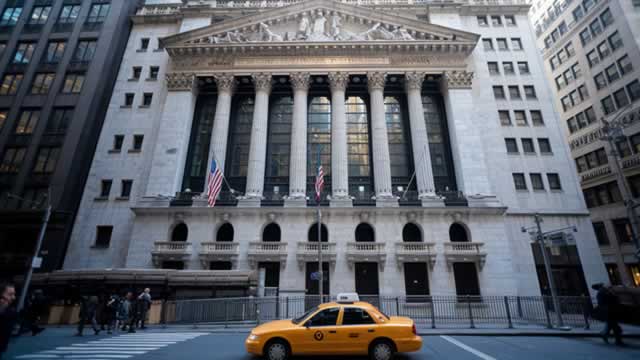
Major US stock indices closed higher on Tuesday, led by Merck and chipmakers like Nvidia ahead of earnings. However, geopolitical discussions between Iran and Oman impacted oil prices, while Canada announced retaliatory tariffs against the US. Consumer confidence and new home sales data disappointed, indicating potential economic headwinds.
- US major averages closed higher, with the Dow up 160 points, S&P 500 up 24 points, and Nasdaq up 171 points.
- Merck shares rose 3.8%, and Nvidia shares were up 2% ahead of its quarterly earnings report.
- Iran and Oman are reportedly discussing a joint shipping route in the Strait of Hormuz, causing US crude prices to tick lower to $82 a barrel.
- Canada announced retaliatory tariffs on US goods, matching US tariffs dollar-for-dollar, excluding energy products.
- Consumer confidence fell to 89.4, missing expectations, and new home sales in July were down 10.5% month-over-month, with rising inventory and falling median prices.
Bitcoin has surged to $80,000, its highest level since May, driven by the 'debasement trade' and significant inflows into US spot Bitcoin ETFs. Last week saw $1.92 billion in net inflows into these ETFs, the largest in 10 months, signaling a potential end to the 'crypto winter' and a shift in investor sentiment towards institutional products due to security concerns with self-custody.
- Bitcoin surged 26% in the last 10 days, touching $80,000 for the first time since May, fueled by the 'debasement trade' and US Treasury bond purchases.
- US spot Bitcoin ETFs attracted $1.92 billion in net inflows last week, the biggest in 10 months, with BlackRock's IBIT leading the charge.
- The rally suggests a shift in investor behavior, with some preferring the security of Wall Street asset managers for Bitcoin exposure via ETFs, especially after recent hacks on cold wallets.

President Trump's initiative to bring Hyperliquid, a major offshore crypto platform, onshore is an unprecedented move that could lead to the first regulated DeFi platform in the US. This development signifies a significant shift towards integrating 24/7, instantaneous, and decentralized trading into traditional finance, creating both opportunities and regulatory challenges for incumbent exchanges.
- President Trump's announcement to bring Hyperliquid onshore is unprecedented, marking a potential shift in US crypto regulation.
- Hyperliquid is a leading decentralized finance (DeFi) platform, handling hundreds of billions in perpetual futures volume, and its onshore regulation by the CFTC would set a major precedent.
- This move signals the broader integration of crypto technology, including 24/7, instantaneous, and on-chain trading, into traditional finance, prompting incumbent exchanges to adapt and compete.

Canada has announced retaliatory tariffs of up to 50% on $27.6 billion worth of US goods, effective September 8, in response to US tariff threats. Canadian officials, including Ontario Premier Doug Ford, describe the US actions as an 'unprovoked attack' that could harm the auto sector and lead to layoffs in both countries. Fox Business analysts express fatigue over trade wars, with some questioning the economic impact of the specific tariffs and the political motivations behind them.
- Canada to enact tariffs up to 50% on $27.6 billion in US imports, effective September 8.
- Ontario Premier Doug Ford states Canada is under 'unprovoked attack' by Trump, potentially hurting the auto sector and causing US layoffs.
- Analysts discuss whether the tariffs are a significant economic threat, noting some are on 'random things' and auto tariffs don't kick in until January 2027.
- Concerns are raised about the long-term impact on industries and the mutual dependence between the US and Canada.

Energy Aspects' Amrita Sen expresses skepticism regarding Oman's announcement of a temporary corridor for the Strait of Hormuz. She believes the market's immediate bearish reaction in crude oil prices is driven by algorithmic trading reacting to headlines, rather than fundamental optimism about easing tensions or a concrete deal. The underlying geopolitical issues and lack of specifics in the framework make her cautious.
- Amrita Sen is 'very, very skeptical' about the Oman-Iran announcement, citing past instances of similar chatter with no follow-through.
- The statement lacks specific details on practical arrangements to restore safe navigation in the Strait of Hormuz.
- Current oil price movements are largely headline-driven and influenced by algorithmic trading due to thin market liquidity, not fundamental shifts.
- Other oil-producing nations in the region are unlikely to pay tolls, and US sanctions pose a risk for any such payments, highlighting ongoing geopolitical complexities.

Katie Stockton of Fairlead Strategies discusses the technical outlook for Bitcoin, Gold, and Nvidia. She sees Bitcoin in a strong rally with further upside potential, while Gold's relief rally is expected to meet resistance. For Nvidia, a recent pullback suggests a potentially better reaction to upcoming earnings.
- Bitcoin is in a long-term basing phase, with June-July marking the bottom, and has broken out above its 200-day moving average with strong short and intermediate-term momentum.
- Gold is experiencing a counter-trend relief rally with intermediate-term momentum, but is expected to meet resistance and may not be as long-lived as Bitcoin's rally.
- Nvidia (NVDA) is in a short-term oversold condition after a recent pullback, increasing the likelihood of a positive reaction to its upcoming earnings report.

The discussion centers on the negative implications of government and central bank interventions in financial markets. Analysts criticize the Treasury's bond buying as a mistake, arguing it artificially lowers the cost of capital and distorts market mechanisms. Concerns are raised about potential inflationary pressures from trade wars and excessive government spending, leading to a shift towards hard assets like gold and Bitcoin as hedges.
- Druckenmiller and Trennert view Treasury's bond buying as a mistake, artificially lowering capital costs.
- Government spending and trade wars are seen as driving inflationary pressures and undermining market credibility.
- Investors are increasingly turning to hard assets like gold and Bitcoin as a hedge against policy-induced instability.

The video discusses the paradoxical shift where privacy coins, once deemed criminal tools by governments and delisted by exchanges, are now being packaged by Wall Street. Grayscale is converting its Zcash trust into an ETF, ZCSH, on the NYSE, making it accessible to mainstream investors despite its controversial past, while charging a 2.5% annual fee.
- Governments previously treated privacy coins, like Zcash, as tools for illicit activities, leading to their widespread delisting from exchanges.
- Grayscale is converting its existing Zcash trust into an ETF, ticker ZCSH, which will be listed on the New York Stock Exchange.
- This move by Grayscale legitimizes and packages Zcash for mainstream investment, offering access to a previously scrutinized asset at a 2.5% annual fee.
The AI infrastructure boom, particularly data centers, faces political backlash over resource concerns (power, water). However, JPMorgan's Kevin Curtin asserts that financing remains robust, with capital markets providing billions due to attractive risk-reward profiles, enabling a projected $5 trillion buildout over the next five years.
- Political backlash against data centers is growing across states due to concerns about power, water, and utility bills, leading to calls for moratoriums and increased local control.
- Despite these political and community risks, data center financing remains robust, with capital markets actively providing funding.
- The total CapEx for data centers and related chips is estimated at $5 trillion over the next five years (through 2030), with hyperscalers covering about $1.5 trillion and financial markets providing the remaining $3+ trillion.
- The US capital markets are described as the largest, most diversified, and robust globally, adapting to finance this critical industrial revolution through various debt and equity structures.

The discussion highlights a significant shift in the private credit market from borrower-friendly to lender-friendly, exemplified by Thoma Bravo's concessions in debt talks. Private equity firms are grappling with a $3.8 trillion backlog of unsold assets and investor pressure for liquidity, leading to the adoption of new, often expensive, financing structures like continuation funds and structured equity.
- Thoma Bravo conceded 40 creditor-friendly terms in debt talks for its portfolio company, Proofpoint, reflecting a shift to a lender-friendly market.
- Private equity firms face a dilemma with $3.8 trillion in unsold assets and investor demand for distributions amidst higher interest rates.
- New, often expensive, liquidity mechanisms like continuation funds, dividend recaps, NAV loans, and structured equity are being employed to return capital.

Dan Suzuki of iCapital criticizes the Treasury's recent bond buyback and cash-use measures as 'miniscule' and 'symbolic,' insufficient to lower long-term yields. He anticipates a 'higher for longer' yield environment due to significant debt supply and warns of potential future Fed rate hikes if oil prices remain elevated, leading to renewed inflation.
- Treasury's bond buybacks ($64 billion/year) are insignificant compared to past QE ($120 billion/month) and are largely symbolic.
- Drawing down the Treasury General Account (TGA) now could reduce buffer for future debt ceiling issues, potentially increasing term premiums.
- Predicts a 'higher for longer' yield environment due to bond supply and warns that sustained high oil prices could force the Fed to resume rate hikes.

The discussion highlights an inverse relationship between falling crude oil prices and rising stock futures, despite new US sanctions on Iran. Upcoming economic data, including consumer confidence, new home sales, and key inflation indicators like PCE and GDP, are anticipated to significantly impact market direction. Nvidia's earnings are also a major event to watch.
- Crude oil futures are down over 3% today, contributing to a modest rally in equity futures (S&P 500, Nasdaq-100, Dow Jones, Russell 2000 are all up).
- The US Treasury Secretary's 'Operation Economic Outcast' against Iran, involving sanctions on trade partners, is seen as a strategy to hit Iran's economy rather than military action, potentially easing crude oil prices.
- Key economic data releases this week include Consumer Confidence, New Home Sales, Richmond Fed data today, and Durable Goods, GDP, and PCE tomorrow, along with Nvidia's earnings after the bell tomorrow.
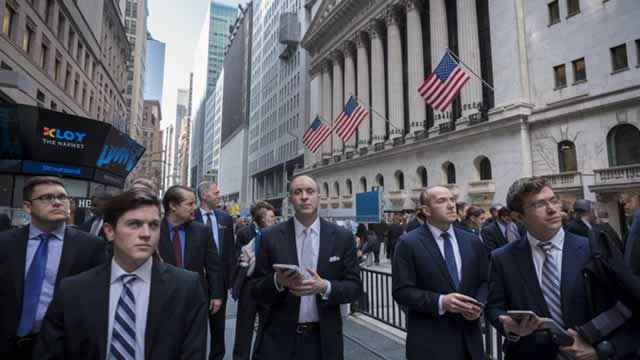
Talley Leger, Chief Market Strategist at The Wealth Consulting Group, expresses a surprisingly bullish outlook for 2026, contrasting it with his bearish stance in 2022. He attributes this to booming earnings, a neutral and supportive Federal Reserve, and accommodative financial conditions. Leger suggests that market pullbacks should be viewed as opportunities rather than concerns, as the economic environment is in a 'Goldilocks' state with encouraging inflation trends.
- The market outlook for 2026 is fundamentally different from 2022 due to 'booming earnings' and a 'neutral to supportive Fed' compared to an 'earnings recession' and aggressive Fed in 2022.
- Financial conditions are accommodative, and there's less reason for the Fed to 'overdo it' and harm the economy, with 10-year Treasury bond yields comfortably below nominal GDP growth.
- The labor market is described as 'Goldilocks' (not too hot, not too cold), and core inflation trends are running as expected, with persistent 'downside inflation shocks' according to the San Francisco Fed's index.

Savita Subramanian of BofA Securities discusses the current market landscape, noting a 'healthier reset' in tech due to multiple compression from rising earnings and falling prices. She expresses optimism for the market but advises against complacency, recommending large-cap value stocks, including tech, as a protective strategy for investors heading into a seasonally turbulent period.
- Market has experienced a 'healthier reset' in 'brothier areas' like tech, semis, software, and hardware, driven by rising earnings and compressed multiples.
- Recommends large-cap value stocks, including tech, as a defensive play against potential S&P 500 downside, suggesting a 'set it and forget it' approach.
- BofA's models are suggesting a higher year-end target for the market, despite concerns about complacency and reduced buybacks.