Video Analysis

The video discusses the rapid evolution of exchange-traded funds (ETFs), highlighting a trend towards increased complexity and the use of derivatives in newer products. While some actively managed and bond ETFs are seen as promising, investors are advised to proceed with extreme caution, especially with leveraged and inverse single-stock ETFs due to their inherent risks and hidden costs. The SEC is currently reviewing hundreds of these riskier products.
- ETFs have evolved from broad index funds to more complex, narrower strategies often employing derivatives.
- Newer ETFs, particularly leveraged and inverse single-stock funds, carry significant risks like volatility decay and are not suitable for long-term holding.
- Actively managed ETFs and bond ETFs are identified as bright spots, offering tax efficiency and innovation, but still require due diligence.

The discussion centers on the growing competition for capital between AI firms and governments, driven by massive AI infrastructure investments and increased fiscal spending. This dynamic is leading to concerns about crowding out in credit markets, rising debt yields, and the sustainability of capital allocation, posing challenges for portfolio construction and the broader market.
- AI firms and governments are increasingly competing for global capital, potentially crowding out other investments in credit markets.
- Record debt issuance for AI CapEx (data centers, chips, energy grids) is pushing yields higher, with some AI debt offering 'equity-like' returns.
- Concerns are raised about the sustainability of accelerating AI CapEx and its implications for capital allocation and portfolio construction in the current market environment.

Fast-fashion retailer Shein is reportedly targeting a valuation of $26 billion to $27 billion for its upcoming initial public offering (IPO) in Hong Kong, a substantial decrease from its peak valuation of $100 billion in 2022. This valuation reset is attributed to slowing growth, increased competition from Temu, higher operating costs, and recent financial losses.
- Shein aims for a $26B-$27B valuation in its Hong Kong IPO, seeking to raise approximately $2B.
- This valuation is a significant drop from its $100B valuation in 2022, with a consistent decline shown over the years (e.g., $66B in 2023, $45B in 2024).
- The company posted a $99 million loss in the first quarter of this year, contrasting with a $395 million profit a year earlier, and faces further impact from potential new EU levies.

The market experienced its worst day in August, with major indices falling due to rising Treasury yields, higher oil prices, and Walmart's significant sales shortfall. Uncertainty surrounding a new Fed Chair also contributed to market volatility, despite some positive economic indicators and strong earnings from Deere.
- Major indices (Dow, S&P 500, Nasdaq) experienced significant drops, marking the worst day of August.
- Walmart's stock fell 9% due to a sales shortfall and concerns over rising fuel costs impacting consumers.
- Rising Treasury yields and oil prices, along with uncertainty surrounding a new Fed Chair, contributed to market declines.
- Positive economic news included a drop in jobless claims and a rise in leading economic indicators, while Deere reported strong earnings.

Bitcoin and crypto-related stocks are rallying, with Bitcoin surpassing $72,000 and Ethereum up significantly, driven by former President Trump's call for the passage of the Clarity Act. This legislative push, coupled with institutional inflows into Bitcoin ETFs and a massive short squeeze, has created a bullish momentum in the crypto market. Future catalysts like the Jackson Hole meeting and upcoming IPOs are also being monitored.
- Bitcoin rallied above $72,000, up over 6% today and 11% this week, breaking key technical resistance levels (100-day and 200-day moving averages).
- Ethereum also saw a significant surge, up over 10% today and 20% this week, trading around $2300.
- The rally is attributed to former President Trump's urging for the passage of the Clarity Act, a crypto summit at the White House, positive comments from the CFTC head, over $1 billion in inflows into US spot Bitcoin ETFs, and a record $2.7 billion short squeeze on Wednesday.
- Future catalysts include potential Fed policy signals from the Jackson Hole meeting and upcoming IPOs like Anthropic, which could draw capital from crypto markets.

Mark Newton of Fundstrat believes the Treasury's intervention on interest rates is a 'game-changer' that could propel the S&P 500, QQQ, and DJIA to new all-time highs as soon as next week, leading into Jackson Hole. He also sees a durable trade in the dollar's decline and highlights specific sectors for potential outperformance.
- Expect S&P 500, QQQ, and DJIA to push back into new all-time high territory into Jackson Hole next week.
- The dollar's break of its February uptrend is a durable trade, expected to decline into 2027.
- Key sectors to watch for alpha are Healthcare (XLV, IBB), Energy (XLE), and Materials (XLB).

Philip Luck, former Deputy Chief Economist at the U.S. State Department, expresses significant concern over the U.S. Treasury's interventionist approach in bond markets and the nation's mounting fiscal pressures. He argues that the U.S. economy's fundamentals are deteriorating, making a credit downgrade 'may very well be warranted' by rating agencies.
- Treasury's intervention in bond markets is a clear pattern, not an isolated incident, distorting market signals.
- The U.S. has doubled its debt in the last decade, and long-term growth is hindered by factors like immigration policy.
- If the U.S. economy were a company, its credit rating would be 'quite a bit worse' due to fiscal indiscipline and lack of resilience in debt markets.
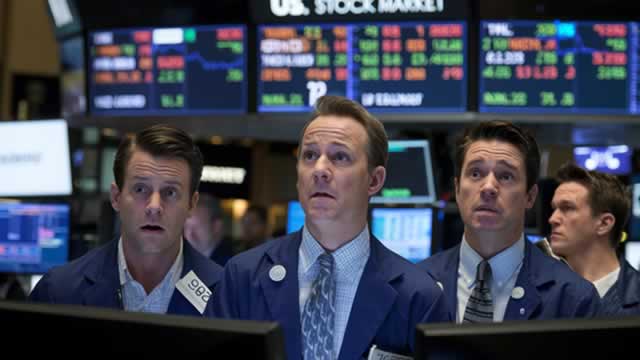
The discussion focuses on the impact of US Treasury intervention on credit markets, the record-breaking investment-grade debt issuance by hyper-scalers, and the looming maturity wall for lower-rated borrowers. Analysts highlight a shift in correlation between Treasuries and credit, and opportunities in private credit amid market volatility, while also noting consumer spending challenges.
- US Treasury intervention saw an initial positive reaction in the Treasury market, but some gains have been undone, and the correlation between Treasuries and credit has turned positive.
- August set a new US investment-grade sales record at $152 billion, with hyper-scalers expected to continue significant borrowing into 2027.
- CCC spreads are at their widest since the 'liberation day' rout, indicating stress for weaker borrowers, with a maturity wall approaching in 2028, particularly for smaller tech businesses.
- Private credit markets are seen as attractive due to better risk pricing, with opportunities in various sectors, though lower-income consumer spending and tightening bank credit are concerns.

Mike McGlone, Senior Commodity Strategist at Bloomberg Intelligence, expresses a bearish outlook on Bitcoin, calling it a 'horrible performing asset' with high correlation to the stock market and a major risk of further decline. He contrasts Bitcoin with the valuable underlying blockchain technology and stablecoins. Regarding crude oil, he anticipates lower prices due to global oversupply and decreasing natural gas prices, despite current Middle East tensions.
- Bitcoin is described as a 'horrible performing asset' with high volatility and correlation to the stock market, expected to 'roll over' by year-end.
- The underlying blockchain technology, stablecoins, and tokenization are seen as valuable, but Bitcoin itself lacks a fundamental basis.
- Crude oil prices are expected to decline, following natural gas, due to record production from countries like the US, Canada, Guyana, and Brazil.

Analysts discuss the US Treasury's bond buyback announcement, expressing skepticism about its long-term effectiveness in controlling rising yields. They highlight underlying issues such as large auction sizes, global issuance problems, and the Federal Reserve's reaction function as primary drivers that will likely continue to push longer-dated yields higher.
- The Treasury's buyback is viewed as a 'non-conventional tool' that may not prevent longer-dated yields from drifting higher.
- Concerns are raised about the size of 20 and 30-year bond auctions and a 'global issuance problem', specifically an 'elevated real 30-year problem'.
- Fundamental issues, including the Fed's unclear reaction function and hot economic data, are seen as the main drivers of yields, which the Treasury's buyback cannot fully address.
Former Kansas City Fed President Esther George discusses the market's attempt to sort out the Fed's communication regarding persistent inflation, the impact of geopolitical events on oil prices, and the unsustainability of federal deficits. She emphasizes the importance of clear Fed communication to maintain public confidence and address the costs of prolonged inflation.
- Markets are grappling with understanding the Fed's stance on persistent inflation and its policy tools.
- The federal deficit is unsustainable, and the lack of a clear plan to address it contributes to upward pressure on long-term Treasury yields.
- The cost of not acting swiftly on inflation includes eroding consumer purchasing power and risking the public's confidence in the Fed's ability to achieve price stability.

Bill Dudley, former New York Fed President, warns that US stocks are in bubble territory, citing stretched valuations (Shiller CAPE, Buffett Indicator) and an unsustainable AI investment boom. He predicts a market correction by late 2027 due to slowing AI growth, compressed profit margins, and increased equity supply, exacerbated by US fiscal challenges.
- US equity market valuations are stretched, with the Shiller CAPE ratio at 41 and the Buffett Indicator at 240%.
- The AI investment boom's impetus is expected to slow by 2027, leading to lower profit growth expectations and compressed margins.
- Increased equity supply from IPOs and lockup expirations, coupled with potential overcapacity in AI, will weigh on the market.
- US fiscal unsustainability and political paralysis pose significant risks, potentially leading to higher bond yields and further market pressure.
Attorney Mark Lanier discusses the Meta Platforms trial, asserting he can prove Meta deliberately harmed youngsters by prioritizing growth over safety. He advocates for significant platform changes, including age-gating and content filters, to protect children, suggesting these measures would be effective if properly enforced.
- Lanier claims Meta's internal 'Beef study' revealed high percentages of children (13-15) exposed to nudity (19.2%) and bullying (27%), which Meta allegedly ignored.
- He proposes 'extensive rewriting' of Meta's platform, including 30-minute scrolling limits, content filters, and 'real age-gating' using existing technology.
- Lanier argues that while social media has positive functions, it needs 'guardrails' and that Meta's pursuit of success should not come at the expense of user safety.

Guneet Dhingra of BNP Paribas argues that recent Treasury buybacks are merely a 'band-aid' for deeper issues like deficits, Fed credibility, and hyper-scalar issuance. He highlights a 'K-shaped bond market' with rising long-end yields and falling short-end yields, suggesting rates will continue to climb due to unaddressed fiscal challenges and a loss of Fed credibility, impacting global markets.
- Treasury buybacks are a temporary 'band-aid' and insufficient to address underlying issues like massive hyper-scalar issuance and growing deficits.
- The 5.25% long bond yield is considered a 'normal' rate for the current growth and inflation environment, not restrictive.
- A 'K-shaped bond market' has emerged with 2-year yields down and 30-year yields up, driven by a loss of Fed credibility and increasing supply.
- Global fiscal situations (Japan, France, US) are fragile, with interest burdens rising and tax revenues not keeping pace, making it hard for markets to ignore.
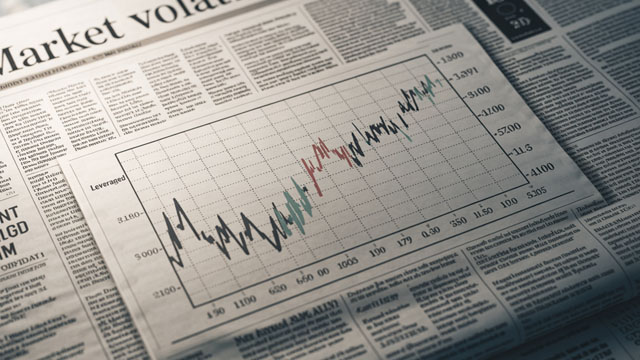
The discussion centers on recent US labor market data, noting that weekly jobless claims came in slightly below estimates, suggesting few layoffs. However, continuing claims were slightly higher than expected, and previous monthly payroll data revisions indicated a softer employment picture, potentially reflecting slower hiring rather than mass layoffs.
- US jobless claims for the Aug. 15 week were 206,000, below the estimated 210,000, indicating few layoffs.
- US continuing claims for the Aug. 8 week were 1.799 million, slightly above the estimated 1.788 million.
- Monthly payrolls data and previous revisions suggest employment may not be as strong as previously thought, with 'softness' potentially reflecting slower hiring.
- The Federal Reserve's view on the job market, while previously 'in good shape,' is now seen with a 'different look' due to recent data.

BlackRock's CIO for Fundamental Equities, Helen Jewell, discusses how underlying volatility, particularly in AI names, is masked by calm top-line market indices. She emphasizes the critical need for portfolio diversification and active management to navigate these concentrated and volatile market conditions, highlighting opportunities in healthcare, European banks, and sustainable energy infrastructure.
- Top-line market calm hides significant volatility in individual stocks, especially within the AI sector.
- Diversification is crucial, with opportunities identified in healthcare, European banks, and sustainable energy/infrastructure names.
- The shift from share buybacks to debt issuance for capital-intensive AI investments increases pressure on companies to generate returns.

Wall Street's major averages are sliding today as crude oil prices and Treasury yields rise, following a day of market rallies and falling yields. This comes after Treasury Secretary Scott Bessen announced increased buybacks of longer-dated Treasury securities. Mixed economic data shows jobless claims falling and the Conference Board's Leading Economic Indicators rising for six consecutive months, a four-year first. Walmart shares are down significantly after posting lower-than-expected comparable store sales.
- Major Wall Street averages (Dow, S&P 500, Nasdaq) are sliding today, with crude oil prices and Treasury yields both rising.
- Treasury Secretary Scott Bessen announced intentions to increase buybacks of longer-dated Treasury securities to drive yields down.
- First-time jobless claims fell by 6,000 last week to 206,000, slightly below economists' expectations.
- The Conference Board's Index of Leading Economic Indicators (LEI) rose 0.2% last month, marking the first six-month positive period in four years.
- Walmart shares are down about 10% after reporting much lower than expected comparable store sales.

Liz Ann Sonders discusses the Treasury's bond buybacks as a symptomatic approach to rising yields, driven by fiscal deficits, inflation, and geopolitical events. She highlights a shift from the 'Great Moderation' to a 'Temperamental Era' where bond yields and equities may move inversely. The conversation also covers the implications of a weaker U.S. dollar for S&P earnings and the concentrated nature of current market performance, particularly within mega-cap tech and chip stocks.
- Treasury's bond buybacks are seen as addressing symptoms rather than the underlying causes of rising yields, such as fiscal deficits and inflation.
- The market is transitioning from the 'Great Moderation' era to a 'Temperamental Era,' implying a potential inverse relationship between bond yields and stock prices.
- A weaker U.S. dollar generally benefits S&P earnings due to overseas revenue, but AI CapEx's reliance on imports can offset domestic GDP gains.
- Market performance remains highly concentrated, with a few mega-cap chip stocks like Nvidia and Micron contributing significantly to S&P earnings growth.
US Treasury Secretary Scott Bessent dismisses recent bond market fluctuations as 'noise,' emphasizing the administration's focus on fiscal consolidation. He expresses confidence that bonds will continue to climb and that economic actions will lead to sooner declines in oil prices, despite a current unexplained spike.
- Short-term bond market movements are considered 'noise' within a 24-hour period.
- The administration is focused on fiscal consolidation to bring the market back to equilibrium.
- Bessent is confident that bonds will continue to climb and oil prices will come down sooner due to economic action.
U.S. Agriculture Secretary Brooke Rollins discusses the historic cattle shortage driving beef prices higher, attributing it to the previous administration's policies. She highlights a positive turn in cattle numbers and the Trump administration's focus on rebuilding the domestic food supply and supporting American ranchers, while also addressing concerns about land use for data centers.
- A historic cattle shortage, with 8 million fewer cattle in 2026 compared to 2019, is driving beef prices up over 10% year-over-year.
- The U.S. became a net food importer in 2023 for the first time in history, attributed to the previous administration's policies.
- Cattle numbers are now turning around, with ranchers retaining heifers at a higher rate, signaling a rebuilding of the herd.
- The administration is focused on supporting ranchers and rural America, including addressing land use conflicts with data centers and promoting 'Product of the USA' labeling.