Video Analysis
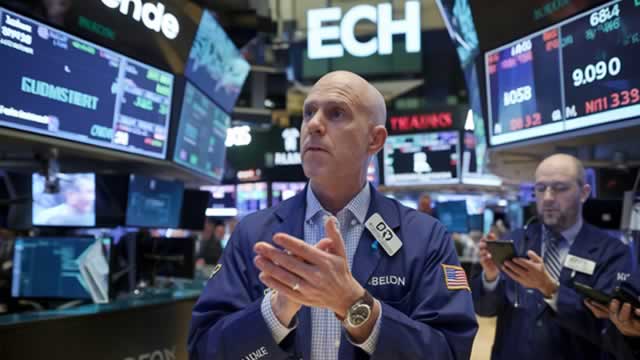
Rebecca Patterson expresses long-standing concerns about the bond market, favoring short-term fixed income and gold due to rising yields and volatility. She highlights the increasing US national debt, nearing $40 trillion, and warns that a lack of fiscal austerity from politicians and the public could lead to a crisis that forces difficult economic adjustments.
- Be cautious with long-term bonds; prefer cash, short-term fixed income, or gold due to rising yields and volatility.
- The US national debt (nearing $40 trillion) and lack of fiscal austerity are major concerns, with debt-to-GDP projected to reach 120% in the next decade.
- A weaker dollar could push up US inflation, potentially leading the Fed to raise rates further, though Patterson doesn't foresee a 'cliff fall' for the dollar.
- There's a fear of an 'ugly crisis' that forces austerity, potentially triggered by domestic market events (e.g., AI bubble burst) or global contagion (e.g., European debt crisis).
- For personal finance, focus on long-term goals and asset allocation rather than trying to time the market, as timing is rarely successful.
- Crypto is not recommended due to difficulty in fair valuation and idiosyncratic drivers, though early investors may have seen gains.

The discussion revolves around Treasury Secretary Scott Bessent's strategy, dubbed the 'Bessent put,' to manage rising long-term bond yields through bond buybacks. While the direct impact of the current buyback size is debated, its signaling effect is considered significant. The broader issue of US debt and the stock market's resilience despite bond market pressures are also key themes.
- Treasury Secretary Scott Bessent is signaling increased bond buybacks to tamp down rising long-term yields, referred to as the 'Bessent put'.
- Analysts question the direct effectiveness of current buyback sizes, comparing it to a 'fire hose to an ocean,' but acknowledge its importance as a market signal.
- The stock market's continued bull run is seen as dependent on sustained double-digit earnings growth, healthy profit margins, and a stable labor market, despite bond market volatility.

The discussion centers on the upcoming week's market drivers: Nvidia's earnings and the Fed Chair's speech. While there's debate on the Fed's potential hawkishness, the overall sentiment leans bullish due to strong expectations for Nvidia's earnings and the broader market's resilience. Analysts highlight the significant growth in AI-related stocks.
- Nvidia's upcoming earnings report is highly anticipated, with expectations for 'spectacular' results and continued robust growth in AI.
- The Fed Chair's speech is also a key event, with differing views on whether recent softer economic data will ease a hawkish stance.
- Despite rising interest rates, the market has shown resilience, driven by strong earnings growth, particularly in the tech sector.

Diane Swonk, KPMG Chief Economist, discusses expectations for Jerome Powell's upcoming Jackson Hole speech. She emphasizes the need for Powell to convey Fed independence and a strong commitment to bringing down inflation, especially given sticky core PCE and rising energy prices. Swonk suggests current rates might be too low and addresses the sequencing problem of AI's inflationary costs preceding its productivity benefits.
- Powell's speech needs to be direct, emphasizing Fed independence and a clear commitment to inflation control, potentially resetting market expectations after the July press conference.
- Persistent inflation pressures from core PCE and rising energy prices (diesel, refinery issues) indicate that the current Fed funds rate may be too low and accommodative.
- AI's impact on the economy presents a 'sequencing problem,' with initial investment costs potentially boosting inflation before long-term productivity gains materialize.

Market strategist Art Hogan discusses current market volatility driven by rising Treasury yields and inflation concerns, noting low trading volumes. He highlights potential relief from upcoming Fed commentary and identifies specific sectors and stocks with strong long-term outlooks, including financials, healthcare, and select tech giants.
- 30-year Treasury yield hit a 19-year high of 5.3% amid inflation concerns and national debt topping $40 trillion.
- Treasury Secretary Bessent's 'Operation Twist' bond purchases aimed at lowering long-term yields have had limited impact.
- Hogan sees potential for relief in bond yields and clarity on monetary policy after the upcoming Jackson Hole meeting.
- He favors financials and healthcare sectors for their M&A activity, capital markets activity, and reasonable valuations.
- Specific stock picks include Eli Lilly (GLP-1 winner), Apple (AI consumption on devices, shareholder-friendly management), and Nvidia (strong margins, growth, and valuation).

The Bloomberg Money episode discusses significant shifts in financial markets, including Treasury bond volatility, the soaring US national debt, and changing investment behaviors across generations. Experts highlight concerns about fiscal policy and potential market instability, while also noting new trends in personal finance and consumer spending.
- The 30-year US Treasury bond yield is at 5.2688%, described as stressful, with the iShares 20+ Year Treasury Bond ETF (TLT) showing a significant price decline since 2020.
- The US National Debt is nearing $40 trillion, raising fears of an 'ugly' crisis due to a lack of fiscal austerity and public/political unwillingness to address it.
- Millennials' net worth is rising faster than other generations, but they also carry higher consumer debt and are shifting investment focus from housing to the stock market, often engaging in a 'treat economy' for smaller purchases.
- Record spending on hobbies is observed across all generations, outpacing other discretionary purchases, suggesting a shift in consumer priorities towards personal well-being amidst economic anxieties.

Financial experts Tom Lee and Bryn Talkington discuss the Treasury's bond buyback, the upcoming Jackson Hole symposium, and the impact of political opposition on the AI and data center trade. Lee views the Treasury's actions as a wise signal of value, expecting lower yields, while Talkington sees it as a signal for long-duration bonds, not short-term market drivers. Both anticipate Jackson Hole to be a crucial 'clearing event' for market direction.
- Tom Lee believes the Treasury's bond buyback is a wise move, signaling value and potentially leading to lower yields.
- Bryn Talkington notes the illiquidity of 20- and 30-year bonds being bought by the Treasury, emphasizing that the 2-, 5-, and 10-year yields are more significant market signals.
- Both experts highlight the upcoming Jackson Hole symposium as a 'consequential' and 'seminal' event for market clarity, especially regarding Fed policy and inflation.
- Growing political opposition to data centers is seen as impacting the AI trade, causing investor hesitation, though downstream AI stocks are showing strength.
The discussion analyzes the turbulent US Treasury market, linking higher nominal GDP growth and persistent inflation to a 'higher for longer' interest rate environment. It highlights the resilience of the US economy, distinguishing current stock market conditions from past bubbles due to corporate profitability and broader participation, while also noting the significant global impact of energy prices.
- Higher nominal GDP growth and sticky inflation suggest a 'higher for longer' interest rate environment, challenging bond yields.
- Current stock market strength is supported by corporate profitability and broad participation, unlike the dot-com bubble.
- Jobless claims are a more reliable labor market indicator than non-farm payrolls, given demographic shifts.
- Global energy prices, particularly China's demand, are a crucial swing factor for inflation and consumer behavior.
The discussion centers on rising long-term Treasury yields, hitting levels not seen since 2007, and their potential impact on financial markets. Despite these macro risks, the speaker maintains a cautiously bullish outlook for equities, anticipating further gains. He highlights a shift of capital into alternative assets like Bitcoin and precious metals, driven by global fear and a weakening dollar, and identifies specific opportunities in these sectors.
- 30-year Treasury yields are at multi-year highs, posing a macro risk to the bull market, especially for companies with high debt in the AI space.
- Equities are expected to continue grinding higher, with potential for 10%+ upside in the S&P 500 and Nasdaq, supported by strong earnings.
- Investors are moving money out of the U.S. dollar and bond market into alternative currencies and assets like Bitcoin and precious metals (gold, silver) due to global fear.
- Specific investment opportunities are identified in Amplify Junior Silver Miners ETF (SILJ) and Amplify Blockchain Technology ETF (BLOK), both showing strong technical breakout patterns and momentum.

The discussion centers on the impending US-Canada tariff deadline, with expectations for a deal to be reached. The expert highlights the importance of detailed agreements for industries like steel and anticipates Mexico will seek similar tariff relief. Broader US-China trade relations and Iran sanctions are also touched upon, noting the administration's delicate balancing act.
- There is momentum for a US-Canada tariff deal by the deadline, with a focus on ironing out specific details for industries like steel.
- A deal would provide crucial certainty for businesses in both countries, and Mexico is expected to seek similar tariff relief, especially for auto tariffs.
- The US administration is carefully managing its relationship with China, particularly concerning rare earths and export controls, to avoid disrupting a 'fragile detente'.

The discussion highlights a significant surge in AI infrastructure debt, with over $220 billion issued year-to-date, leading to market 'indigestion' and higher borrowing costs. Concerns are raised about 'circular financing' practices and the legitimate risks of delays in data center buildouts due to regulatory hurdles, community pushback, and shortages of labor and chips, potentially prolonging expensive debt servicing.
- Over $220 billion in AI infrastructure debt issued year-to-date, more than double 2025 levels and 10x 2024, causing market 'indigestion'.
- Companies face higher borrowing costs due to increased coupon rates and difficulty in placing large volumes of debt.
- Circular financing (offering debt to customers to secure product purchases) is a legitimate concern for investors.
- AI data center buildouts face risks from regulatory/community pushback, worker shortages, and chip shortages, leading to potential delays and prolonged high-cost debt.

The discussion analyzes Treasury Secretary Bessent's optimistic view on the US deficit peaking and the $40T debt not being 'magic.' David Rosenberg largely agrees on the deficit but argues that rising long-term Treasury yields are driven by factors beyond fiscal policy, such as geopolitical risk, Fed uncertainty, and corporate long-dated issuance, suggesting potential future government intervention.
- Treasury Secretary Bessent believes the US deficit has likely peaked and the $40T debt figure is not 'magic,' citing fiscal consolidation and temporary tariff funds.
- David Rosenberg attributes the recent rise in long-term Treasury yields (e.g., 10-year from below 4% to 4.736%) to geopolitical risk (war), Fed uncertainty on inflation targets, and increased long-dated issuance by hyperscalers for AI spending.
- Rosenberg suggests the Treasury may need to intervene with a 'big bazooka' (similar to Ben Bernanke's quantitative easing) to prevent 10-year Treasury yields from reaching 5%.

Bitcoin experienced its best week since 2023, surging over 20% due to a macro-driven short squeeze, renewed ETF demand, and a push for the CLARITY Act. Crypto-related stocks also saw double-digit gains, though regulatory uncertainty and potential September sluggishness remain factors.
- Bitcoin rallied over 20% this week, driven by easing Treasury yields, a weaker dollar, and a massive short squeeze liquidating roughly $2.7 billion in short positions.
- Renewed demand for Bitcoin ETFs and a legislative push for the CLARITY Act (defining digital asset regulation and SEC/CFTC oversight) also contributed to the rally, despite the bill stalling in the Senate.
- Crypto stocks like Coinbase (COIN), Circle (CRCL), and MicroStrategy (STRATEGY) mirrored Bitcoin's gains, all up double-digits for the week.

Critical Metals CEO Tony Sage warns the US faces a significant uphill battle and a 2-3 year lag to break China's dominance in critical minerals, primarily due to processing bottlenecks. However, he asserts that Critical Metals' Greenland Tanbreez project, rich in heavy rare earths, is on track for 2029 production with strong local support and sufficient funding.
- US faces a 'very difficult' and 'uphill struggle' to catch up with China in critical minerals, with a 2-3 year lag expected for processed metals to hit the market.
- Critical Metals' Greenland Tanbreez project is on track for 2029 production, boasting significant heavy rare earth deposits crucial for US national defense.
- The company has strong local and Greenland government support, and sufficient cash on hand, with a US DLA loan application pending.
The US Treasury's plan to boost liquidity for longer-dated treasuries is deemed a 'band-aid' for rising yields. The speaker highlights concerns over the level and speed of yield increases, driven by global factors and the federal deficit. Investors are advised caution on long-dated bonds, with a below-benchmark duration strategy.
- US Treasury's liquidity support for longer-dated treasuries is a 'relative band-aid' for the market.
- Concern exists over both the high level and rapid speed of rising long-end interest rates, which is a global phenomenon.
- Investors are advised to exercise caution on longer-dated bonds, suggesting a below-benchmark duration strategy.
- The 10-year yield is expected to trade between 4.25% and 4.75%, with an elevated term premium (due to the federal deficit) likely putting a floor on how low yields can go.

China's humanoid robot industry is rapidly advancing, with Chinese makers controlling 97% of global shipments in the first half of the year, positioning the country for a dominant role in this emerging tech sector. Backed by government support, China aims to convert these advanced prototypes into mainstream, commercially viable machines, intensifying the global tech race with the US.
- Chinese humanoid robot makers, including Unitree and Agibot, accounted for over 97% of global shipments in H1 2023, outpacing US rivals like Tesla.
- The World Robot Conference in Beijing showcases diverse applications, from industrial sorting and logistics to household tasks like laundry.
- President Xi Jinping is actively promoting the robotics industry to secure China's lead in the global tech race, despite recent US curbs on foreign-made robots.
Soaring diesel prices, driven by global supply shortages (refinery outages, Russian export halt, Middle East disruptions) and rising US demand, are causing record crack spreads and national average prices. This is expected to fuel inflation, particularly in producer and consumer prices, and could limit the Fed's ability to cut rates, potentially shaving off GDP growth.
- Diesel crack spread topped $100/barrel for the first time this week, measuring the price difference between crude and refined products.
- Causes of record high diesel prices include global refinery outages, infrastructure damage, export disruptions (especially from Russia), and tight U.S. inventories.
- The U.S. national average diesel price is $5.57/gallon today, significantly higher than ~$3.72/gallon before the Iran war, with some regions seeing prices upwards of $7/gallon.
- An anticipated demand spike in late August/September due to the harvest season will add further upward pressure on diesel prices.
- Elevated diesel prices will feed directly into the Producer Price Index (PPI) and Consumer Price Index (CPI), putting the Fed in a difficult position regarding interest rate policy and potentially impacting GDP.

The discussion centers on bond market turmoil, inflation, and equity valuations. One analyst expresses a cautious but not panicking view, favoring international and small-cap value equities, while the other is more concerned about rising yields, embedded inflation, and has taken profits in equities. Both highlight the challenges for asset allocators in the current environment.
- Bond yields are rising due to inflation concerns and debt picture, with some seeing attractive levels for long-term bonds, while others see continued upside risk.
- One analyst believes the Fed will hike in December, not before midterms, and expects oil prices to remain contained, with a 70% probability of US economic expansion.
- The other analyst has reduced duration in portfolios, focused on short-dated treasuries, and taken profits in equities due to 'over-enthusiasm' and signs of embedded inflation, particularly in refined products and housing.
- European equities are seen as a higher beta market, tending to sell off harder than the US, despite potentially cheaper valuations.

The discussion focuses on Q2 big box retail earnings, noting that while companies like Walmart, Target, Home Depot, and Lowe's beat estimates, their stocks retreated due to a soft outlook. The expert believes consumers are becoming more 'choosy' and pulling back on spending, which will benefit discount retailers like Walmart and off-price stores during the upcoming holiday season, while luxury and premium segments may struggle.
- Big box retailers generally beat Q2 estimates but provided soft outlooks, causing stock retreats.
- Consumers are becoming more cautious and 'choosy' with their spending, shifting towards value.
- Discount retailers (Walmart, dollar stores, TJ Maxx) are expected to benefit from this consumer shift, especially during the holiday season.
- Retailers offering a seamless 'great point of experience' (online, offline, BOPIS) are positioned to win.

The video discusses the US Clarity Act and its potential impact on crypto regulation. Benjamin Peillard, CEO of Cap, highlights the bill's aim to provide clear rules for consumer protection and innovation, distinguishing truly decentralized protocols. He notes that the recent Bitcoin rally is driven by Treasury announcements and presidential comments, not high optimism for the Clarity Act's immediate passage, as markets have already priced in a low probability.
- The Clarity Act aims to provide clear rules for consumer protection, innovation, and asset issuance in the crypto industry.
- Benjamin Peillard emphasizes the need for clear rules to differentiate truly decentralized protocols from 'decentralization theater' where teams retain control over user funds.
- The recent Bitcoin rally is attributed to Treasury announcements and presidential comments, with low market expectations (5-25% chance) for the Clarity Act passing this year.
- Predictability through legislation is crucial for long-term planning and addressing public mistrust in the crypto space.