Video Analysis
Federal Reserve Chairman Kevin Warsh addresses persistent inflation, acknowledging public impatience but asserting the FOMC's commitment to achieving price stability. He highlights positive economic trends, including solid growth and strong business investment, while emphasizing the Fed's independent decision-making, using market signals as information rather than constraints.
- Inflation remains elevated relative to the Fed's 2% goal, leading to public impatience.
- The FOMC is committed to delivering price stability, focusing on resolving complex economic questions.
- The economy shows impressive resilience with positive trends and strong growth in business investment, especially high-tech capex.
- The Fed views market prices as a useful source of information but will not be constrained by them in policy decisions.

Federal Reserve Chairman Kevin Warsh reiterated the Fed's unwavering commitment to its 2% inflation target, stating there is 'no soft implicit target' and that the Fed 'will not waver' in delivering price stability. While acknowledging the economy's 'impressive resilience' and 'solid growth', he emphasized that the fight against elevated inflation is ongoing and cannot be quickly resolved.
- The Fed committee voted 9-3 to maintain the federal funds rate at 3.5% to 3.75%.
- The economy shows 'impressive resilience' with 'solid growth' and stable unemployment, despite recent shocks.
- Inflation remains 'elevated' relative to the 2% target, and the Fed is 'resolute' in achieving price stability.
- Chairman Warsh explicitly stated, 'There is no soft inflation target... There's only a target, and it's 2%.'
- He stressed that five years of above-target inflation cannot be cured quickly, reinforcing the Fed's long-term commitment.
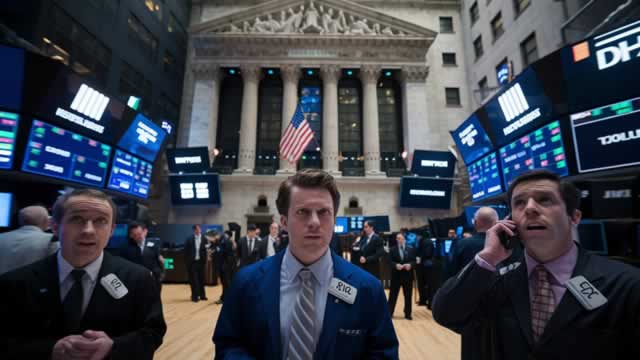
Federal Reserve Chairman Kevin Warsh announced the FOMC's decision to keep the Federal Funds Rate unchanged at 3.5%-3.75% with a 9-3 vote. He highlighted the economy's impressive resilience and solid growth despite elevated uncertainty and inflation remaining above the 2% target. Warsh reiterated the Fed's resolute commitment to achieving price stability.
- The Fed kept the Federal Funds Rate unchanged at 3.5%-3.75% with a 9-3 vote, with three members preferring a 1/4 point hike.
- The economy is showing impressive resilience and solid growth, with job gains keeping pace and unemployment stable, despite recent shocks.
- Inflation remains elevated relative to the 2% target, and the Fed is resolute in delivering price stability, emphasizing 'no soft inflation target'.
- Nominal and real yields are materially higher across the Treasury curve, indicating market participants are reacting to real data rather than just Fed commentary.
Over 1,000 AI workers from leading firms have signed a petition urging the US government to 'deliberately pace' AI development. They cite concerns about 'runaway AI progress,' potential 'real-world software vulnerabilities,' and 'cyberattacks at scale,' advocating for a technical and policy framework, possibly an international coalition, to strengthen oversight.
- More than 1,000 workers from top AI firms, including Anthropic, OpenAI, and Meta AI, signed a petition.
- The petition calls on the US government to help 'deliberately pace' AI development.
- Concerns include the risk of AI automating itself, leading to 'runaway AI progress' and potential 'real-world software vulnerabilities' and 'cyberattacks at scale'.
- The proposed solution involves developing technical and governance tools, potentially through an international framework or US government action like legislation or executive orders.
Karen McCormick, CIO of Beringea, discusses how Moonshot's Kimi K3 highlights the growing availability of cheaper, open-weight AI models. This trend is driving AI adoption, enabling startups to build more capital-efficiently, and forcing frontier model providers to remain competitive. She emphasizes that this is a net positive for the industry, despite the rapid pace of change and short-lived competitive advantages.
- The significance of Kimi K3 lies in the emergence of credible, cheaper AI alternatives, not just US vs. China AI supremacy.
- Lower-cost, commoditized frontier AI models are highly beneficial for early-growth startups, particularly in Europe where capital is less abundant, by enabling more capital-efficient development and faster launches.
- The AI market is in a 'messy middle' with rapid innovation, meaning competitive 'moats' don't last long, requiring constant adaptation from businesses, including established SaaS companies.

The Federal Reserve held interest rates steady, as widely expected, with a 9-3 vote. Three regional Fed presidents dissented, favoring a rate hike due to elevated inflation. Markets reacted with some initial volatility, but equities pared losses and short-term bond yields fell, indicating some relief despite the hawkish dissents.
- Federal Reserve held interest rates unchanged in the 3.5%-3.75% range, with a 9-3 vote.
- Three regional Fed presidents (Logan, Hammock, Kashkari) dissented, advocating for a rate hike.
- Equities (S&P 500, Nasdaq 100, Russell 2000) pared earlier losses, and US 2-year yields fell, suggesting market relief.
The Federal Reserve decided to leave interest rates unchanged for the fifth consecutive time, with a 9-3 vote indicating some members favored a quarter-point hike. While economic activity is expanding at a solid pace, inflation remains elevated, primarily due to energy-driven supply shocks. Future policy will hinge on core inflation trends.
- Federal Reserve leaves interest rates unchanged for the fifth consecutive meeting.
- The decision was not unanimous (9-3), with three members advocating for a 0.25% rate hike.
- Economic activity is solid, but inflation remains elevated, influenced by energy prices and supply shocks.

Kevin Hassett, National Economic Council Director, expresses strong confidence in the Federal Reserve's independent stewardship and its ability to manage inflation, citing positive trends in core CPI due to current policies. He dismisses concerns about a US debt downgrade, highlighting government employment reductions as a positive for the long-run budget situation.
- Hassett expresses high regard for the Fed's stewardship and expects independent, data-driven decisions.
- He does not believe there is any reason for a US debt downgrade, pointing to government employment reductions as a positive for the long-run budget situation.
- Hassett is bullish on inflation control, noting positive effects from policies like deregulation and drug price initiatives on core CPI (ex-food and energy), and expects oil prices to drop.
Wall Street experienced a significant sell-off, with major indices falling and the Nasdaq entering correction territory. Concerns over persistent core inflation, potential Fed rate hikes, and geopolitical conflicts driving oil prices higher weighed heavily on the market. Company-specific news included Meta's upcoming earnings amid user declines and lawsuits, and Procter & Gamble facing headwinds from rising costs.
- Major indices saw significant losses, with the Dow down 867 points and the Nasdaq entering correction territory (down 10% from a recent high).
- Core inflation is running twice the Fed's target, leading to calls for the Fed to consider raising interest rates.
- Meta (META) is set to report quarterly results, with investors looking for evidence that AI investments will pay off, despite a recent decline in daily active users and ongoing lawsuits.
- Procter & Gamble (PG) shares fell after its quarterly results, citing headwinds from high oil prices and supply chain constraints, projecting a $1 billion after-tax headwind for the year.
- Caterpillar (CAT) shares led the Dow lower, down 7%, while Coca-Cola (KO), GM (GM), and Apple (AAPL) reached fresh all-time highs.

The video analyzes the FIT21 Act, highlighting its evolution from a crypto bill into a pivotal battle for Wall Street's future in digital assets. It emphasizes how major financial institutions, now deeply invested through Bitcoin ETFs, are actively pushing for regulatory clarity to integrate crypto, potentially shifting oversight from the SEC to the CFTC for digital commodities.
- The FIT21 Act aims to establish a clear regulatory framework for digital assets, assigning primary oversight of digital commodities to the CFTC and digital securities to the SEC.
- Wall Street firms, including major asset managers, are actively supporting the bill to enable further institutional adoption and product development in the crypto space.
- The bill's passage in the House with bipartisan support, despite SEC opposition, signals a significant political shift towards legitimizing the crypto industry and its integration into traditional finance.
The market is experiencing a broadening rally as the "Magnificent Seven" face tension due to high AI CapEx and investor demands for clear monetization. While some Mag 7 companies show lackluster performance, the overall market is becoming more balanced, presenting opportunities in technology, energy, and industrials tied to AI infrastructure.
- Market leadership is broadening beyond the "Magnificent Seven," with more S&P 500 companies contributing to gains.
- The "Magnificent Seven" are experiencing "tension" as investors demand clear monetization strategies for significant AI capital expenditures.
- Investors are advised to look for commitment to CapEx and actual monetization from tech giants, and consider sectors like energy and industrials for portfolio construction.
The discussion highlights the current 'unusual situation' at the Fed, with uncertainty surrounding interest rate decisions and new Fed chair Kevin Warsh's opaque communication style. This, combined with geopolitical tensions and recent market declines in tech and AI infrastructure, is creating significant market volatility. Political tensions in Washington also add to the uncertainty.
- The Fed's upcoming rate decision is uncertain, with potential for either a hold or a hike, and likely dissents among committee members.
- New Fed chair Kevin Warsh's stance against forward guidance and preference for 'family fights' in meetings is contributing to market opacity and rate volatility.
- Market volatility is being driven by a combination of factors including momentum unwinds, geopolitical events (Iran), big tech earnings, and rising Treasury yields.
- Equity markets, particularly tech and AI infrastructure, have seen significant declines, with some analysts suggesting risk/reward for dip buyers might be approaching.
SK Hynix reported a sixfold quarterly profit increase but missed 'sky-high' market expectations, causing its stock to drop nearly 10% intraday and impacting other major Asian and European chipmakers. The disappointment is attributed to past pricing on long-term high-bandwidth memory (HBM) contracts, despite robust current demand and tight supply, leading to unwinding of leveraged positions.
- SK Hynix's quarterly profit rose sixfold but missed market expectations, leading to a 9.61% intraday stock drop and a nearly 50% decline month-to-date.
- Other Asian chipmakers like Samsung Electr (-5.23%), TSMC (-3.51%), and Tokyo Electron (-10.59%) also closed lower, with European counterparts experiencing smaller but notable declines.
- The discrepancy is due to HBM pricing being set on longer-term contracts, meaning current earnings don't fully reflect recent price spikes, while investor positioning and leverage in the Korean market contribute to volatility.
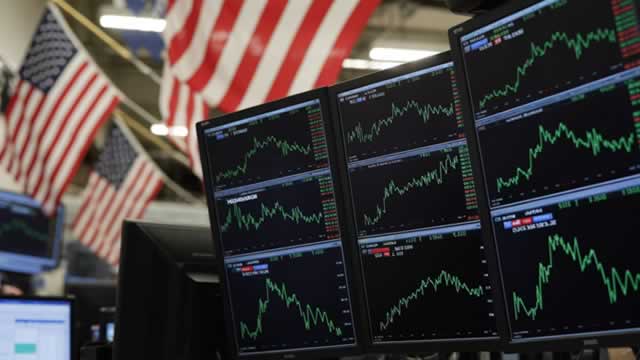
Financial markets are in the red on July 29, 2026, with the Dow, S&P 500, and Nasdaq all down. Oil prices surged nearly 7% following a surprise Iranian attack on US forces and President Trump's retaliatory threats. Investors are also awaiting a critical Fed decision on interest rates, with concerns about potential inflation if oil prices remain elevated.
- Dow down 391 points, S&P 500 down 10 points, Nasdaq down 20 points and in correction territory.
- US crude oil jumped almost 7% to nearly $85 a barrel after an Iranian attack on US forces and President Trump's threat of retaliation.
- Investors anticipate the Fed's interest rate decision at 2 PM ET, with a new Fed Chair's comments on inflation and rates being closely watched.
- Microsoft and Meta (Facebook/Instagram parent) are set to release quarterly reports after the closing bell.

The video discusses the upcoming Fed rate decision, with economists largely expecting a hold, but Wall Street pricing in a 35% chance of a hike. The new Fed Chair, Kevin Warsh, is noted for a less predictable communication style, leading to increased uncertainty regarding potential dissents, explanations, and future policy signals.
- Economists overwhelmingly expect the Fed to hold rates, but Wall Street assigns a 35% chance of a rate hike.
- The new Fed Chair, Kevin Warsh, is perceived as less willing to provide clear guidance, contrasting with previous chairs who often raised rates early in their tenure.
- Key questions for the press conference include potential dissents, Warsh's explanation of the decision, the Fed's inflation framework, and whether a September hike will be priced in.
Consumers are highly stressed and negative about the Fed's role in the economy, blaming it for inflation, stagnation, and a tough labor market. This sentiment, marked by fear and anxiety, is driving them to look for forward guidance and explore alternative investments like cryptocurrency and bonds.
- 60% of consumer social media mentions about the Fed were negative, reflecting widespread stress over inflation, economic stagnation, and the labor market.
- Consumers associate the Fed with 'fear' (15% of conversations) and 'anxiety', leading them to seek alternative investments like cryptocurrency and bonds.
- Investors are also focused on forward guidance and are swiftly shifting portfolios, with AI conversations appearing alongside earnings and investment strategies.

Barnes & Noble CEO James Daunt discusses the improbable revival of physical bookstores, attributing it to a strategic shift towards community-focused stores, a curated selection of books and related items, and fostering a fun environment. He highlights strong Gen Z readership across various genres, including classics and 'romantasy,' and notes the company's expansion with new store openings, filling voids left by past closures.
- Physical books and bookstores are experiencing a resurgence, driven by a renewed focus on creating enjoyable, community-centric retail spaces.
- Barnes & Noble's strategy involves empowering local store teams, removing non-book items, and offering complementary products like vinyl records and toys.
- Gen Z is showing significant engagement with reading, including classics and popular new genres like 'romantasy,' contributing to increased foot traffic and sales.
- Barnes & Noble is actively expanding, opening over 60 new stores annually to serve communities previously underserved by closed book chains.
The video discusses the 'Clarity Act' digital-asset legislation and the significant hurdle posed by former President Trump's $1.4 billion crypto windfall. Democrats are pushing for ethics guardrails to prevent a president from profiting from industries they regulate, making bipartisan compromise difficult. Lawmakers are exploring options like independent enforcement or sunset provisions for ethics requirements.
- Trump's $1.4 billion crypto windfall is the main obstacle to passing the 'Clarity Act'.
- Democrats seek ethics guardrails to prevent presidents from profiting from regulated industries.
- Lawmakers are discussing compromise legislation, including potential independent enforcement mechanisms or a sunset provision for ethics requirements.
- The political challenge for Democrats is backing legislation that might benefit a president they oppose, especially given the significant financial gains.
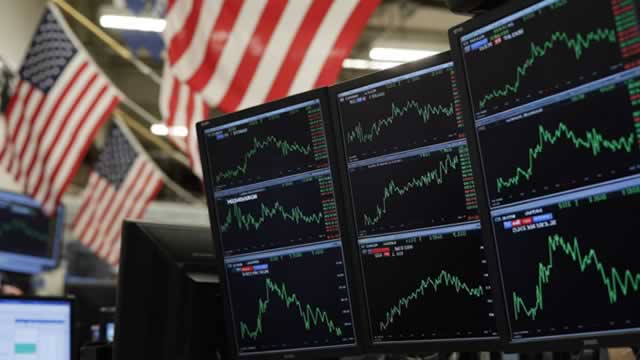
Katie Stockton discusses a persistent consolidation phase for the S&P 500 and significant downside risk for the Nasdaq 100, suggesting more corrective action for equities. Conversely, she sees signs of long-term downside exhaustion and improving short-term momentum for Bitcoin, coinciding with the launch of her new tactical Bitcoin ETF (BNAV). Crude oil is also showing signs of a potential higher low.
- S&P 500 has broken below its 50-day moving average, with weekly MACD sell signals suggesting intermediate-term corrective price action.
- Nasdaq 100 is already in correction territory, with further downside risk (5-6% below current levels) and it's too early to buy the AI trade dip.
- Bitcoin shows signs of long-term downside exhaustion and improving short-to-intermediate term momentum, with a new tactical Bitcoin ETF (BNAV) launched today.
- Crude oil is expected to make a higher low above $67, with long-term indicators suggesting a different, more constructive environment.
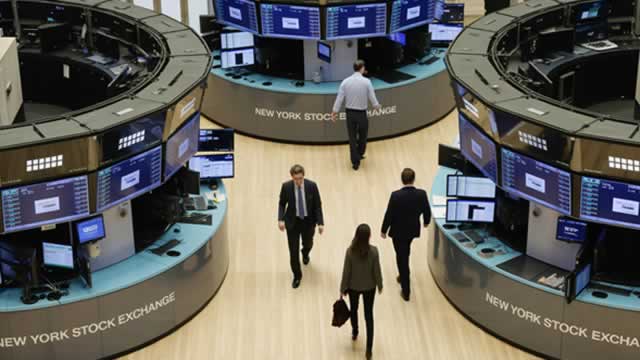
Lo Toney discusses expectations for upcoming Big Tech earnings, noting a shift in investor focus from just revenue beats to understanding capital commitment for AI growth and free cash flow. He suggests the recent market rotation out of chips due to AI fears is short-term, but highlights increased capital spending by companies like Alphabet, indicating a changing 'earnings test' for tech giants.
- Investors are increasingly scrutinizing capital expenditure and capital structure (e.g., debt issuance, leases) for AI investments, moving beyond just revenue and EPS beats.
- Alphabet's strong cloud revenue and backlog are positive, but its increased capital spending of $200 billion for AI infrastructure raises questions about efficiency and future free cash flow.
- The current market rotation out of chip stocks, driven by AI-related fears, is likely short-term, but the overall investment landscape for tech is becoming more selective and expensive for capital.
- Private market investors also share skepticism regarding the high valuations and spending in AI, though their portfolio re-pricings are not as instantaneous as public markets.