Video Analysis

Aditya Bhave of BofA Securities argues that the Federal Reserve could surprise markets with an October rate hike, despite current low market expectations. He highlights the risks of the Fed not acting on inflation, including losing credibility and allowing inflation expectations to rise, which could necessitate more aggressive hikes later.
- The market briefly priced in a 60% chance of an October hike after problematic CPI data, but then reverted to low odds.
- Bhave questions if the Fed is serious about not guiding markets, suggesting inaction on a hike could undermine their credibility.
- He warns that delaying a second hike could lead to core PCE inflation returning to 3.4% by year-end and notes rising survey-based inflation expectations.
- Wage inflation is currently the Fed's 'solace,' but if it accelerates, the Fed might need to hike rates to 5%.

Stocks opened mostly higher, rebounding from the previous week's losses, as concerns over AI company growth abated. AI investments are expected to continue, benefiting major tech and chipmaker companies, with Intel seeing an upgrade and the iShares Semiconductor ETF showing strong gains.
- S&P 500 and Nasdaq opened higher, rebounding from their worst week since late June, as concerns over AI companies abated.
- AI investments are expected to continue, benefiting major tech companies like Microsoft, Amazon, and Google, and chipmakers such as Nvidia, Broadcom, and Micron.
- Intel shares rose 4.5% after JPMorgan upgraded the stock to 'Neutral' from 'Underweight'.
- The iShares Semiconductor ETF is up nearly 4% after nine consecutive down sessions.

The video highlights a rebound in AI and tech stocks, driven by a Goldman Sachs upgrade for Coreweave and broader market optimism. Macroeconomic factors like crude oil and yields are showing signs of cooling, while a busy week of mega-cap tech earnings and housing data is anticipated. The Fed's October rate hike probability has decreased, partly due to comments on AI's long-term disinflationary potential.
- AI and tech stocks are rebounding following last week's sell-off, with Coreweave up 6% pre-market after a Goldman Sachs upgrade to 'buy'.
- Crude oil prices are lower, and 10-year Treasury yields have decreased, easing some macroeconomic pressures.
- A significant week for mega-cap tech earnings is ahead, including Tesla, Meta, and Netflix, which will influence market direction.
- Housing data releases and Fed rate hike probabilities (October at 14.5%) are also key economic watchpoints, with AI's long-term disinflationary impact noted.

Experts discuss the AI trade amidst a recent sell-off, with UBS advisor Xi Qiao remaining positive on US tech assets, viewing the dip as a buying opportunity for quality names. Bloomberg analysts Sunny Bangia and Anthony Stephens emphasize the market's demand for clear ROI from AI spending by hyperscalers, highlighting upcoming earnings as crucial for validating the long-term structural growth of AI.
- UBS's Xi Qiao maintains a positive long-term outlook on AI and tech as a 'generation theme,' suggesting the current sell-off is an opportunity to invest in quality names with strong balance sheets.
- Bloomberg's Sunny Bangia notes the market's desire to see tangible returns from AI spending by major players like Microsoft, Amazon, and Meta, rather than just increased investment.
- Anthony Stephens highlights the critical debate between a short-term profit boom and long-term technological targets, with hyperscaler guidance on future AI investment ROI being pivotal for market sentiment.

Peter Tchir expresses significant concern over the current state of credit markets, highlighting 'faux liquidity' and the rapid widening of bond yields. He warns of a potential cascade sell-off, starting from less liquid assets like emerging markets and high-yield bonds, which could drag down broader corporate credit. Tchir also questions the sustainability of the AI debt boom, citing risks related to funding, actual AI effectiveness, and the longevity of first-mover advantage.
- Concerns over 'faux liquidity' in credit markets, citing rapid widening of Treasury and European bond yields.
- Warns of a potential cascade sell-off, where a 'trickle of selling' in less liquid assets (like EM or specific compute bonds) could become a 'bucket getting dumped' and drag down broader markets.
- Identifies three key risks for the AI debt boom: funding availability, actual effectiveness/cost of AI implementation, and the sustainability of first-mover advantage.
The discussion centers on the AI market's volatility, exemplified by CoreWeave's stock wipeout, and the challenges facing Tesla. While AI is seen as a transformational technology, investors are cautioned about identifying long-term winners amidst potential misallocations. Tesla's valuation and market share are under pressure from intensifying competition and CEO Elon Musk's actions.
- CoreWeave's stock drop highlights investor uncertainty and the divide between AI fear and greed, with concerns about market misallocation in new technologies.
- Nvidia CEO Jensen Huang remains confident in AI's long-term transformation, but the market faces the challenge of discerning which companies will be sustainable winners, akin to past tech booms.
- Tesla's market position is threatened by increased competition from companies like BYD, which offers superior range and lower prices, coupled with Elon Musk's controversial public behavior.

Ed Yardeni discusses the bond market's role in regulating the AI ecosystem, viewing it as a positive development that prevents an AI bubble by ensuring efficient capital allocation. He highlights strong earnings momentum (FEMO) across companies, not just AI, and maintains a positive market outlook despite potential Fed rate hikes and higher oil prices.
- The bond market's increased attention to credit quality for AI-related companies is seen as a positive, fostering more efficient capital allocation and potentially preventing an AI bubble.
- Yardeni emphasizes 'fabulous earnings momentum' (FEMO) as a key driver for the market, with analysts projecting strong S&P 500 earnings growth for next year.
- Despite concerns about 'higher for longer' oil prices and potential Fed rate hikes impacting valuation multiples, Yardeni remains optimistic about the market's trajectory, setting an S&P 500 target of 8400 by mid-next year.
Matt Orton of Raymond James believes the market is 'massively overreacting' to concerns about AI peak earnings and funding. He asserts that hyperscalers have healthy finances to fund AI infrastructure, and strong earnings will eventually provide an opportunity for investors to re-enter these trades, despite recent technical pressures.
- Market is 'massively overreacting' to AI peak earnings concerns, as peak earnings continue to be pushed back.
- Hyperscalers (major tech firms) are still able to fund themselves, with 'incredibly healthy' interest coverage ratios.
- Anticipates strong earnings to emerge, creating an opportunity for investors to add back into high-quality AI-related trades.
- Identifies Meta, Alphabet, and Microsoft as key earnings reports to watch for insights into AI spending, adoption, and free cash flow.
The discussion centers on the potential erosion of the U.S. dollar's global role and the emergence of a multipolar international monetary system, with increased influence from the Chinese renminbi. While a gradual diversification could be beneficial, an abrupt loss of confidence in the dollar is warned to be disruptive. Governments are urged to address structural issues to ensure stability.
- The U.S. dollar's global role is eroding, and this process could accelerate, leading to a multipolar monetary system.
- Diversification away from the dollar is positive if gradual, but an abrupt shift could be disruptive for economies and investors.
- Governments (US, Europe, China) need to implement reforms to enhance trust, liquidity, and economic balance to manage this transition.

17 states are challenging major credit rating agencies (S&P Global, Moody's, Fitch) over their 'woke' ESG policies. They argue these metrics use 'false predictions' that unfairly penalize traditional energy companies and states, leading to increased borrowing costs and reduced investment, ultimately diverting funds from essential state services and pensions.
- 17 states are challenging S&P Global, Moody's, and Fitch Ratings over their ESG policies.
- States argue ESG metrics are based on 'false and outdated climate predictions' that harm state credit ratings and increase borrowing costs.
- These policies allegedly penalize oil, gas, and coal companies, impacting state pension funds and diverting money from roads, schools, and pensions.
- Concerns are raised that American companies are downgraded while state-owned Chinese companies receive A+ ratings despite 'worse ESG metrics'.
- States have pressed the SEC to scrutinize these credit rating practices, hoping for regulatory intervention.

Jed Ellerbroek discusses the Q3 earnings season, noting solid bank results despite rising deposit costs. For Big Tech, strong performance is observed, but investor skepticism remains high due to aggressive data center capital expenditures, creating a high bar for future earnings. He also highlights Dynatrace and Medpace as promising stock picks.
- Bank earnings were generally good, with rising deposit costs partially offset by good loan growth and credit quality.
- Big Tech companies are showing strong revenue and profit growth but face investor discomfort over aggressive data center CapEx spending.
- Jed Ellerbroek recommends Dynatrace (DT) and Medpace (MEDP) as promising stocks, citing strong fundamentals and growth potential.

PIMCO's Tony Crescenzi discusses the bond market's increasing discipline on borrowers, citing rising US Treasury interest costs and CoreWeave's junk bonds. He suggests that historically, divided government post-midterm elections tends to be bullish for markets, as it limits legislative interference, and sees the AI investment cycle as being in its very early stages.
- US Treasury net interest costs have reached 3.2% of GDP, a level that historically has forced presidents to take unpopular fiscal actions, potentially reaching 4% by decade-end.
- The bond market is imposing greater discipline on borrowers, from companies with uncertain cash flows (like CoreWeave's 15% junk bonds) to high-rated nations with high budget deficits (like France).
- Historically, investors favor divided government after midterm elections, leading to stock market rallies in the subsequent year, as it allows for less government intervention and more free investment.

The discussion centers on the alleged restriction of SpaceX's Starshield and Starlink services in Ukraine, with Ukrainian President Zelenskyy suggesting it was deliberate. Senator Marco Rubio denies US involvement, stating Starshield is a military product not yet available to Ukraine, while Starlink is commercial. The segment also touches on growing bipartisan backlash against former President Trump's perceived pro-Russia stance ahead of the US midterm elections.
- Ukraine reportedly uses Starshield and Starlink for critical military operations, including air defenses and supply lines.
- Rubio denies US government involvement in slowing Starlink service and clarifies Starshield is a military product not yet available to Ukraine.
- The political dispute occurs weeks before US midterm elections, with Republicans facing pressure over foreign policy stances, particularly concerning Russia and Ukraine.

The discussion focuses on inflation's impact on Wall Street, the Federal Reserve's cautious stance on interest rates, and key market movers. While chip stocks faced a significant sell-off due to rate hike concerns, bonds and the healthcare sector are highlighted as defensive plays. Upcoming third-quarter earnings, particularly from AI-related companies like Meta, are identified as the next major market catalyst.
- Inflation is back in the driver's seat, fueling expectations for higher interest rates, despite the Fed's reluctance to signal future moves.
- Chip stocks experienced a trillion-dollar wipeout due to concerns that higher borrowing costs will threaten AI build-out.
- Bonds and the healthcare sector are identified as 'hidden movers,' offering defensive appeal and outperforming the S&P year-to-date.
- Third-quarter earnings reports, especially from Meta, are seen as the 'coming catalyst' for market direction, with AI spending being a key focus.

The discussion centers on the AI market's current state, using CoreWeave's stock drop as an example of investor fear and greed. Barry Ritholtz highlights AI as a transformative technology but cautions about market misallocation and the difficulty of identifying long-term winners. He also critiques Tesla's valuation and market position amid intensifying competition and management issues.
- CoreWeave's stock wipeout reflects broader market nervousness and misallocation in the AI sector, similar to past tech bubbles.
- AI is a transformative technology, but investors face challenges in picking winners and losers, with many companies likely to fail despite the technology's potential.
- Tesla's valuation is seen as 'out of whack' given increased competition from companies like BYD and Elon Musk's actions alienating core customers, leading to faltering sales.

The video highlights how the slowdown in electric vehicle (EV) demand is prompting battery manufacturers to pivot towards producing larger batteries for grid-scale energy storage systems (BESS). This shift is supported by US government tax incentives and policies aimed at boosting domestic manufacturing and reducing reliance on foreign supply chains, particularly from China. While the EV market faces headwinds, the BESS sector is experiencing significant growth, driven by the need for reliable renewable energy storage.
- EV battery manufacturers are pivoting to produce larger batteries for grid-scale energy storage systems (BESS) due to weakening EV demand.
- US government tax incentives, including those from the Inflation Reduction Act and executive orders, are crucial for driving domestic BESS manufacturing and reducing reliance on foreign components.
- Despite policy support, challenges remain in scaling up the entire domestic battery supply chain, especially for upstream components, which are currently more expensive to produce in the US compared to China.
- Companies like LG Energy Solution and Qcells are expanding US production, leveraging existing manufacturing processes for both EV and BESS applications.
The discussion centers on recent inflation data, including rising import and export prices, and the Federal Reserve's monetary policy. Former Fed Chair Kevin Warsh's rejection of 'forward guidance' is highlighted as a positive shift. Both analysts acknowledge inflation but emphasize the economy's resilience and the short-term nature of current price increases, primarily due to oil shocks, suggesting manageability.
- Kevin Warsh signals a new Fed approach by rejecting 'forward guidance' for rate decisions, which Kudlow views positively.
- Import and export prices (excluding fuel) are rising, with import prices at 6.0% in September, showing a pattern similar to CPI/PPI.
- Kudlow points to strong economic growth (Q3 GDP forecast at ~3.6%) and robust consumer spending, indicating the economy's resilience.
- Antoni attributes current inflation to a 'short-term oil shock' and global energy prices, noting some deflation in sectors like dairy and prescription drugs.
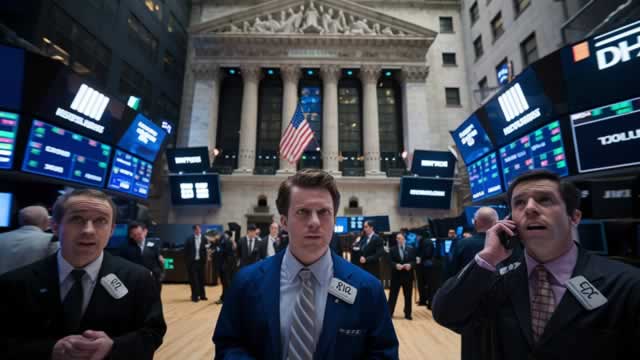
Richard Bernstein of Janus Henderson Investors discusses the market sell-off, attributing it to the Fed's tightening cycle and removal of liquidity. He views the resulting market broadening, with capital shifting from speculative tech to broader sectors like small and mid-caps, as a healthy re-calibration for the overall economy, despite short-term volatility and inflation concerns.
- The Fed's tightening cycle is 'taking the punch bowl away from the party', impacting speculative tech stocks.
- Market broadening, where capital shifts to small and mid-caps, is considered 'very healthy' for the economy as it lowers the cost of capital for a wider range of businesses.
- Inflation remains a significant concern, with core import prices rising faster than core CPI, indicating imported inflation.
- Current market volatility is seen as a precursor to a change in market leadership, moving away from recent tech dominance.
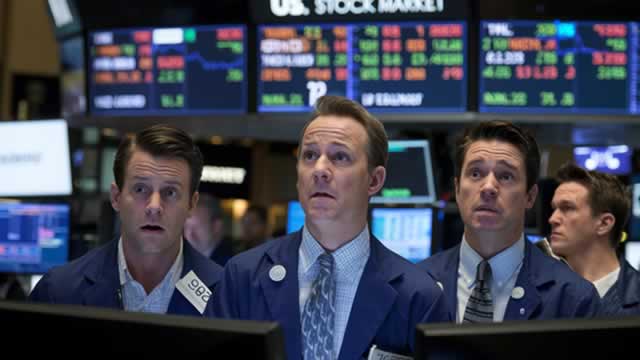
Ben Emons argues that the market is underpricing the probability of further Fed rate hikes, suggesting the October meeting is 'more live' and one or two more hikes are likely needed due to persistent inflation. He believes the Fed is waiting for more real-time data for December's decision, not midterms. He also acknowledges the risk of 'stallflation' if economic growth slows while inflation remains high.
- Market probability for an October Fed rate hike (17.2%) is too low; the meeting is 'more live'.
- Fed will likely need to implement one or two more rate hikes due to persistent inflationary pressures.
- Midterms are not a direct factor for the Fed; they are waiting for more real-time data for December's decision.
- Acknowledges the risk of 'stallflation' (slowing economy with high inflation) if current trends continue.
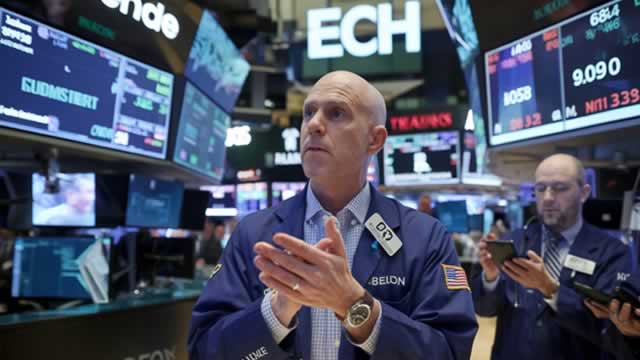
The week saw a significant rotation out of the tech sector, leading to losses for the S&P 500 and Nasdaq, while the Dow closed slightly higher. Hot inflation data came in, but markets are now pricing in a Fed rate hold. Consumer staples outperformed, and speculation around a potential Tesla-SpaceX merger is rising.
- The tech sector experienced a rough week, with chipmakers (SMH, Micron, AMD, SanDisk/WDC) losing over 10% due to competition fears from China, marking their worst weekly performance since July.
- Inflation data, including CPI, PPI, and import prices, came in hotter than expected, with capital goods prices seeing their highest year-over-year increase since 1987.
- Despite inflation, market traders are increasingly pricing in a Federal Reserve rate hold for the upcoming meeting, with odds for an increase falling below 20%.
- Consumer staples, including big retailers like Walmart, outperformed this week as investors rotated out of riskier tech assets into more reliable safe havens.
- Speculation about a Tesla-SpaceX merger is growing, with prediction market odds rising to 58% for a deal before May 2027, fueled by the redesigned Roadster's SpaceX technology and analyst discussions.