Video Analysis
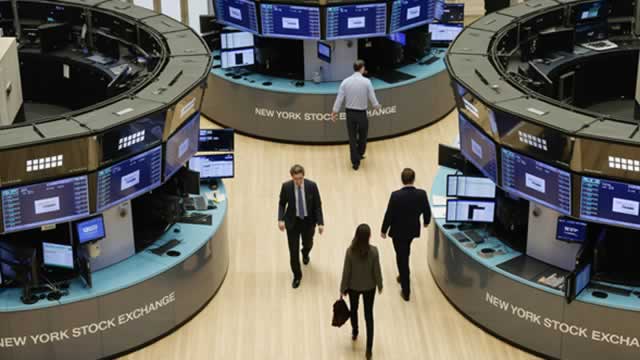
Frances Newton warns that the speed of rising Treasury yields, not just the level, poses a significant 'shock to the system' given record debt. She highlights a market divergence where the AI trade thrives on liquidity while small caps lag, and predicts a breaking point when high yields impact earnings, forcing a Fed response.
- The 'breaking point' for yields is driven by the *rate of change*, not just the absolute level, due to record debt in the system.
- A divergence exists between the AI trade (buoyed by liquidity) and other market segments like the Russell 2000 (down 9%), with the S&P 500 making new highs while the Nasdaq lags.
- Rising yields will eventually affect corporate earnings and valuations, making the current AI trade unsustainable, with the Fed likely responding with liquidity facilities.
- Advises caution in yield-sensitive sectors like utilities and suggests property and casualty insurance equities as an alternative to traditional bonds, which are no longer a quintessential hedge.

The discussion highlights a boom in prediction markets like Kalshi and Polymarket, driven by retail bettors placing high-risk 'longshot' wagers. Despite losing 98% of the time, these bets are popular due to their entertainment value and low cost, raising concerns about potential gambling problems and mispriced contracts.
- Prediction markets (Kalshi, Polymarket) are experiencing rapid growth, fueled by longshot bets.
- Bettors on these platforms lose 98% of the time on longshots, with aggregate losses of 15% on Kalshi and 27% on Polymarket since early 2025.
- The appeal of longshot bets stems from entertainment, a 'dopamine rush,' and low contract prices (e.g., 3-cent contracts), despite the high likelihood of losing.
- Addiction experts warn that longshot bets are particularly problematic for individuals with gambling issues, as they encourage chasing losses and overpaying for unlikely outcomes.
- These platforms are increasingly sports and crypto-focused, attracting a young, predominantly male audience who may prioritize gamified experiences over traditional investment principles.

The discussion centers on President Trump's unusual announcement to pause attacks on Iran until after the midterms, and the broader implications of escalating tensions in the Middle East. Jen Gavito highlights Iran's continued attacks on oil tankers, the economic unsustainability of elevated transit costs, and the potential for further military conflict, emphasizing that diplomacy is the ultimate solution.
- President Trump's public declaration to pause attacks on Iran until after the midterms is an 'unusual' move.
- Iran continues to escalate attacks on oil tankers in the Strait of Hormuz, disrupting traffic and increasing costs.
- Iran is likely using this period to rebuild capabilities and improve negotiating leverage, with diplomacy being the long-term resolution.
- The US would bear consequences for any Israeli strikes against Iran, and the ongoing Houthi attacks in Saudi Arabia are problematic, contributing to economically unsustainable oil transit costs.
The crypto market, led by Bitcoin and Ethereum, experienced a significant pullback this week, driven by a broader 'risk-off' sentiment in global markets and specific news from the TOKEN2049 conference. While regulatory clarity is emerging, its non-legislative nature and persistent macroeconomic headwinds continue to influence crypto trends.
- Bitcoin and Ethereum saw notable declines this week, with Bitcoin down around 3% and Ethereum down around 6%, coinciding with a general risk-off environment.
- The TOKEN2049 conference in Singapore, a massive industry gathering, featured key players from both traditional finance and crypto-native firms.
- A significant takeaway from TOKEN2049 was Tom Lee's confirmation that Bitmain will cease accumulating Ethereum once it reaches 5% of outstanding supply, potentially removing a key source of buying support.
- Emerging regulatory rules from the SEC and CFTC are seen as helpful for clarity, but their non-legislative status means they could be subject to change.
- Despite current selling, positive seasonal trends for Bitcoin (October being a strong month) and technical signals offer some 'buy the dip' sentiment, counteracting negative macro variables.

Kelsey Berro and Brij Khurana discuss the drivers of rising global bond yields, noting a shift from inflation concerns to strong nominal growth. While US yields have significantly underperformed, signs of stabilization are emerging in Europe. Both analysts identify areas of value within fixed income, despite ongoing fiscal supply and high oil prices.
- US bond yields have significantly underperformed global peers recently, with some stabilization seen in European core markets.
- Higher yields are primarily driven by strong nominal growth, fueled by fiscal spending, AI capital expenditure, and robust consumer spending.
- Value is being created in fixed income, with specific attraction to agency mortgage-backed securities due to their yields and government backing.

The discussion centers on the Federal Reserve's September meeting minutes, indicating broad support for rate hikes and the likelihood of further increases. Global bond yields are pushing higher due to factors like the AI CapEx cycle, geopolitical tensions, and central bank policy shifts. While tech stocks show resilience, other sectors are struggling, pointing to a narrow market rally and underlying economic pressures.
- Fed minutes confirm unanimous support for the September rate hike, with several participants foreseeing another hike in 2026 and market pricing in high odds for an October hike.
- Global 10-year bond yields are rising across the UK, US, France, Germany, and Japan, driven by inflation, geopolitical risks (e.g., potential US strikes on Iran), and central bank policy tightening.
- Despite tech sector gains, other major sectors like Communications, Healthcare, Energy, Industrials, Consumer Discretionary, and Financials are experiencing declines, suggesting a lack of broad market strength.

Brian Sozzi highlights that while some tech giants are reaching new highs, many well-known S&P 500 companies like PG&E, PayPal, Ford, Nike, and Las Vegas Sands are significantly underperforming. These 'big caps' need over 200% gains to reclaim their all-time highs, with Sozzi expressing skepticism for Nike but cautious optimism for PayPal's turnaround efforts under new leadership.
- Many S&P 500 household names are significantly down from their all-time highs, needing over 200% gains to recover.
- Nike's stock decline is seen as warranted, with reclaiming all-time highs considered a 'pipe dream' due to ongoing challenges.
- PayPal faces significant competition in the Fintech space, but new CEO Enrique Lores' strategic decisions and potential cost-cutting offer some hope for future recovery.
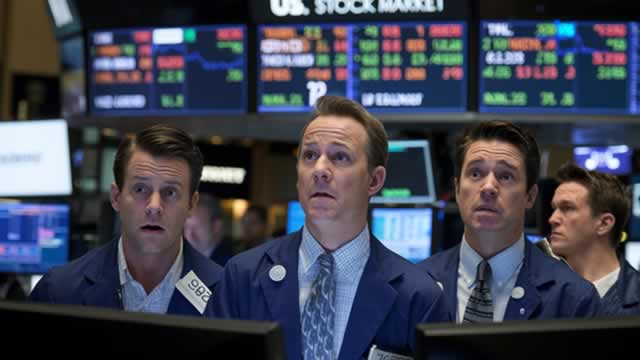
The video discusses the Trump administration's suspension of an immigration program for several tech firms, including Microsoft, citing abuse. Despite record profits for Samsung and surging sales for TSMC, investors remain cautious about the AI investment boom. Additionally, new AI ventures like Isomorphic Labs and Hone are seeking significant funding, while investors grapple with valuing the risks associated with AI development.
- US suspends permanent labor certification (PERM) immigration program for multiple tech firms, including Microsoft, Adobe, Cognizant, Infosys, Tata, Wipro, HCL, and Capgemini, citing abuse.
- Samsung's Q3 operating profit jumped ninefold, and TSMC's sales surged 51%, but investors remain skeptical about the sustained power of the AI investment boom.
- Nvidia commits $1 billion to advance US science over the next five years, while Alphabet's Isomorphic Labs seeks over $40 billion in funding for AI-powered drug discovery.
- Wall Street analysts suggest betting on chipmakers and infrastructure providers (Micron, Intel, AMD) for AI agents, rather than the AI agents themselves, due to market uncertainty.
- Hone, a startup aiming to build AI that can run business functions, launched with $60 million in seed funding, and Microsoft announced a new laptop with Nvidia chips that outperforms MacBooks in AI tasks.
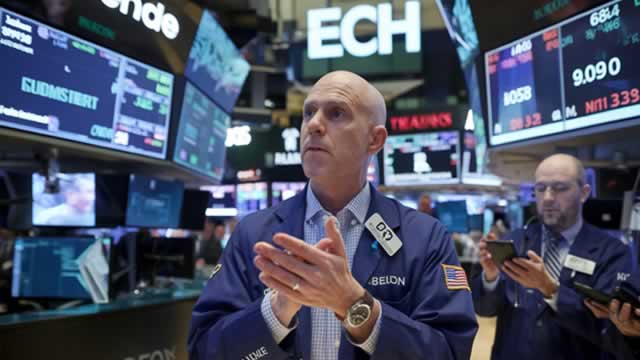
Goldman Sachs' Matt Weir believes the tech bull market is not over, despite recent concentrated gains in large tech stocks. He expects hyperscaler capital expenditure growth to decelerate from an unsustainable peak but remain robust, emphasizing that strong earnings growth will continue to drive the market, not macro events.
- Concentrated gains in 'Magnificent 7' tech stocks do not signal a market top, as year-to-date performance is comparable to the broader S&P 500.
- Hyperscaler CapEx growth, a key driver, peaked at 116% YoY in Q3 but is expected to decelerate to a still-strong 22% by Q4 2027.
- Earnings, not macroeconomic events or elections, are the ultimate determinant of market direction, and the earnings growth outlook for tech remains positive.

The CNBC Investment Committee discusses the ongoing market rally amidst rising interest rate risks, highlighting Fed Governor Waller's hawkish comments and the impact on various sectors. While some express concern about market breadth and interest-rate sensitive areas, others remain optimistic due to economic growth, strong earnings from large-cap tech, and attractive bond yields, emphasizing the need for selective portfolio positioning.
- Fed's Waller indicates more rate hikes are needed, impacting short-end Treasury yields and interest-rate sensitive sectors.
- Market breadth is narrowing, with a significant portion of S&P 500 stocks experiencing drawdowns, while a few large-cap tech companies (Magnificent 7) drive overall index performance.
- Analysts suggest investors need to be highly selective, focusing on companies with strong balance sheets and free cash flow, and considering attractive yields in bonds despite rising rates.

Global markets are facing significant headwinds from inflation worries, rising debt, and geopolitical fragmentation. Asian stocks, particularly chipmakers and Singaporean banks, are under pressure, while oil prices surge due to Middle East tensions. Experts warn of a 'dangerous mix' reshaping global returns, emphasizing the need for diversification and highlighting opportunities in private markets and long-term tech trends like tokenization.
- Asian stocks, including Samsung Electronics and chip shares, slipped due to inflation worries and missed earnings estimates.
- Oil prices (Brent Crude topping $102) rose on reports of potential US military strike options on Iran and a storm hitting US crude output.
- Tikehau Capital warns that market concentration, rising debt, and geopolitical fragmentation are reshaping global returns, advocating for private markets for diversification.
- IMF chief Kristalina Georgieva cautions governments against over-reliance on spending, noting that high borrowing costs and rising debt are global threats, with developed markets showing fiscal vulnerabilities.
- Singaporean bank stocks extended their sell-off, dropping over 4% for some, reflecting concerns over surging bond yields and their impact on earnings.
The discussion highlights the market's resilience despite headwinds like rising oil prices, yields, and the dollar, largely driven by a narrow rally in mega-cap tech. Concerns are raised about the weakness in small-cap stocks and the high bar for upcoming Q3 earnings, especially for tech companies, as the AI story shifts from demand to funding, impacting cash flow and debt.
- Market resilience is narrow, primarily driven by mega-cap tech stocks (Mag 7), while small caps (Russell 2000) are nearing correction territory.
- High Q3 earnings expectations (29.5% YoY for S&P 500) create a challenging environment, with strong preliminary results from chip companies like Samsung and TSM not always leading to positive market reactions.
- The AI narrative is evolving from pure demand to the funding required for development, with debt financing impacting cash flow and contributing to higher Treasury and corporate finance yields.
- Despite market volatility compressing and hedging becoming cheaper, investors are not actively seeking protection due to the absence of significant market sell-offs, suggesting underlying tech support.

The CNBC segment reports on two controversies involving OpenAI: fired researchers who wrote a letter to the board about AI safety risks, alleging their termination was retaliatory, and an NYU math professor accusing OpenAI of stealing his findings. These incidents raise significant questions about OpenAI's internal governance, ethical practices, and the trustworthiness of its AI products for enterprise use.
- Fired OpenAI researchers wrote a letter to the board, obtained by The Wall Street Journal, expressing concerns about AI safety risks and suggesting their firings could discourage others from speaking up.
- OpenAI denies the firings were retaliatory, stating they were due to 'improperly sharing confidential information with an outside safety firm' and supports broader safety concerns.
- An NYU mathematics professor, Tristan Buckmaster, accused OpenAI of stealing his findings from private notes to solve a Millennium math problem, which OpenAI categorically denies, stating it's impossible for his prompts to have influenced their system.
US initial jobless claims fell to 197,000 for the week ending October 3, below the estimated 200,000, marking the fourth consecutive week below 200,000. Continuing claims rose slightly to 1.716 million. The overall assessment points to 'remarkable stability' in the labor market, with businesses maintaining staff but showing caution in new hiring due to economic uncertainty.
- US initial jobless claims decreased by 2,000 to 197,000, lower than the 200,000 estimate.
- The four-week moving average for initial claims is 198,000, down from the previous week's revised 200,500.
- Continuing claims rose to 1.716 million, slightly above the 1.700 million estimate.
- The labor market is characterized by 'remarkable stability,' with businesses cautious about hiring due to lack of clarity on future economic conditions.

Nela Richardson, ADP Chief Economist, suggests the US labor market is more resilient and 'hotter' than commonly perceived, particularly in manufacturing due to increased overtime hours. While small firms are currently stable, she notes the economy's capital investment is surprisingly rate-insensitive, contrasting with a lack of overtime in consumer-oriented sectors. This robust labor market context implies continued inflationary pressures, influencing future Fed policy decisions.
- The US labor market exhibits stability, with healthcare being a reliable indicator and jobless claims remaining consistent.
- Richardson believes the labor market is 'hotter' than generally acknowledged, with ADP tracking approximately 95,000 jobs per month and significant increases in overtime hours within the manufacturing sector.
- The economy's capital investment is showing resilience and rate-insensitivity, suggesting a potential 'investment boom' despite higher interest rates, though consumer-oriented sectors are not seeing similar overtime activity.

The video discusses an easing in global bond yields following the latest Fed minutes, shifting rate hike expectations to December. However, a market strategist warns of an impending 2-6 month 'Wile E. Coyote' sell-off in risk assets (10-20% on S&P) due to tightening liquidity. French political instability and EU-China trade tensions also contribute to a cautious outlook.
- Fed minutes indicate reduced odds for an October rate hike, with expectations shifting to December, leading to a temporary ease in global government bond yields.
- A market strategist predicts a significant 10-20% sell-off in risk assets over the next 2-6 months, citing tightening global liquidity and a 'Wile E. Coyote moment' for equities.
- French political unrest over student conditions and the public deficit, alongside EU-China trade tensions (especially regarding hybrid car imports), add to market uncertainty.
- US tech stocks like Meta and Nvidia saw pullbacks, contributing to a reversal in recent record highs on the S&P 500 and Nasdaq.

Edward Yardeni discusses the global rise in bond yields, attributing it to the unwinding of the Yen carry trade and the strong US economy. He warns that US bond yields are heading towards a 'danger zone' due to robust economic activity and large fiscal deficits, which could lead to financial system cracks if yields rise too quickly. Yardeni suggests that US fiscal policy, not bond vigilantes, is the primary driver of the current yield increases.
- Global bond yields are rising due to the unwinding of the Yen carry trade as the Bank of Japan raises interest rates.
- US bond yields are increasing due to a booming economy, strong consumer and capital spending, and high demand for credit from AI hyper-scalers.
- The US fiscal deficit is a significant concern, and if 10-year yields quickly reach 6% or higher, it could create cracks in the financial system, potentially requiring Treasury intervention.
- France's bond yields are also rising, showing signs of a potential debt crisis similar to Greece in 2010.
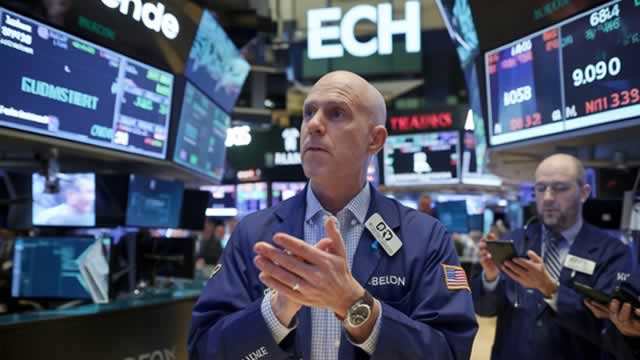
Oil prices are rallying due to reports that the US is considering military strikes against Iran before the midterms, as detailed by The Atlantic. This potential action is seen by some as a way for the Trump administration to demonstrate strength amid stalled diplomacy, despite public sentiment largely opposing war. Escalating tensions in the Strait of Hormuz and Saudi Arabia's adaptation of oil transport methods underscore the growing geopolitical risks.
- Brent Crude and NY Crude prices are up over 4% intraday on fears of US strikes against Iran.
- The Atlantic reported that Trump is considering a plan to strike Iran before the midterms, with advocates seeing it as a way to demonstrate strength.
- An NBC News poll indicated 57% of voters are less likely to support a candidate who backs war.
- There has been an uptick in attacks in the Strait of Hormuz, and Saudi Arabia is formalizing a 'shuttle system' for oil transport, signaling preparation for sustained tensions.

Michele Della Vigna from Goldman Sachs discusses the escalating costs and supply challenges in global energy markets, particularly for Europe ahead of winter. Geopolitical tensions are exacerbating logistics and production issues in oil, gas, and refined products, leading to higher prices and concerns about Europe's preparedness for potential cold weather.
- Oil faces logistics problems, with rerouting around Africa adding 30 days and $25-30 to transportation costs, contributing to inflation in the energy complex.
- Europe is entering winter with 20% less natural gas inventories and 20% less supply, with risks to prices skewed to the upside.
- Refining capacity is tight, especially for middle distillates, due to Russian capacity being offline, which could lead to substitution with natural gas in a cold winter.
- China is strategically managing its energy needs by substituting imported hydrocarbons, boosting EV sales, and utilizing existing inventories to stabilize its market.

Principal Asset Management's Chief Global Strategist, Seema Shah, discusses the maturing AI capex cycle, highlighting the need for monetization by 2027 to avoid correction risks. She notes a bifurcated US economy with resilient high-end consumers but stressed lower-income households. Despite strong Q3 earnings expectations, margin pressures and higher yields constrain valuations, with further Fed hikes anticipated.
- The AI capex cycle is maturing; monetization by 2027 is crucial, with a risk of market correction if earnings expectations are not met.
- The US economy shows bifurcation: high-end consumers are robust, but lower-income households face significant pressure from rising borrowing costs and inflation.
- One further Fed hike is expected in December and another in 2027, but the overall hiking cycle is historically shallow given current growth.
- Q3 earnings are expected to be strong, but margin pressures and the necessity for companies to meet high expectations create vulnerability for the market.