Video Analysis

The video discusses Iran's escalating attacks on vessels in the Strait of Hormuz, a critical energy chokepoint, which is driving oil prices higher. Despite increasing oil flows, the persistent geopolitical risks and rising shipping/insurance costs pose a significant threat of inflationary pressure to the global economy.
- Iran has intensified attacks on vessels in the Strait of Hormuz, raising concerns about oil supply risks.
- Brent Crude and NY Crude prices are advancing, with Brent above $101 and NY Crude above $90, reflecting heightened risk.
- The ongoing attacks, despite recovering oil flows, increase shipping costs and insurance premiums, contributing to global inflationary pressures.

The Reserve Bank of India (RBI) unanimously voted to increase the policy repo rate by 25 basis points to 5.5% and adopted a stance of 'calibrated tightening'. Governor Sanjay Malhotra stated that rate cuts are off the table in the near term, with future policy contingent on growth, inflation developments, and underlying price pressures. CPI inflation for the current year is projected at 5.2%, with Q1 next year at 5.6%.
- RBI hiked the policy repo rate by 25 basis points to 5.5%.
- The Monetary Policy Committee (MPC) adopted a stance of 'calibrated tightening'.
- Rate cuts are 'off the table' in the near term, with future policy dependent on growth and inflation outlook.
- CPI inflation is projected at 5.2% for the current year, and 5.6% for Q1 next year.

Hunter Point Capital CEO Avi Kalichstein discusses the evolving landscape of private markets, highlighting that strong alternative asset managers are thriving despite retail redemption pressures in private credit. He notes a thawing in private equity exits and sees significant opportunities in specialized strategies and the democratization of finance, while acknowledging potential risks in AI infrastructure over-investment.
- Strong alternative asset managers are consolidating power and finding growth, focusing on specialized expertise rather than broad asset classes.
- Private credit is navigating retail redemption pressures, but underlying businesses remain robust, and higher interest rates can be beneficial for floating-rate credit.
- Private equity is showing signs of a 'thaw' in exits, with institutional demand remaining strong despite a past 'DPI drought'.
- AI presents both opportunities for efficiency and competitive threats, necessitating careful discernment in investment, particularly in areas like data centers.
- The long-term trend of democratizing alternative investments to individual investors is ongoing, though the process is acknowledged to be 'bumpy'.

The video discusses Reflection AI, a $25 billion New York-based startup aiming to disrupt the AI landscape with open-source models. Founded by ex-Google DeepMind researchers, it challenges closed-source giants like Anthropic and OpenAI by offering private, customizable, and potentially cheaper AI solutions. The speaker emphasizes the strategic importance of Western open-source AI, especially given China's dominance in the sector, and Nvidia's significant investment in Reflection AI to expand the GPU market and reduce concentration risk.
- Reflection AI, valued at $25B, is set to release its first open-source AI model, offering a Western alternative to Chinese models and closed-source giants.
- Open-source models provide privacy, customization, and lower costs, contrasting with closed-source models' premium pricing, access limits, and data retention concerns.
- The US has fallen behind China in open-source AI, with 58-80% of US AI startups using Chinese models, raising security and auditability concerns.
- Nvidia (NVDA) has invested $2B in Reflection AI, aiming to expand the overall AI compute market and diversify its customer base beyond a few large players.
- Reflection AI's 'AI factory' model allows companies to train private, customized AI systems on their proprietary data without leakage, addressing a key enterprise concern.

The S&P 500 hit a record high, driven by tech, but analysts express significant concerns about narrow market breadth, rising bond yields, and escalating geopolitical risks. Discussions highlight France's debt issues, the extreme concentration in AI stocks, and the potential for financial repression, leading to a cautious outlook for developed market equities.
- S&P 500 reached a fresh all-time high, closing above 7,800, primarily due to a massive tech rally (e.g., Broadcom, AMD).
- Bond markets are on alert with 10-year Treasury yields above 5.3% and 30-year yields near 5.7%, raising concerns about sovereign creditworthiness in Europe, particularly France.
- UBS CEO Sergio Ermotti and Lazard's Ron Temple highlight the need for serious overhaul in France's debt situation and the extreme concentration of capital in a few tech stocks (Mag 7).
- Geopolitical tensions, including Houthi attacks on Saudi Arabia pushing oil prices above $100, and Iran's strategic leverage over the Strait of Hormuz, contribute to market uncertainty.
- Recommendations include diversifying AI exposure through emerging markets due to lower valuations and broader earnings drivers, and favoring income-producing real assets over developed market equities.

The discussion centers on the robust US economy, highlighted by strong employment, rising real incomes, and record corporate profits, which are seen as 'good liquidity' driving the stock market. Panelists debate the Federal Reserve's next steps on interest rates, with some advocating for further tightening due to inflation, while others believe inflation is moderating and no immediate hikes are needed.
- The US economy is experiencing an economic boom with solid employment growth, rising real incomes, and strong manufacturing and services ISM data.
- Record corporate profits and robust productivity are driving the stock market, indicating healthy, internally generated liquidity.
- Panelists debate the Federal Reserve's future rate hike decisions, with differing views on whether inflation is sufficiently under control or if further tightening is required.
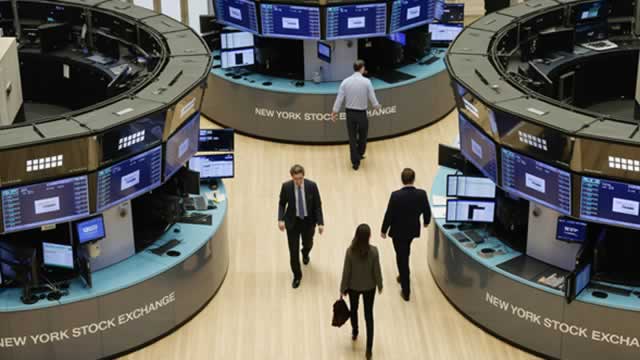
The discussion highlights the stock market's record-breaking performance, attributing it to AI and productivity gains. Rising Treasury yields are viewed as a sign of a booming economy and normalizing rates, not a cause for alarm. Both equities and bonds are considered investable, with expectations for bond yields to moderate and the stock market to continue its upward trend.
- S&P 500 and Nasdaq Composite have achieved numerous record closes this year, driven by AI and productivity gains.
- Rising Treasury yields are seen as a normalization in a growth economy, with real interest rates indicating economic strength and competition for capital.
- UBS expects bond yields to go 'a little higher before lower' and anticipates Fed rate cuts next year, making both equities and bonds investable.
- The long-term outlook for the economy and stock market is bullish, with more record highs expected due to sustained growth and investor confidence.

The discussion centers on navigating the current market's concentrated focus on the AI trade. Holly Mazzocca advocates for selective investing in companies with durable and diversified earnings that strategically leverage AI for productivity, rather than solely focusing on the obvious semiconductor and hyperscaler plays. She provides specific stock recommendations that fit this criteria.
- The market is heavily focused on a narrow portion of the AI trade, particularly the 'Magnificent 7'.
- Investors should be selective, seeking companies with durable, diversified earnings that utilize AI for productivity and innovation.
- Specific stock recommendations include Amphenol (APH) for its connectivity in AI/communications, NextEra Energy (NEE) for clean energy supporting data centers, and Waste Management (WM) for AI integration in smart trucks and operations.

Goldman Sachs' Salveen Richter discusses China's accelerating biotech innovation, focusing on 'me-too' and 'me-better' drugs, with future potential for novel therapies. Western biopharma companies are increasingly engaging in cross-border licensing deals and M&A with Chinese firms, driven by upcoming patent cliffs. AI and robotics are being integrated into drug discovery and development in China.
- China's biotech innovation is accelerating, currently focused on 'me-too/me-better' drugs and re-engineering known targets, with an expected shift towards more novel innovation.
- Western drugmakers are increasingly pursuing out-licensing deals and M&A with Chinese companies, viewing China as a source of assets due to upcoming patent expirations.
- AI and robotics are being widely adopted in China for early-stage drug discovery, molecule design, trial design, and manufacturing, particularly in oncology.
- Summit Therapeutics (SMMT) is highlighted as a potential key investment due to upcoming data in lung cancer that could validate China-to-Western data translation.
David Busch discusses the Fed's dual mandate challenge, balancing softening labor market data with persistent inflation driven by geopolitics. He anticipates an October Fed pause but highlights structural pressures on long-term Treasury yields and potential market volatility from corporate earnings and the burgeoning AI power demand.
- The Fed faces a dual mandate problem with softening labor market data (September jobs report) and inflation driven by geopolitical factors.
- Busch expects the FOMC to pause rate hikes in October, with a potential hike in December, as the Fed's primary tool is demand destruction.
- Structural concerns exist for long-term Treasury yields due to high US debt issuance and limited buyer demand from key institutions.
- The next significant AI trade is predicted to be in power infrastructure, as data centers require substantial energy, raising questions about sustainable energy supply.
- Key market risks to monitor include continued labor market deterioration, sustained high interest rates, and potential compression of corporate earnings.

Middle East crude oil exports are maintaining volumes despite Houthi attacks and Iranian threats, with Saudi Arabia utilizing alternative routes and pipelines. However, these disruptions have led to significant increases in oil tanker rates and created an inefficient market, driving up energy prices and benefiting shipping and refining stocks.
- Strait of Hormuz oil exports reached a seven-day average of 10 million barrels per day, about 75% of pre-war levels, as of October 4.
- Saudi Arabia has reverted to using the Strait of Hormuz after its East-West pipeline was blown up by Houthi attacks, though the pipeline is now back up and running.
- Oil tanker rates for crude transport from the Middle East to Asia have surged from $30,000/day in January to $1.2 million/day, due to increased risk and inefficient ship-to-ship transfers and rerouting around Africa.
- Geopolitical risks from Houthi/Iranian actions continue to threaten energy infrastructure and shipping, with potential for increased disruption leading up to the mid-term elections.

The video discusses the S&P 500 reaching all-time highs, largely driven by AI-linked stocks like Nvidia, while experts like Jamie Dimon express caution regarding government debt, sticky inflation, and rising interest rates. Commentary also covers the narrowness of the current market rally, global AI deployment risks, and the need for robust AI safeguards and workflow rethinking in the corporate world.
- S&P 500 hits record highs, fueled by enthusiasm for AI, despite concerns about market breadth and underlying economic factors.
- Jamie Dimon warns against endless government borrowing and spending, highlighting risks of sticky inflation and rising rates, while emphasizing preparedness for diverse outcomes.
- Experts discuss the growing reputational and financial risks associated with AI deployment, stressing the importance of safeguards, ethical use, and transparent governance.
As stocks reach record highs, RCN Wealth Advisors President Nick Lumpp warns investors to prepare for increased risk and volatility, anticipating a potential market pullback in 2027. He highlights structural changes in market dynamics, such as the shift to passive investing and the rise of leveraged products, which could exacerbate downturns. Lumpp recommends rebalancing portfolios towards non-correlated assets like gold and utilizing systematic trend-following strategies to manage downside risk.
- Cyclical economic slowdown and a deceleration in AI growth are expected to create headwinds for the market into 2027.
- The shift from actively managed funds to passive index funds, along with increased use of stock options and leveraged ETFs, is magnifying market volatility, leading to sharp downturns.
- Investors should prepare for potential pullbacks by diversifying into real assets like gold and employing systematic trend-following approaches to minimize downside risk exposure.
- The 60/40 portfolio is considered outdated; a tactical allocation fund like PRTO, which dynamically adjusts exposure to asset classes like small caps, bonds, and gold based on trends, is suggested.

The discussion centers on why stocks are hitting record highs despite September's challenges (Fed hikes, rising rates, rising oil). Analysts debate whether the rally will broaden beyond mega-cap tech into other sectors like industrials, financials, and utilities, or if tech and energy will continue to drive growth, especially during the upcoming earnings season.
- Stocks hit record highs despite September's challenges, including Fed hikes and rising rates/oil.
- Some analysts anticipate a broadening of the rally beyond mega-cap tech into beaten-down sectors like industrials (XLI), financials (XLF), and utilities (XLU).
- Others suggest that tech (NVDA, MU) and energy will continue to dominate earnings growth, potentially delaying broader market participation, especially during the upcoming earnings season.
- The Fed's future rate hike path (one more hike vs. a prolonged cycle) is a key factor influencing market breadth and sector performance.

The S&P 500 and Nasdaq are at record highs, largely propelled by the re-ignited AI trade, particularly in semiconductor stocks (AI 1.0). While the 'AI 2.0 trade' focusing on supporting infrastructure like nuclear energy for data centers has lagged due to political concerns, there's optimism for a potential rebound as fears may be priced in.
- AI trade is driving S&P 500 and Nasdaq to record highs, with semiconductor stocks like AMD up +37% in one month.
- The S&P 500's year-to-date performance (+14.35%) significantly outpaces the S&P 500 excluding AI stocks (+5.90%).
- The 'AI 2.0 trade' (supporting ecosystem for AI, including nuclear energy for data centers) has been challenged but may be nearing a bottom, with potential for recovery.

Reflection AI, an Nvidia-backed startup, has unveiled 'Beam,' a new open-weight AI model designed to compete with established players like OpenAI and Anthropic, as well as fend off cheaper Chinese alternatives. The model promotes an 'AI ownership' market, allowing enterprises to customize AI with their own data, potentially offering cost savings and data privacy benefits.
- Reflection AI, backed by Nvidia and founded by former Google DeepMind engineers, launched 'Beam,' a 501B open-weight AI model.
- The model aims to compete with closed-source options from OpenAI and Anthropic, and address the dominance of Chinese companies in the open-source AI space.
- Reflection's CEO likens the shift to 'AI ownership' versus 'AI rental,' suggesting open-source models offer greater control and potential cost efficiency for enterprises.
- The move could put pressure on the margins of major AI labs like Anthropic and OpenAI, especially as they consider going public.

Morgan Stanley's James Lord forecasts further downside for the Euro against the US Dollar, potentially reaching 1.10, due to a combination of US dollar strength and Euro-specific policy concerns. He is bullish on USD-JPY, expecting it to rise above 160, and sees continued strengthening for the Brazilian Real post-election, potentially to 4.5, driven by fiscal consolidation and reduced volatility.
- Euro-USD: Morgan Stanley forecasts Euro to fall towards 1.10, driven by US dollar strength and Euro-specific issues like increasing risk premia and lower ECB terminal rate expectations.
- USD-JPY: Morgan Stanley is long USD-JPY, expecting it to move above 160, as Japanese repatriation flows are less likely and BOJ remains dovish.
- USD-BRL: Brazilian Real is expected to strengthen further to 4.5 against the dollar, supported by potential fiscal consolidation post-election and reduced volatility.

The discussion highlights strong momentum in AI and tech, driven by demand for compute, with hyperscalers poised for continued growth. Despite higher yields, opportunities exist in fixed income, particularly in long-duration and municipal bonds. Globally, infrastructure and energy build-out, along with emerging markets, are seen as significant investment themes, overshadowing domestic political events.
- AI infrastructure and hyperscalers (e.g., Amazon, Microsoft, Alphabet) are experiencing significant momentum and underappreciated asset productivity.
- Fixed income offers opportunities with higher yields, favoring long-duration bonds, closed-end municipal bond funds, private credit, and emerging market debt.
- Global infrastructure and energy build-out, particularly in Europe and emerging markets like Latin America and Asia, present substantial investment prospects.
- Midterm elections are not expected to significantly alter market trajectory, with focus remaining on global economic and geopolitical factors.

The video discusses recent regulatory developments in the crypto space, including the SEC's approval of 3x leveraged Bitcoin and Ether funds, the CFTC's proposed federal framework for leveraged retail crypto trading, and the Treasury's withdrawal of a controversial crypto mixing rule. It also touches on Strive's Bitcoin purchases and Ondo Finance's tokenized pre-IPO markets. The speaker highlights the ongoing shift towards regulatory clarity and new product offerings, despite some inherent risks.
- SEC approves first 3x Bitcoin and Ether funds, but warns of daily reset volatility decay for long-term holders.
- CFTC proposes a new federal framework for leveraged retail crypto trading, including token listing standards, proof of reserves, and AML controls.
- Treasury withdraws a 2020 crypto mixing rule and a 2023 self-hosted wallet reporting rule, citing concerns over 'chilling effect on legitimate activity'.
- Strive has quietly accumulated 29,462 Bitcoin, surpassing MicroStrategy's recent purchases and nearing Marathon's holdings.

A new open-weight AI model from Reflection, backed by Nvidia, is seen as an American alternative to popular low-cost Chinese options. This model allows companies to customize AI with proprietary data, potentially offering a cheaper 'ownership' model compared to 'renting' closed systems like OpenAI and Anthropic. This shift is expected to increase competition and put pressure on the margins of leading closed-source AI providers.
- Reflection AI unveils Beam, a 501B open-weight model, offering a customizable and potentially cheaper alternative to closed AI systems.
- The move addresses a geopolitical factor, providing a Western open-source option in a space previously dominated by Chinese AI labs.
- This increased competition from open-weight models is expected to put pressure on the margins of leading closed-source AI companies like OpenAI and Anthropic, especially as they consider going public.