Video Analysis

The discussion covers the Treasury's efforts to manage rising rates and the implications of the growing national debt. Analysts highlight strength in commodities, homebuilders, and the broader impact of the AI boom on various industries, alongside insights into consumer spending from major retailers.
- Treasury's 'Operation Twist' aims to ease rising rates, but its long-term impact on the $40 trillion national debt is debated.
- Bitcoin, Gold, and Copper show technical breakouts, while homebuilders like Toll Brothers and Lennar exhibit strength.
- Consumer spending remains resilient, as evidenced by Target's performance, with upcoming Walmart earnings providing further insights.
- The AI boom is benefiting companies beyond traditional tech, including Walmart, Deere, and Caterpillar, driving productivity gains.

Jason Furman, former Chairman of the Council of Economic Advisers, discusses the US national debt surpassing $40 trillion, leading to higher interest rates as government and businesses compete for capital. He believes high interest rates are here to stay, with the solution lying in fiscal policy (spending cuts or tax increases) rather than monetary policy. AI's capital demand is currently inflationary, with productivity gains expected in 1-3 years.
- US national debt has surpassed $40 trillion, contributing to higher interest rates due to enormous capital demand from both government and businesses (especially for AI buildout).
- Furman states that high interest rates are 'likely here to stay' and the solution to address the fiscal imbalance lies with Congress through spending cuts or tax increases, not the Fed.
- AI's current capital demand is inflationary, although long-term productivity gains are anticipated within a 1-3 year timeframe, potentially adding 0.1-0.2% to annual productivity growth.
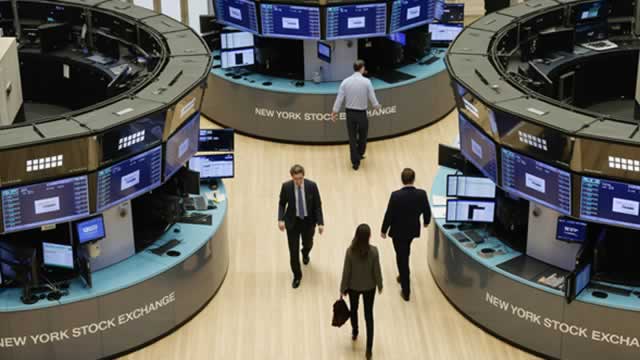
The video discusses a mixed market outlook with stock futures falling due to rising crude oil prices and elevated Treasury yields. Geopolitical tensions between the US and Iran are highlighted as a key driver for crude. Conversely, cryptocurrencies and related stocks are rallying following former President Trump's support for the 'Clarity Act,' while recent jobless claims and manufacturing data show strength.
- Stock futures are falling as crude oil prices climb to $87 and Treasury yields remain elevated.
- Escalating US-Iran tensions, described as 'economic warfare,' are pushing crude oil prices higher.
- Cryptocurrencies like Bitcoin and Ethereum, along with crypto-related stocks, are rallying after former President Trump urged the passage of the 'Clarity Act' for crypto regulation.
- Weekly initial jobless claims dropped to 206K, and the Philly Fed Manufacturing Index significantly beat estimates at 47.4, indicating strong regional economic data.
San Francisco Fed President Mary Daly believes current monetary policy is in a good place, with no urgent need for preemptive rate hikes or cuts. She attributes elevated inflation to a series of shocks, including AI investment, which she expects to dissipate. Daly emphasizes the Fed's focus on price stability and sees no signs of the labor market faltering.
- Fed policy is currently in a good place; no urgent need for preemptive rate hikes or cuts.
- Inflation is driven by a series of shocks (tariffs, oil, AI investment) that are expected to dissipate.
- The labor market is not seen as a primary contributor to inflation, showing 'uncomfortable stability'.
- AI investment is currently a relative demand shock, not broadly spilling over into consumer prices yet.

Treasury Secretary Scott Bessent's recent actions to lower long-term bond yields by increasing purchases of off-the-run securities are analyzed. While the technical move to improve market liquidity is seen as rational, the unscheduled nature of the announcement raises concerns about market predictability, potential distortion of signals, and its impact on Fed policy, leading to skepticism among analysts.
- Treasury increased purchases of off-the-run securities from $2 billion to $4 billion per operation to drive down long-term bond yields.
- The 10-year yield has risen nearly 70 basis points since the beginning of the Iran war, and the 30-year yield is at its highest since 2007.
- This strategy, including plans for more short-term issuance, could raise stakes for Fed rate hikes, boost growth and inflation, and distort market signals, potentially eroding market confidence.

The discussion highlights the short-term positive impact of Scott Bessent's debt buybacks on long-end US Treasury yields, but expresses long-term concerns due to the persistent US budget deficit. It also explores market spillover effects, including a potential weaker US dollar and a bid for alternative assets like gold and Bitcoin, alongside specific corporate actions in the Korean market.
- Scott Bessent's debt buybacks have provided a short-term positive move in long-end US Treasury yields.
- The long-term outlook for US bond yields remains pressured by the large US budget deficit (estimated at 6%), requiring more measures to control spending.
- If US yields are contained, the pressure may be 'squeezed out' through a weaker US dollar and increased bids for assets like gold and Bitcoin.
- Korean companies Samsung and SK Hynix are preparing for record shareholder returns, including buybacks, supported by the strength of the Korean Won.
The video discusses the U.S. Treasury's move to double long-dated bond purchases to stem rising yields, but the presenter expresses deep skepticism, highlighting the insignificance of the amount against the backdrop of a $40 trillion national debt, soaring interest payments, and persistent inflation. The commentary is highly critical of government fiscal policy and the perceived ineffectiveness of current measures.
- U.S. Treasury announced doubling long-dated bond purchases from $2 billion to $4 billion, which the presenter sarcastically deems insufficient.
- U.S. national debt has crossed $40 trillion, with federal debt interest payments reaching $1.37 trillion annually, surpassing the Pentagon's budget and Medicare outlay.
- The presenter emphasizes that market forces, driven by concerns over debt and deficits, are dictating long-end yields, not the Federal Reserve's policy.
- President Trump's past criticism of the Fed's 'artificially high' interest rates is highlighted, contrasting with the current market reality of high yields and inflation.
Kelsey Berro discusses the Treasury's surprise announcement to increase long-end buybacks, viewing it as a positive near-term stabilizer for bond markets. She attributes current yield movements to term premium rather than inflation fears, emphasizing that sustained lower yields depend on underlying economic fundamentals, Fed communication, and data.
- Treasury's unexpected increase in long-end buybacks is a positive development for near-term market stabilization, though it was a surprise outside of the usual quarterly refunding schedule.
- Current yield increases are primarily attributed to term premium (investors demanding more compensation for holding longer-dated bonds) and geopolitical risks, not runaway inflation fears, as inflation expectations remain well-anchored.
- Long-term yield stability requires support from economic fundamentals, a shift in Fed communication, a reset in issuance (supply) expectations, and softer-than-expected economic data.

Bob McNally of Rapidan Energy Group discusses US economic pressure on Iran, noting that Iran's oil exports are effectively blockaded. He believes the crude oil market is underpricing geopolitical risk, with refined product margins at record highs. He forecasts crude prices to remain in a 'spiky muddle through' range of $70-$100 per barrel indefinitely, with potential for upward breakout.
- US administration is increasing economic pressure on countries supporting Iran, with China being a key focus due to its economic ties.
- Iran's oil exports are effectively blockaded by the US, removing it as a significant factor in global oil prices.
- The crude oil market is currently optimistic and 'underpricing geopolitical risk,' particularly concerning a potential second energy shock.
- Refined product margins (gasoline, diesel) are at record highs, indicating tightness in those markets.
- Rapidan Energy predicts crude will stay within a $70-$100 per barrel range indefinitely, but warns that crude could 'follow products higher' if the US-Iran deadlock continues or escalates.

We prefer North Asia for AI hardware theme, China is a stock picker's market: Eastspring Investments
Eastspring Investments is constructive on global equities, highlighting the US market's broad recovery and strong Q2 earnings. For the AI hardware theme, North Asia (especially South Korea) is preferred due to attractive valuations and robust earnings growth. China is viewed as a stock picker's market given its K-shaped recovery and domestic AI focus.
- US equity market showing broad recovery beyond tech, with manufacturing rebounding and over 80% of companies reporting positive Q2 EPS growth.
- North Asia, particularly South Korea, is preferred for AI hardware due to cheaper valuations (KOSPI shy of 5x) and strong expected earnings growth (60%).
- China's AI/tech landscape is a 'stock picker's market' due to its K-shaped recovery and domestic focus, requiring careful selection despite overall macro challenges.

Rich Nuzum of Franklin Templeton discusses the challenges faced by the U.S. Treasury in managing debt and yields, despite recent buyback operations. He highlights the impact of large budget deficits, increasing debt issuance for AI infrastructure, and global inflationary pressures from conflicts, while also noting disinflationary forces from AI productivity and strong earnings growth in tech-related sectors.
- U.S. Treasury's debt buyback operation is seen as symbolic and insufficient given the $32 trillion market and persistent 6% GDP budget deficits.
- Global yields are rising across major economies, driven by increased government and corporate debt issuance (e.g., $4 trillion for AI build).
- AI and digitalization are viewed as disinflationary due to productivity gains, but geopolitical conflicts and fiscal stimulus contribute to inflationary pressures.
- Credit risk concentration is a key concern, though strong earnings growth in AI-related companies (e.g., South Korea's KOSPI up 87% with 185% earnings growth) provides some bullish signals.

The video analyzes the US Treasury's bond buyback plan and President Trump's criticism of the Federal Reserve, highlighting deep concerns about the escalating US national debt and its implications for interest rates and the economy. While some positive company news is shared, the dominant theme is a critical assessment of current fiscal and monetary policies.
- US Treasury's $4 billion bond buyback plan is deemed insufficient against trillions in national debt and annual borrowing.
- President Trump criticizes the Federal Reserve for 'artificially high' interest rates, despite the Fed not raising rates in over three years.
- Concerns are raised about the US national debt exceeding $40 trillion and rising interest payments, potentially crowding out other essential spending.
- Moderna's experimental skin cancer vaccine shows positive late-stage trial results, causing shares to surge.
- Novonesis (formerly Novozymes) reports strong organic sales growth and raises its full-year forecast, emphasizing innovation and AI in its processes.

The video discusses a broad market rebound driven by healthcare innovation, specifically Moderna and Merck's successful melanoma vaccine trial, and falling bond yields due to Treasury buybacks. Investment opportunities in Amazon's expanding logistics and Broadcom's dip after a rival's Google deal are also highlighted.
- S&P 500, Nasdaq, and Russell 2000 are up, with healthcare leading due to Moderna and Merck's melanoma vaccine success.
- Bond yields are plunging after the US Treasury announced increased buybacks of longer-term government debt.
- Amazon is expanding its drone delivery service, and its logistics system is now open to outsiders, presenting a significant growth opportunity.
- A 'buy the dip' recommendation is given for Broadcom (AVGO) despite its rival Marvell (MRVL) securing a deal with Google.
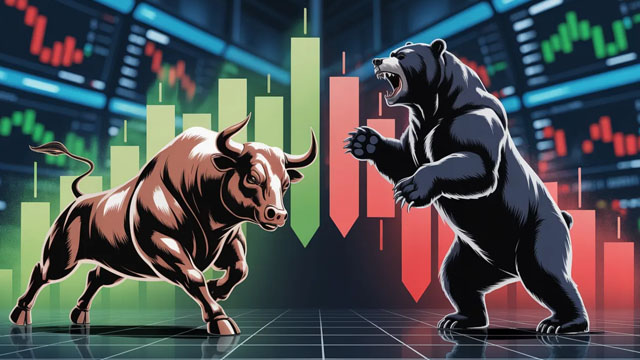
The discussion covers current market action, highlighting strength in the retail sector, particularly Home Depot and Lowe's, with anticipation for Walmart's earnings. A significant Treasury intervention in the bond market is noted as yields spiked. The strategist expresses optimism for tech stocks due to productivity gains, which are expected to offset higher lending rates, and touches on the Fed's potential shift to fewer meetings.
- Retail sector shows strength, with Home Depot and Lowe's performing well, and anticipation for Walmart's earnings.
- Treasury's decision to double bond purchases is seen as an intervention to address spiking 30-year yields.
- Tech stocks are favored due to productivity gains, which are expected to compensate for higher lending rates.
- Fed minutes indicate concerns about inflation and potential rate hikes, with a proposal for fewer FOMC meetings.

The video analyzes the US Treasury's long-term bond buybacks, intended to curb surging yields. Experts are largely skeptical, viewing the intervention as a tactical, potentially unconventional, and temporary measure that shifts the problem rather than fundamentally lowering borrowing costs. The prevailing sentiment suggests a 'higher for longer' interest rate environment is likely to persist, driven by underlying real yield and term premium dynamics, akin to pre-GFC levels.
- The US Treasury's long-term bond buybacks are considered an important tactical, but somewhat unexpected and unconventional, move.
- Analysts express skepticism about the buybacks' long-term effectiveness, suggesting they offer temporary stability but don't address the fundamental upward pressure on rates.
- The consensus leans towards a 'higher for longer' interest rate environment, driven by real yield and term premium stories, with rates potentially returning to pre-GFC levels.

Larry Kudlow argues that the recent rise in long-term bond yields, specifically the 10-year and 30-year Treasury, is a positive indicator of 'Trumpian growth' and not a sign of accelerating inflation. He dismisses media panic, stating that the increase is driven by real economic growth, particularly in manufacturing, construction, and advanced technologies, and represents a normalization from historically low rates.
- Rising long-term bond yields are attributed to strong economic growth, not inflation.
- The 'real yield' component of Treasury bonds has increased, while the 'inflation component' (CPI break-even) has remained flat.
- Current yield levels are compared to the strong economic period of the 1990s, suggesting a healthy normalization.
- Media concerns about inflation are dismissed as politically motivated attacks on President Trump.
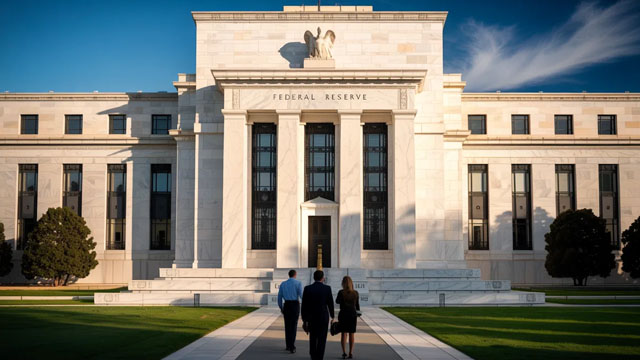
Keith Buchanan discusses the current market setup, noting strong earnings driven by AI investment but also concerns from less uniformly positive economic data. He highlights the impact of rising long-term Treasury yields on valuations and the increased market volatility due to the Fed's evolving communication. Investors are advised to be selective and diversified across asset classes, with caution regarding consumer health.
- Earnings remain strong, particularly for companies benefiting from AI investment, but broader economic data is becoming less uniformly positive.
- Rising long-term Treasury yields create a higher hurdle for earnings and valuations, especially for long-duration growth assets.
- The Fed's less explicit communication style is contributing to increased market volatility and uncertainty.
- Consumer health is a concern, with mixed retail earnings and persistent inflationary pressures, suggesting a K-shaped recovery.
- Investors should be selective rather than chasing indices, diversifying across cap sizes, value, international markets, and alternative assets like precious metals.

Donald Trump hosted crypto leaders at the White House, advocating for a clear regulatory framework for the crypto industry in the US. He criticized the current administration's approach, claiming his policies would foster innovation, boost the economy, and establish the US as the global financial leader in crypto and AI.
- Trump emphasized US leadership in finance, crypto, and AI, aiming to keep innovation within the country.
- He called for a 'clear regulatory framework' and stablecoin legislation to support pioneers and builders in the crypto space.
- He criticized the current administration's 'Operation Choke Point 2.0' and 'crippling regulations' that he claims drove innovation overseas.

The market experienced a 'winning Wednesday' with major averages closing higher, driven by a Treasury announcement to double its debt buyback program, which lowered bond yields. Pharmaceutical companies Merck and Moderna saw significant gains following positive clinical trial results for a personalized cancer vaccine. Rising oil and diesel prices, however, present an inflationary concern.
- Major market averages (Dow, S&P 500, Nasdaq) closed higher on Wednesday, with the Dow up 119 points.
- Treasury's plan to double its debt buyback program led to lower bond yields and a slight dip in mortgage rates.
- Merck shares surged 12% and Moderna shares soared 176% on positive Phase 3 trial results for a personalized cancer vaccine.
- US crude oil prices rose above $85 a barrel, with diesel prices reaching $5.50/gallon nationally, nearing all-time highs.

BlackRock's Rick Rieder discusses the recent volatility in the long end of the yield curve, attributing it to elevated inflation and significant Treasury supply. He views the Treasury Secretary's recent actions as a significant 'statement' aimed at managing long-end interest rates, suggesting a potential cap on further increases. Rieder emphasizes the need for clearer communication from the Federal Reserve regarding their reaction function and key economic metrics.
- The back end of the yield curve has felt 'untethered' due to elevated inflation and substantial Treasury financing needs.
- Treasury Secretary's actions are seen as a 'statement' to keep an eye on long-end rates, potentially capping further yield increases.
- Rieder calls for the Fed to clarify its 'reaction function' and the specific metrics it monitors (beyond just core PCE) to guide market expectations.