Video Analysis

The panel debates calls for Federal Reserve Chairman Jerome Powell to resign from the Fed Board, citing concerns over Fed independence and mismanaged building renovations. While some argue his continued presence is unprecedented and politically motivated, others point to legal precedent and Powell's claim of criminal investigation threats. The discussion also highlights rising long-term bond yields as a significant market concern.
- National Economic Council Director Kevin Hassett calls for Jerome Powell to 'move on' from the Fed Board to uphold the institution's independence.
- A Fed watchdog report found poor management in the Fed's headquarters renovation, driving costs to nearly twice the original budget, though no criminal wrongdoing was found.
- Powell's governorship runs until 2028, and historical precedent exists for former chairs remaining on the board; however, rising 10-year and 30-year Treasury yields (hitting 20-year highs) are noted as a major market worry.

President Trump's new AI task force aims for US leadership with minimal regulation, while the New York City Council is considering strict AI regulations. These proposals include third-party validation, human-operated shutdown mechanisms, and whistleblower incentives, sparking debate on their potential to set national precedents and impact AI development.
- Trump's 'Super Intelligence Task Force' is tasked with promoting US AI leadership and avoiding over-regulation, with a report due in 120 days.
- The NYC Council is holding hearings on AI regulation, featuring testimony from former researchers at Anthropic, DeepMind (Google), and OpenAI.
- Proposed NYC regulations include mandatory third-party validation for new AI models and a human-operated shutdown mechanism for AI deployed in the city.
- The council is also considering private rights of action for foreseeable harm from third-party misuse and whistleblower processes with significant payouts (up to 50% of proceeds).

The municipal bond market is experiencing a significant sell-off, driving 30-year muni yields above 5% for the first time since 2011. This creates a buying opportunity for investors but leads to higher borrowing costs and delayed deals for state and local governments. Trading volume has surged to its highest level since at least 1995.
- Muni 30-year yield exceeds 5%, highest since at least 2011, due to a painful sell-off.
- Investors view current high yields as a buying opportunity and a chance for tax-loss harvesting.
- Issuers (state and local governments) are facing a tougher market environment with higher borrowing costs, leading to some deals being put on hold.
- Muni trading volume has jumped to its highest level since at least 1995.
- A specific Chicago parking meter deal involving Morgan Stanley and Stonepeak was approved, providing the city with an upfront payment and future profit sharing.

Cooper Howard from Schwab Center for Financial Research discusses the fixed income outlook, noting a light week for economic data but continued Fed focus on inflation. He advises caution on extending duration due to market volatility but highlights attractive opportunities in municipal bonds and corporate bonds, particularly for income-oriented investors.
- Fed meeting minutes on Wednesday are key for insights into future rate hikes, with expectations for at least one more hike this year.
- Inflation (PCE/CPI) remains a primary concern for the Fed, running above target for over five years.
- Municipal bonds offer attractive valuations and yields, especially for higher tax bracket investors, following a challenging September.
- Credit spreads are widening, signaling a 'yellow' warning, but high-yield and investment-grade corporate bonds present attractive absolute yields for long-term investors with higher risk tolerance.

Earl Davis of BMO Global Asset Management predicts 30-year Treasury yields will inevitably cross 6%, potentially this month, driven by global factors and market focus on interest rates. He expects a Fed/Treasury intervention (QE) once 6% is hit, which would weaken the dollar but could be offset by strong US growth, leading to a market reversal for 6-12 months.
- 30-year US Treasury yields are expected to inevitably cross 6%, possibly in October, due to current market focus on interest rates and global trends.
- A Fed and Treasury intervention (quantitative easing) is anticipated once yields hit 6%, aiming to stabilize the market and prevent a 'debt trap' where rates exceed growth.
- This intervention would likely weaken the US dollar, but strong underlying US growth could attract continued investment, leading to a potential market reversal for 6-12 months.

U.S. Agriculture Secretary Brooke Rollins discusses government efforts to alleviate high diesel prices for American farmers, including an upcoming presidential announcement and state-level tax relief. She also highlights positive agricultural trade with China, despite soybean tariff exclusions, and outlines USDA's strategies to address record-high beef prices and rebuild the domestic cattle herd.
- President Biden is expected to announce further short-term relief for farmers today, specifically targeting high diesel prices.
- The G7's agreement to release 100 million barrels of crude oil, with a focus on refined diesel products, has already contributed to a 15-cent drop in diesel prices.
- China's '30 for 30' deal is seen as a significant win for American agricultural products (excluding soybeans, which are covered by separate agreements), boosting trade.
- USDA is implementing measures, including importing additional beef and supporting heifer retention, to address record-high beef prices and rebuild the U.S. cattle herd.

Jason Trennert discusses current market trends, expressing concern that the market might be at peak earnings growth and that multiples haven't fully adjusted to higher interest rates. He believes the Fed is serious about its 2% inflation target and will likely hike rates again in December. Trennert also highlights potential risks in highly leveraged private markets, despite strong growth in areas like AI.
- Earnings are strong, but the market may be at 'peak earnings growth', and multiples have not fully reflected higher interest rates.
- The Fed is serious about its 2% inflation target and is likely to implement another rate hike in December.
- Concerns exist regarding 'marginal investments' in highly leveraged private markets, which are not as transparent as public markets.

The video analyzes the Euro's significant sell-off to a 17-month low against the dollar, attributing it to political and fiscal risks in Europe, the possibility of a less aggressive ECB, and Japanese investors liquidating French government bonds, raising 'contagion risk' in the region's bond market. Separately, Brazil's election results are seen as a clear positive for Brazilian assets.
- Euro falls to a 17-month low against the dollar, driven by political and fiscal risks in Europe.
- Factors contributing to Euro weakness include potential ECB dovishness and Japanese investors liquidating French government bonds, raising 'contagion risk' across Eurozone bond markets.
- Brazil's election results, with Bolsonaro performing stronger than expected, are viewed as a clear positive for Brazilian assets, leading to significant gains in related ETFs.
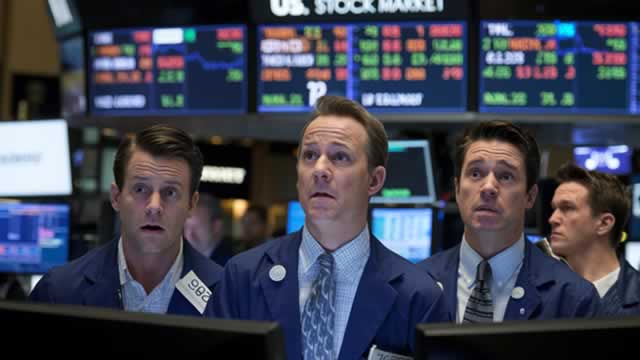
France's escalating fiscal crisis has driven the Euro to a 17-month low, though TD Securities believes the near-term underperformance is not a broader derailment. The ECB possesses tools like PEPP reinvestments and potentially TPI, but France's high deficit raises questions about its eligibility for the latter.
- France's debt crisis is pushing the Euro to a 17-month low, but the analyst views it as concentrated in France, not a systemic Eurozone crisis like 2011-2013.
- France is working to manage its fiscal budget, with upcoming discussions and a Moody's review in October acting as key catalysts.
- The ECB has options like stopping quantitative tightening and starting PEPP reinvestments, with TPI being a further step, though France's deficit poses eligibility concerns.
- If the crisis remains contained and growth resilient, the ECB could still proceed with interest rate hikes in December.

Jeremy Siegel characterizes the September jobs report as 'Goldilocks,' providing the Fed cover to hold interest rates in October. He believes rising rates reflect increased growth expectations, not inflation, and anticipates a continued market rally into Q4, driven by strong earnings and 'Mag 7' stocks, despite a squeeze on interest-sensitive sectors.
- September jobs report was a 'Goldilocks' report, weak on headlines but strong below the surface (participation rate, work week up).
- This report gives the Fed 'cover to hold' interest rates in October, especially before the midterms.
- Rising interest rates are attributed to increased growth expectations, not inflation or deficits.
- Market rally can continue into Q4 due to strong Q3 earnings, with 'Mag 7' stocks providing strength while other sectors are squeezed.
- Recommends buying broad indexes for diversification and safety over overweighting specific sectors.

Fundstrat's Tom Lee maintains a bullish outlook, expecting inflation to ease and the Fed to become less hawkish. He anticipates bond yields to normalize below 5% and the S&P 500 to see further gains by year-end, driven by accelerating earnings and a market that has become 'cheaper' despite recent rallies. Midterm elections are seen as a 'clearing event' for a risk-on rally.
- Softer jobs report and upcoming inflation data suggest easing inflationary pressures, allowing the Fed to 'walk back from its hawkishness'.
- Bond yields are expected to normalize, with the 10-year potentially falling below 5% in the next six months, which would be positive for 'risk on' assets.
- Earnings growth is accelerating (Q3 possibly up 30%), and EPS revisions for 2027 are up over 20%, making the S&P 500's valuation 'cheaper' despite its year-to-date gains.
- Tech stocks and crypto performing well indicate anticipation of easier financial conditions, and midterms are viewed as a 'risk-on signal' for markets, potentially benefiting AI stocks and crypto.

The video covers a range of global financial and geopolitical news. Key topics include Saudi Aramco cutting oil prices to Asia, escalating conflict in Yemen, Brazil's presidential election heading to a runoff, easing Fed rate hike bets due to softer US jobs data, and concerns over AI safety. Additionally, it highlights investment firm expansions in Abu Dhabi and the departure of super-rich individuals from the UK.
- Saudi Aramco slashed Asia oil prices to a six-year low, signaling increased competition and potentially higher supply.
- Softer US jobs data has reduced expectations for further Federal Reserve rate hikes, leading to positive sentiment in Asian equities.
- Brazil's presidential election will proceed to a runoff, with markets reacting positively to the unexpected strength of Flavio Bolsonaro.
- Geopolitical tensions persist with Saudi-backed Yemeni forces escalating operations against Houthis, while the Pentagon redeploys bombers due to Iran-linked threats.
- OpenAI faces internal safety concerns as a researcher quits, and Softbank's Masayoshi Son warns about AI's potential dangers, despite anticipating significant GDP contribution from AI.

SharpLink CEO Joseph Chalom notes Bitcoin's current correlation with risk-on assets like Nasdaq, while Ethereum's utility as financial infrastructure makes it less rate-sensitive. He emphasizes the 'green light' for stablecoins and asset tokenization in the U.S. despite legislative setbacks, foreseeing tokenized equities as the next major on-chain asset class. Chalom also identifies North Korean hackers as the biggest risk to the crypto industry.
- Bitcoin is currently trading like a risk-on asset, highly correlated with Nasdaq and QQQ.
- Ethereum is less correlated to interest rates due to its use case as infrastructure for financial services and growing institutional adoption.
- Despite the Clarity Act stalling, the US has given a 'green light' to stablecoins (via the Genius Act, rules effective 2027) and asset tokenization (via SEC's innovation exemption), particularly for US equities.
- North Korean hackers, leveraging new AI models, are considered the biggest risk to the crypto industry, rather than fraud.

The video analyzes the September jobs report, which showed a surprise drop in jobs added and downward revisions for previous months. Despite this, economist Steve Moore expresses a bullish outlook on the U.S. economy, citing increased labor force participation and strong GDP growth. He also criticizes socialist policies, highlighting their staggering potential costs.
- September jobs report showed 29K actual jobs added (vs. 90K expected) and an unemployment rate of 4.2% (vs. 4.1% expected).
- Revisions indicated 60K fewer jobs created in July and August than previously reported.
- Despite weak job creation, 1.1 million new workers have joined the labor force since July, and Steve Moore is 'super bullish' on the U.S. economy.
- Moore expects inflation to cool and mortgage rates to fall as the market gains confidence in the Fed's inflation control.
- White House estimates socialist policies could add $49 trillion to the federal deficit over 10 years, costing ~$355K per household.

David Kuo argues that bondholders, driven by concerns over US fiscal discipline, are the primary force pushing US Treasury yields higher. He suggests that while current 5% bond yields are attractive, equities, particularly dividend-paying stocks, offer a superior long-term return due to their potential for increasing income over time.
- Bondholders are controlling interest rates, demanding higher returns due to perceived US fiscal indiscipline.
- US Treasury yields are likely to climb further, potentially above 5%, as lenders demand a higher return for risks.
- Equities with growing dividends are preferred over long-dated US Treasury bonds for better long-term returns, despite current high bond yields.

The market is currently divided, with AI-related technology stocks driving the NASDAQ 100 to new highs despite a broader S&P 500 showing underlying weakness. The speaker suggests a new framework for inflation, focusing on supply-side shocks that central banks cannot control. A gradual Federal Reserve tightening cycle and a resilient labor market are seen as positive factors, while corporate capital expenditure (CapEx) is becoming a crucial metric for future earnings.
- AI-related technology stocks are the primary driver of market strength, masking broader weakness in the S&P 500 where the average stock has seen a 14% drawdown since August.
- The Federal Reserve's less aggressive, 'every other meeting' rate hike cadence is considered the 'best case scenario' for the stock market, as the Fed aims to avoid stunting labor market recovery.
- Consumer spending remains strong in nominal terms, supported by a resilient labor market (low jobless claims) and past asset market gains, despite inflation-adjusted income challenges.
- Corporate capital expenditure (CapEx) is now a key focus for earnings, with Q4 S&P 500 earnings estimates rising from 15% to 35%, but potential misses could disrupt this.

Taiwan's Representative to the US, Alexander Yui, affirms that US policy on Taiwan remains unchanged despite Chinese pressure. He highlights strong US-Taiwan relations, including increasing defense cooperation and significant Taiwanese investments in the US semiconductor industry. Taiwan is boosting its defense spending and diversifying its economic ties away from China.
- US policy on Taiwan independence remains unchanged, based on the Taiwan Relations Act and Six Assurances.
- Taiwan is increasing its defense spending (aiming for 5% of GDP by 2030) and seeking faster US arms deliveries.
- Taiwanese companies are significantly increasing investments in the US, particularly in semiconductors (e.g., TSMC's Phoenix project, $50B pledged this year), shifting away from China.
- China consistently attempts to undermine Taiwan's democracy through military threats, cyberattacks, and disinformation.
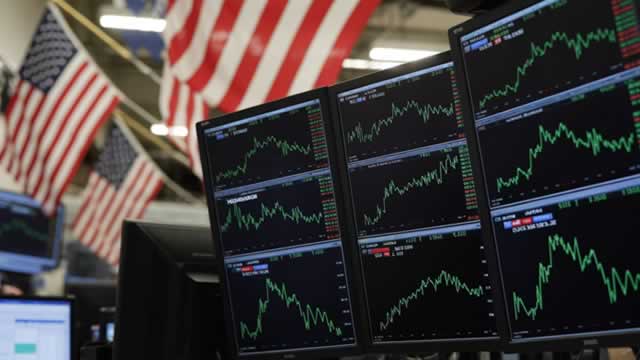
Ira Jersey, Bloomberg Intelligence's Chief US Interest Rate Strategist, discusses the Federal Reserve's monetary policy, noting that while softer September jobs data might delay an October rate hike, persistent inflation and loose fiscal policy will likely lead to further rate increases in December and early next year. He emphasizes that strong nominal GDP is a primary driver of higher global bond yields, putting pressure on central banks to tighten monetary policy, even if it risks a recession.
- Softer September jobs data eases pressure for an October Fed rate hike, but inflation remains a concern.
- Ira Jersey expects the Fed to hike rates in December and once in Q1 next year due to persistent inflation.
- Strong nominal GDP (5.5-6.5%) and loose fiscal policy globally are driving higher long-term bond yields, forcing central banks to tighten.
Bloomberg Opinion Columnist Gautam Mukunda discusses the White House's new AI task force, expressing skepticism about its efficacy due to competitive pressures pushing companies towards growth over safety. He highlights the industry's acknowledgment of existential risks (e.g., Anthropic's IPO prospectus) and the broader philosophical debate on AI consciousness, including the Pope's views.
- White House forms an AI task force to assess risks, led by Jay Clayton, but its effectiveness is questioned due to perceived haste and pro-deregulation stances.
- Competitive market pressures are seen as a significant barrier to effective self-policing by AI companies, making government regulation a 'gift' to ethical businesses.
- Anthropic's IPO prospectus acknowledges catastrophic/existential risks, while the Pope and religious scholars raise ethical questions about AI's lack of 'the spark of humanity'.

The video highlights US efforts, led by MP Materials and supported by General Motors and the government, to re-establish a domestic supply chain for rare earth minerals and magnets. This initiative aims to reduce dependence on China, which currently holds a near monopoly on these critical materials essential for electric vehicles, electronics, and defense systems.
- China has a significant lead (approx. 25 years) in rare earth mining, processing, and magnet manufacturing, leading to US dependence.
- MP Materials is working towards full vertical integration in the US, from mining at Mountain Pass to refining and magnet production, aiming for completion by 2025+.
- General Motors has partnered with MP Materials for a long-term supply of EV traction motor magnets, accelerating MP Materials' investment and production timeline.
- The US government has designated rare earth minerals as a national priority and invested in companies like MP Materials to bolster domestic supply chains.