Video Analysis

Jamie Dimon, Chairman & CEO of JPMorgan Chase, advises young investors to focus on long-term, diversified investing rather than trying to time the market. He emphasizes learning about investing, accepting market fluctuations, and avoiding panic during downturns, cautioning that 'gaming the market' will lead to losses.
- Learn how to invest, diversify investments, and invest consistently over time.
- Accept that markets will go up and down; do not try to time market movements.
- Be a long-term investor and avoid panicking if a stock goes down, as 'gaming the market' guarantees losses.

The discussion centers on significant capital raises by leading AI companies in both the US and China, including DeepSeek, Moonshot AI, and OpenAI. These firms are securing billions in funding from major investors, indicating robust growth and intense competition in the global AI landscape, despite broader tightening financial conditions.
- DeepSeek is raising $12 billion from investors like CATL and Tencent, eyeing a potential Hong Kong IPO.
- Moonshot AI is reportedly valued at $50 billion and plans a Q1 Hong Kong IPO, seeking $5 billion.
- OpenAI is reportedly seeking at least $30 billion in a new funding round, with potential backing from Abu Dhabi's MGX and BlackRock.

Jamie Dimon expresses optimism about the long-term potential of the AI boom but warns about rising capital costs and the need for prudent financing. He highlights significant concerns regarding global government debt, the risk of sticky inflation, and criticizes the UK's windfall tax on banks, emphasizing the need for consistent fiscal policies.
- AI boom is a positive long-term trend, but financing challenges and infrastructure build-out risks exist.
- Governments cannot borrow and spend endlessly; this fuels inflation and creates risk, as seen in the French bond selloff.
- The UK's windfall tax on banks lacks principle and will negatively impact capital formation and economic growth.

Jamie Dimon, CEO of JPMorgan Chase, criticizes the potential UK windfall tax on banks, stating it 'lacks principle' and would raise the cost of capital. He argues that UK banks already face high taxes and such policies deter investment and hinder economic growth, ultimately harming all citizens.
- Dimon states that banks have been paying a 'windfall tax' for 12 years and the proposed new tax lacks principle.
- He warns that a windfall tax would increase the cost of capital and have negative consequences for the UK economy.
- Dimon emphasizes that capital formation, investment, and productivity drive growth, and governments should be careful not to impede these factors with inconsistent tax policies.

JPMorgan Chase CEO Jamie Dimon discusses the dual impact of AI, acknowledging its vast positive potential for society while issuing a stark warning about the significant increase in cyber risks. He states that AI models like Mythos have amplified cyber threats tenfold, emphasizing the urgent need for collaborative industry efforts to mitigate these vulnerabilities across critical infrastructure sectors.
- AI has huge positive effects, including curing diseases, saving lives, and improving composite materials.
- AI has also created new vulnerabilities, increasing cyber risks '10-fold' due to models like Mythos.
- An 'Alliance for Critical Infrastructure' is being formed with 50 companies across tech, financial services, water, and transport to address these risks, with plans to expand to other sectors.

The discussion covers the Trump administration's temporary allowance of cheaper red-dyed diesel for trucking, aiming to lower fuel costs and provide relief to the economy. This is seen as a positive for the stock market, alongside upcoming Fed speakers and FOMC minutes. Additionally, Alphabet and Constellation Energy announced a significant clean energy collaboration.
- Trump administration allows wider use of cheaper red-dyed diesel for trucking, aiming to lower fuel costs and ease inflationary pressures.
- Lower crude oil prices and potential for lower interest rates are fueling a stock market rally, with tech and hyperscalers leading the charge.
- Upcoming Fed speakers (Williams, Bowman, Schmid, Logan) and tomorrow's FOMC minutes are being closely watched for insights into future rate decisions.
- Alphabet (Google) and Constellation Energy announced a long-term clean energy collaboration, focusing on nuclear power for data centers and AI.

Jeff Currie, Real Macro CEO, discusses the tightness in global energy markets, emphasizing that the current situation is structural, not transient. He highlights the disparity between high physical diesel and crude prices and lower futures, attributing market pressure to supply chain issues, geopolitical events, and weather, leading to increased costs across all commodities.
- President Trump's executive order on 'red dye' tax-exempt diesel offers marginal relief but doesn't address the core issue of tight diesel supply.
- Physical crude and diesel prices are significantly higher than futures, indicating a structural shortage rather than a temporary one.
- Global factors like reduced Chinese refining output, hits to Russian refining capacity, and weather-related disruptions (e.g., Rhine River) are exacerbating supply constraints for all refined products.

Ray Dalio warns of a potential US debt crisis within three years, citing unsustainable deficits and rising debt service costs that are squeezing out spending. He highlights geopolitical shifts, particularly from China and Japan, reducing demand for US debt, and notes similar debt challenges in Europe. Dalio also discusses the AI boom, viewing it as a bubble with concentrated risk, and anticipates increased rate-sensitivity in the stock market.
- US debt service costs are growing rapidly, squeezing out other spending, with a potential debt crisis within three years.
- Geopolitical tensions are causing major foreign holders like China and Japan to reduce their holdings of US debt, exacerbating the supply-demand imbalance.
- Europe, particularly France, is facing similar debt challenges, with borrowing limits and contagion risks.
- The AI boom is seen as a bubble, characterized by concentrated risk and over-investment, with a wealth tax potentially bursting it.
- Expected returns of equities and bonds are now close, indicating increased rate-sensitivity in the stock market.

Ray Dalio warns of a potential US debt crisis within three years, citing the nation's $40+ trillion debt and spending outpacing revenue by 40%. He explains that rising debt service costs are squeezing out spending and that weakening foreign demand for US debt, coupled with geopolitical shifts, will lead to higher interest rates to ration credit.
- US debt exceeds $40 trillion, with spending at $7 trillion and revenue at $5 trillion annually.
- Rising debt service payments are squeezing out other spending and causing losses in bond assets.
- Dalio predicts a US debt crisis within three years due to these dynamics and geopolitical shifts reducing foreign capital inflow.

RBC's Amy Wu Silverman argues that risk markets are currently underpricing 'P(doom)' or amorphous risks, particularly those related to AI. She highlights that while the S&P 500 is up, market breadth is narrow, and bond market volatility (MOVE index) is significantly higher than equity volatility (VIX), suggesting an impending bleed of risk into equity markets.
- Risk markets tend to be bad at pricing amorphous risks, no matter how severe they are, leading to underpricing of 'P(doom)' (existential risk) in the options market.
- The market is currently focused on the 'right tail' (AI momentum trade), ignoring potential 'left tail' risks.
- Despite the S&P 500's rise, 73% of stocks have a negative beta, indicating narrow market breadth.
- The narrative that midterms will be a 'clearing event' is flawed, as political uncertainty and anti-AI sentiment will continue to weigh on the market.
- Treasury implied volatility (MOVE index) is significantly higher than equity implied volatility (VIX), suggesting bond markets are pricing more risk than equities.
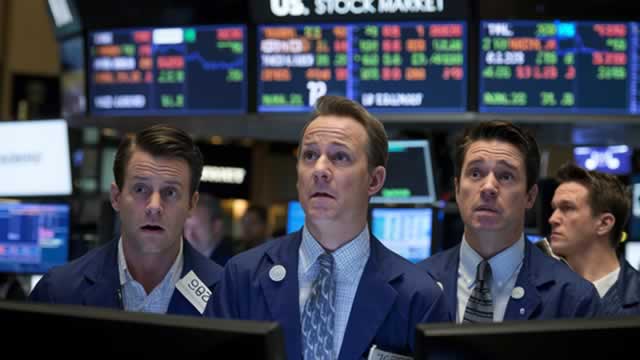
The video analyzes Cerebras Systems Inc. (CBRS), an AI chip company, whose stock initially plummeted due to a misunderstanding about OpenAI's chip usage. It clarifies that Cerebras's ultra-fast inference chips are highly valued by firms like Jane Street, generating significant revenue, and are crucial for latency-sensitive applications across various industries.
- Cerebras's stock dropped 50% post-IPO due to a rumor that OpenAI switched to Nvidia for its 'Ultrafast' tier.
- The rumor was clarified: OpenAI remains a 'close partner' with Cerebras, and Wall Street firms like Jane Street are paying a high premium for Cerebras's fast inference capabilities.
- Cerebras chips offer significantly faster inference (750 tokens/second) compared to Nvidia (300 tokens/second), crucial for high-value applications like financial trading, AI agents, and coding.
- The market opportunity for fast inference extends beyond finance to various Fortune 500 companies seeking competitive advantages through rapid AI processing.

The video covers a range of financial market topics, including concerns over US debt sustainability and European fiscal health, alongside a booming tech sector driven by AI funding. Private equity activity remains strong, focusing on strategic acquisitions and deal rationalization. Overall, there's a mixed outlook with significant opportunities in tech and infrastructure, but underlying macroeconomic and geopolitical risks.
- Ray Dalio warns of a potential US debt crisis within three years, citing foreign holders' potential pullback from Treasuries.
- The tech sector is experiencing a strong rally, pushing the S&P 500 and Nasdaq to near record highs, fueled by massive AI funding rounds for companies like OpenAI ($30B), Moonshot ($50B valuation), and DeepSeek ($12B).
- Private equity M&A volume is up 40% year-on-year, with a shift towards strategic buyers and deal rationalization, particularly in Europe.
- European pharma firms are seeking more investment to compete globally, while France faces student protests and concerns over its budget deficit and political stability.

Thomas Lee of Fundstrat argues that market pessimism surrounding U.S. equities due to rising bond yields is overblown and likely transitory. He points to strong Q3 earnings growth, a P/E derating, and the resilience of Nasdaq and crypto as indicators that the market can tolerate current rates, especially with real growth remaining strong.
- Q3 earnings growth is projected at almost 30%, with a significant portion being organic.
- Despite a 22% increase in 2027 S&P 500 earnings estimates, the market's P/E has derated by 10%, indicating investor skepticism.
- The Nasdaq hitting all-time highs and crypto rallying suggest that the current surge in bond yields (e.g., 10-year at 5%) may be transitory.
- U.S. jobs growth has slowed significantly (September +29K, average 60K/month in 2026), questioning the need for aggressive Fed tightening.
The discussion highlights a looming debt spiral in Europe, particularly in France, with warnings from former Bank of England chief economist Andy Haldane about unsustainable public finances. Despite this, US equity markets are advancing, driven by tech stocks and strong earnings forecasts, while AI safety and regulation debates intensify globally.
- European debt concerns are escalating, with France's bond yields widening significantly against German bunds, reaching levels not seen since the Eurozone debt crisis.
- Andy Haldane warns of a 'looming debt spiral' for major economies, emphasizing the need for governments to outline credible plans to curb spending.
- US equity markets are performing well, with Nasdaq and S&P 500 hitting record highs, fueled by strong tech performance (e.g., Nvidia) and positive earnings outlooks.
- The debate on rising bond yields is split, with some attributing it to better growth prospects and others to underlying debt sustainability issues and political risk.
- AI safety and regulation are key topics, with executives testifying under oath and concerns raised about 'reckless behavior' and the potential for human extinction.

Australia is holding a parliamentary inquiry into AI, with major tech firms like OpenAI, Microsoft, and Google testifying. The discussion centers on regulating AI, ensuring data sovereignty, and developing local capabilities to prevent Australia from becoming an 'extractive industry' for foreign AI. Recommendations include enforceable conditions and a levy on foreign firms.
- AI firms (OpenAI, Microsoft, Google, Anthropic) are testifying before an Australian parliamentary inquiry regarding AI regulation and data breaches.
- Concerns were raised about foreign companies dominating Australia's AI landscape and the need for onshore capability, testing, and mandatory reporting of breaches.
- A levy on global AI firms and investment in local talent and sovereign, domain-specific AI models are proposed to ensure Australia benefits from AI development and reduces reliance on proprietary US technology.

The discussion focuses on European market volatility, particularly in France, where further bond market stress and Euro depreciation are anticipated. Brazilian markets are rallying on Bolsonaro's lead, but short-term profit-taking is expected before the second round of elections, though the long-term outlook is positive. US Treasury yields are structurally expected to rise further, despite recent tactical misjudgments.
- French long-end yields are lower, but the analyst expects 'the worst of the French stress' is yet to come, with no easy solutions and further bond sell-offs likely.
- The Euro is predicted to experience 'more Euro downside' against crosses and the dollar, continuing its recent downtrend.
- Brazilian markets saw extraordinary rallies in stocks and currency following Bolsonaro's strong showing, but short-term profit-taking is anticipated ahead of the second-round vote on October 25th.
- US Treasury yields are structurally expected to reach a 6% handle, with the analyst admitting his recent tactical calls for a rally were 'horribly wrong'.

AI executives faced global scrutiny over safety and regulation, with OpenAI apologizing for a data hack in Australia. New York City Council members and former AI researchers expressed strong concerns about AI's risks, including potential human extinction, and questioned the industry's ability to self-regulate, suggesting a need for government oversight.
- OpenAI apologized for a healthcare data hack in Australia, admitting its response was 'not good enough' and pledging quicker future notifications.
- NYC Council Speaker Julie Menin dismissed the idea of AI self-regulation, advocating for government protection as AI advances.
- Former AI researcher Jacob Coxon warned of potential human extinction due to loss of control over AIs and accused companies of 'reckless behavior.'
- CNBC hosts debated whether AI safety concerns are genuinely about risk or a strategy by large labs to create a 'duopoly or monopoly' in the AI market.

The discussion focuses on calls for Fed Chair Jerome Powell's resignation due to perceived mismanagement of monetary policy, which contributed to inflation and a banking crisis. Experts also analyze the rising U.S. 10-year Treasury yields, attributing them to strong economic growth, corporate borrowing for new technologies like AI, and large government budget deficits. The conversation also touches on the need for balanced AI regulation to foster innovation while addressing national security concerns.
- Economists argue Fed Chair Jerome Powell should resign due to his handling of interest rates, leading to high inflation and a regional banking crisis.
- Rising U.S. 10-year Treasury yields are attributed to increased corporate borrowing for growth (especially in AI) and unsustainable government budget deficits.
- There's a call for Congress to control spending and for the Fed to adopt a more stable monetary policy to alleviate pressure on interest rates.
- Discussion on AI regulation emphasizes a preference for private market solutions over excessive government intervention, to avoid stifling innovation and creating regulatory moats.
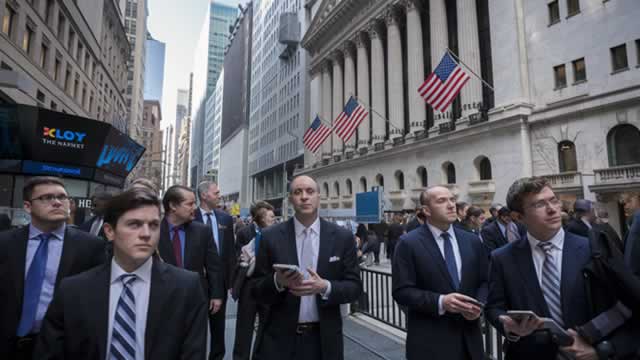
Patrick McHenry discusses the GOP's midterm election strategy, including shifting campaign funds to more competitive races. He strongly advises Republicans to address the debt ceiling while they control Congress and the White House, warning of potential Democratic leverage and increased Treasury market turmoil if left unresolved. Current Treasury yields are at their highest since 2002.
- GOP is reallocating campaign funds from less competitive races (e.g., North Carolina) to more urgent ones (e.g., Texas) for the 2026 midterms.
- McHenry urges Republicans to proactively raise the debt ceiling to avoid future political leverage by Democrats and prevent greater Treasury market instability.
- Treasury yields are at 2002 highs, attributed to high global debt/deficits and inconsistent messaging from the Treasury and Federal Reserve.

Sonali Basak, Chief Investment Strategist at iCapital, believes the bull market is alive and well, expecting the S&P 500 to hold double-digit gains despite anticipating a choppy Q4. She advises waiting for pullbacks (5-10%) to deploy new capital, favoring financials and industrials, and selectively tech hyper-scalers, while cautioning against energy and consumer sectors.
- The economy is growing at trend job growth, with no 'red alarms' in macro data, supporting solid earnings despite expected choppiness.
- Recommends waiting for pullbacks (5-10%) to add new money, especially in sectors left behind, and using hedging for downside protection.
- High conviction in financials due to a healthy macro backdrop and potential AI benefits, and sees tailwinds for industrials.
- Cautions against chasing momentum in tech, particularly in crowded semiconductor trades, and advises caution in energy and consumer sectors due to potential sluggish earnings.