Video Analysis

Neil Dutta suggests that while an October rate hike might be 'on life support' due to weak September payrolls, the Federal Reserve is still 'one bad inflation number away' from pulling the trigger on another hike. He expresses caution about fully embracing a dovish outlook, noting that core inflation has consistently run above the Fed's targets despite some weak labor cost data.
- Weak September payrolls put an October Fed rate hike on 'life support'.
- The Fed's core inflation forecast for Q4 2027 is 2.5%, but Q1 core inflation has been near 4% annually since 2023.
- Despite low unit labor costs and weak wage pressure, actual inflation remains above target, making the speaker reluctant to fully buy into a dovish thesis.

The September US jobs report showed significantly weaker-than-expected payroll growth (29k vs. 90k est.) and subdued wage increases, while the unemployment rate ticked up. This 'dovish' report led to a rally in equity futures, a plunge in bond yields, and a weaker dollar, as traders pared back expectations for aggressive Fed rate hikes.
- US September nonfarm payrolls rose by only 29,000, significantly below the 90,000 estimate, with a net revision subtracting 60,000 jobs from prior months.
- The unemployment rate increased to 4.2% (vs. 4.1% est.), and average hourly earnings grew by a mere 0.1% M/M (vs. 0.3% est.).
- Equity futures (S&P, Nasdaq, Russell) surged, bond yields (2-year, 10-year, 30-year) plunged, and the dollar weakened, as markets interpreted the data as reducing the urgency for the Federal Reserve to hike interest rates.
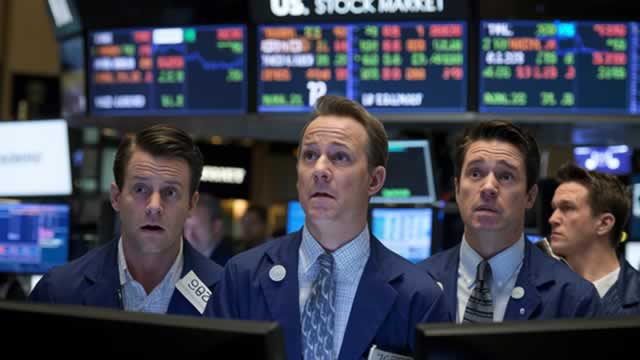
The September jobs report showed significantly weaker-than-expected non-farm payrolls (29K vs. 89K estimate), leading to a slight increase in the unemployment rate to 4.2%. Economist Joe Brusuelas highlights that despite the soft report, the labor market remains at full employment, and the U.S. economy is accelerating with strong Q3 growth.
- September non-farm payrolls came in at 29K, well below the 89K estimate, with prior months also revised down.
- The unemployment rate rose slightly to 4.2%, but this is attributed to more people entering the workforce, indicating a tight labor market.
- Average hourly earnings (M/M and Y/Y) were lower than anticipated, suggesting a potential easing of wage inflation.
- The weak jobs data is expected to lead the Federal Reserve to hold interest rates in October, though further hikes are anticipated in December and March.
- The overall U.S. economy is seen as healthy, with strong growth expected in Q3, driven by sectors like artificial intelligence and infrastructure.

The discussion focuses on the global bond market sell-off, leading to a flight to safety in assets like US Treasuries and German Bunds. France's fiscal and political instability is highlighted as a significant risk, causing fragmentation in the European bond market and widening credit spreads. Upcoming US jobs data is also a key focus, with potential implications for Federal Reserve policy.
- Global bond market sell-off is driving demand for safe-haven assets such as US Treasuries, Japanese Government Bonds (JGBs), and German Bunds.
- France's fiscal woes and political uncertainty are causing fragmentation in the European bond market, with contagion spreading to Italy and Belgium, and credit spreads widening.
- The upcoming US Non-Farm Payrolls report is a critical event; a strong number could surprise markets and pressure the Federal Reserve for more rapid rate hikes.
The video discusses rising global diesel prices, driven by refinery capacity issues rather than crude oil prices, and escalating tensions over supply. The US is pressuring European nations to release emergency diesel stocks, while China has halted fuel exports to protect its domestic supply. This situation could lead to an 'energy war' with significant economic consequences.
- US diesel sales prices hit a record high of $6.52/gallon on September 23rd, a 76% increase year-over-year, despite lower crude oil prices compared to early 2022.
- The price surge is attributed to a lack of refinery capability, exacerbated by conflicts in Ukraine and the Middle East.
- The Trump administration urged Germany and France to release emergency diesel stocks, threatening a US diesel export ban if they don't comply.
- Chinese refiners have suspended October fuel exports to bolster domestic stocks, further tightening global supply.
- Europe is the most exposed region to higher diesel prices, with diesel/gasoil accounting for 40% of its petroleum consumption; European drivers are already paying 40% more than at the start of the year.
The discussion centers on a global bond market rout, with Treasury yields and European borrowing costs (UK, France) reaching multi-year highs due to inflation concerns, fiscal uncertainty, and geopolitical tensions. Analysts highlight governments' struggle with debt and the potential for further market pressure if fiscal consolidation is not effectively addressed.
- US 10-year Treasury yields hit levels not seen since 2002, and UK 30-year gilt yields reached 6%, the highest since 1998, making the UK the first G7 country to pay such a rate since 2012.
- French fiscal uncertainty, including a projected 5.4% deficit this year, has caused the euro to tank against the dollar and widened the spread between French and German government bonds to a 14-year high.
- Fed officials express concern over persistent inflation and suggest higher rates, while the upcoming US Non-Farm Payrolls report is closely watched for labor market strength.

The US is pressuring the European Union to release its diesel stockpiles to boost global supplies and bring down prices, potentially averting a US export ban. Europe held emergency talks, with some officials questioning if current high prices warrant using strategic reserves, which are typically for more critical emergencies. France is open to G7 discussions on oil supplies and prices, but not export bans.
- US officials are urging the EU to release diesel stockpiles to lower global prices and increase supply.
- Europe held emergency talks, but some officials are hesitant, arguing strategic reserves are for more critical emergencies, not just price containment.
- French President Macron is open to G7 discussions on oil supplies and prices, but opposes US export bans.
- Diesel prices were down 5% on the day, despite questions about the long-term impact of reserve releases.

The video analyzes the 'blowout' in France's bond spreads (OAT-Bund), attributing it to a combination of high energy prices, political instability, and the nation's inability to address its budget deficits and implement necessary reforms. Analysts express significant concern over a potential self-reinforcing cycle of higher borrowing costs and deteriorating debt perception, with the market starting to 'punish' France's debt levels.
- France's widening bond spreads are driven by energy costs, political risk, and structural budget deficit issues.
- Upcoming presidential and general elections in France are seen as exacerbating political uncertainty and hindering critical reforms (social, pension, work).
- Analysts warn of a self-reinforcing cycle where higher yields lead to bigger deficit deterioration, further increasing borrowing costs and risk perception on French debt.

Barbara Doran discusses the current market valuation, noting the S&P 500's P/E has become cheaper and earnings growth is strong, making it a buy signal. She highlights resilient household wealth and the Fed's focus on inflation. Specific stock recommendations include Meta and Micron for their strong growth and AI integration, and Robinhood for its platform transformation, though she advises buying on weakness for the latter two.
- S&P 500 P/E ratio has dropped from 23 to just over 19, coupled with doubled earnings growth expectations (15% to 30%), indicating a buy signal.
- Household wealth has increased by $50 trillion since 2019, with significant contributions from stocks, providing a resilient consumer base.
- Meta (META) is seen as 'firing on all cylinders' due to strong user growth, ad revenue, and AI platform, while Micron (MU) benefits from structural demand, long-term contracts, and upcoming stock buybacks.
- Robinhood (HOOD) is undergoing an 'app transformation' with strong EPS and revenue growth and broadening financial services, but is currently expensive, suggesting a buy on weakness.
Economists Art Laffer and Douglas Holtz-Eakin discuss Federal Reserve policy, with Kudlow calling for Jerome Powell's resignation due to past mismanagement and inflation. Laffer and Holtz-Eakin agree on Powell's missteps but express optimism about current economic trends, including a shrinking monetary base, rising real interest rates, and a supply-side boom, which they believe will continue to bring down inflation.
- Larry Kudlow and guests advocate for Jerome Powell's resignation, citing past Fed mismanagement and accommodation of 'big government socialists' leading to high inflation.
- Art Laffer and Douglas Holtz-Eakin highlight positive economic trends like a shrinking monetary base, rising real interest rates, and a 'supply-side boom' driven by tax cuts and increased productivity.
- Both economists believe inflation is trending down (Core PCE and CPI 3-month changes at 2%) and advocate for continued tight monetary policy to achieve zero inflation, with Laffer expressing excitement about Kevin Warsh as a potential Fed chair.
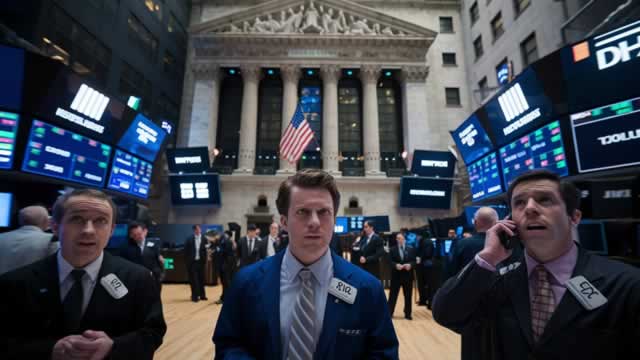
The video discusses the current state of the energy market, noting a significant outperformance of energy stocks and a critical diesel emergency despite record crude oil output. Adam Lampe, CEO of Mint Wealth Management, highlights the 'economic problem' of diesel shortages and advises clients to invest in energy companies, particularly refiners, for long-term growth while being mindful of policy risks.
- Energy stocks have seen substantial gains, with a 40% increase this year and strong outperformance in Q3.
- Diesel inventories have dropped below 100 million barrels for the first time since 2003, creating a 'diesel emergency' that impacts the economy.
- Corporate profit growth for energy companies is robust at 29%, with refiners seeing significant net profit increases.
- Policy risk, such as potential export bans, is a major concern that could further escalate prices on the East and West coasts.
- Investment strategy focuses on owning energy businesses (e.g., Chevron, Phillips 66) rather than oil futures, emphasizing diversified companies with strong fundamentals and proper hedging.

FDIC Chairman Travis Hill discussed the current interest rate environment, noting less dramatic increases than 2022, which is generally positive for banks. He addressed concerns about AI-driven 'agentic bank runs,' stating it would require a significant shift in consumer behavior. Hill also supported expanding deposit insurance coverage and highlighted ongoing regulatory work on capital and liquidity rules.
- Current interest rate increases are less dramatic than 2022, with longer-term rates rising more than shorter-term rates, which is generally positive for banks.
- Concerns about AI-driven 'agentic bank runs' are acknowledged, but Hill believes it would require a 'dramatic move' in consumer behavior to delegate financial decisions to AI agents.
- The FDIC is engaged with Capitol Hill on potential deposit insurance reform, including expanding coverage by raising the limit or creating new account categories.
- The FDIC is also working on finalizing capital rules, liquidity rules, and reviewing the bank merger process, aiming to balance safety with economic growth.
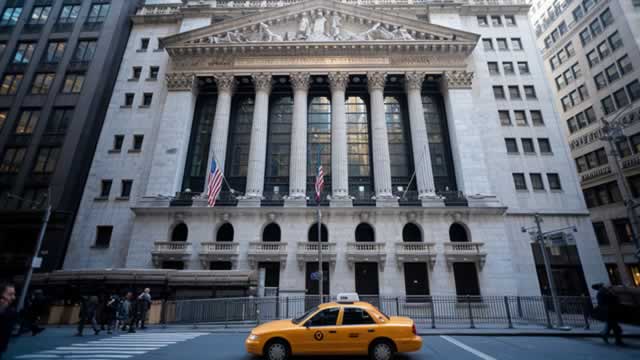
The market enters Q4 with a 'mixed bag' following a volatile September. While AI-driven tech companies like Micron are showing strong growth, the broader market faces challenges from rising Treasury yields, persistent inflation, and tightening credit, particularly impacting over-leveraged companies. The guest suggests the AI memory trade might be at its peak within a cyclical semiconductor sector.
- September was a choppy and volatile month, with the Dow and S&P 500 finishing lower, and the Nasdaq as the lone winner.
- The fixed income market is in its sixth year of a bear market, with rising Treasury yields posing significant risks to over-leveraged companies facing refinancing or default.
- Persistent inflation, higher oil prices due to geopolitical conflict, and technological disruption (AI) are creating a 'haves versus have-nots' dynamic in the stock market.
- Micron (MU) delivered a strong 4Q earnings report, with significant revenue growth in cloud memory and core data centers, driven by AI demand, but the semiconductor sector is inherently cyclical.

Dan Brouillette, former US Energy Secretary, discusses the ongoing diesel crisis, attributing high prices to geopolitical tensions in the Strait of Hormuz and refining bottlenecks. He suggests releasing fuel reserves and emphasizes the need for long-term infrastructure and permitting reform, while strongly advising against a US diesel export ban due to potential negative impacts on gasoline prices.
- High diesel prices are influenced by geopolitical issues (Strait of Hormuz) and domestic refining bottlenecks (98% utilization).
- Releasing fuel reserves (EU and US) could offer near-term relief, but a permanent solution requires opening the Strait of Hormuz.
- A US diesel export ban is a 'bad idea' as it would disrupt the refining process, potentially leading to reduced gasoline production and higher prices.
- Long-term solutions include building more refineries and pipelines, which necessitates significant permitting and judicial reform.

Larry Kudlow calls for Federal Reserve Chair Jerome Powell's resignation, citing mismanagement of a Fed building renovation project and broader monetary policy that led to high inflation. He echoes former President Trump's criticisms and links current economic woes to Democratic spending and 'woke' policies.
- Larry Kudlow advocates for Jerome Powell's resignation from the Federal Reserve.
- He highlights a Wall Street Journal editorial criticizing Powell for 'incompetence' in a Fed building renovation project, which saw significant cost overruns and delays.
- Kudlow references Donald Trump's past remarks calling Powell a 'disaster' and 'incompetent'.
- He attributes high inflation (9% peak, 21% cumulative) and high gas prices to Powell's 'easy money' policies and the Biden administration's 'Big Government Socialism' and 'radical climate change greenie policies'.

David Trainer makes a bold call that the AI bubble is on the verge of popping due to tightening liquidity, rising borrowing costs, and the government's inability to bail out the market. He warns of significant downside risk for AI-related stocks and advises Main Street investors to exit before professional investors do.
- The AI bubble is expected to pop due to liquidity squeezes across the market.
- Rising interest rates, delayed IPOs, and high junk bond yields (e.g., SoftBank's 9.25% offering) indicate a tightening liquidity environment.
- The government is unlikely to provide bailouts as it did in past crises, exacerbating liquidity concerns.
- An estimated $4 trillion in off-balance sheet debt and unrecognized earnings in AI companies could lead to a 25-30% drop in the S&P 500, with AI stocks potentially falling 50% or more.
- Main Street investors are advised to sell now to avoid becoming 'exit liquidity' for professional investors.

Jeremy Siegel, Professor of Finance at Wharton School, discusses the bond market, noting relief as yields pull back from 24-year highs. He believes the economy is strong enough to absorb further short-term interest rate increases, highlighting tech companies' resilience due to high margins, and suggests the Fed might still need two more hikes this year.
- Siegel expresses relief as bond yields, particularly the 30-year TIPS real yield, pull back from recent highs.
- He argues that high-margin tech companies (50-70% margins) are better positioned to absorb rising interest rates compared to 'real world' companies (7-10% margins).
- Siegel believes the economy can withstand further short-term interest rate increases and suggests the Fed may implement two more hikes this year, potentially considering political timing for the November meeting.

The Fox Business 'Big Money Show' panel discusses President Trump's announcement of a $200 billion investment from South Korea into U.S. energy infrastructure, including nuclear reactors, a natural gas project in Texas, and an LNG pipeline in Alaska. Panelists express strong support for these projects, highlighting their importance for American energy independence and the innovative role of AI in nuclear power, while also noting potential political risks to long-term project completion.
- President Trump announced a $200 billion investment from South Korea into U.S. energy infrastructure.
- The investment targets nuclear reactors, a natural gas project in Texas, and an LNG pipeline in Alaska.
- Panelists view these projects as crucial for American energy independence and praise the integration of AI in nuclear power.
- Concerns were raised regarding the long-term political commitment to these projects across different administrations.

The discussion highlights concerns about persistent inflation, indicated by a hot ISM prices index, which could impact consumer spending despite a lower PCE print. Micron's strong earnings, while 'A+ results,' saw the stock decline, suggesting a 'priced for perfection' scenario in the tech sector. The market's rally is noted to lack breadth, being driven by a small number of mega-cap stocks, raising questions about its sustainability.
- Hot ISM prices paid index (77.9 actual vs 72.9 estimate) suggests long-lasting inflation that will trickle down to consumers, potentially slowing spending.
- Micron (MU) posted 'A+ results' with significant data center revenue growth and strong guidance, yet the stock fell ~3%, indicating it was 'priced for perfection.'
- The broader market rally is concentrated in a 'very small number of stocks' (mega-caps/Mag 7), with a lack of breadth below the surface raising concerns about overall market support and sustainability.

Former President Donald Trump is calling for Jerome Powell to resign from the Federal Reserve Board of Governors, citing an internal watchdog report on alleged mismanagement and cost overruns during the renovation of the Fed's headquarters. Despite the report finding no criminal wrongdoing, Trump continues his long-standing criticism of Powell and the Fed. Powell, however, has indicated he intends to serve his full term until January 2028.
- Donald Trump demands Jerome Powell's resignation from the Fed Board over alleged mismanagement of headquarters renovations.
- An internal watchdog report noted cost overruns but found no criminal wrongdoing or administrative misconduct.
- Rachel Schilke of Bloomberg Government confirms Powell's intention to remain on the board until January 2028, highlighting Trump's ongoing criticism of the Fed.