Video Analysis

The discussion centers on the upcoming July CPI and PPI reports and their implications for Federal Reserve policy. Neil Dutta argues that despite negative payrolls, the recent jobs report indicates a tightening labor market. He believes that persistent inflation and increasing hawkish sentiment among Fed governors make a September rate hike highly probable, contrary to current market expectations for a hold.
- July CPI and PPI reports are critical, with inflation expected to remain above the Fed's 2% target.
- The recent jobs report, showing negative payrolls but a ticking down unemployment rate, reinforces the Fed's hawkish stance.
- Neil Dutta predicts a high probability of at least one more Fed rate hike by year-end, possibly in September, due to persistent inflation and tightening labor market conditions.
- He notes increasing hawkish sentiment among Fed governors, suggesting the Fed Chair may have no choice but to align with a hike.
Negotiations between Iran and Oman regarding the Strait of Hormuz face significant hurdles due to Iran's new demands and recent attacks on regional energy infrastructure. Despite ongoing discussions, an immediate return to normal oil flows is not expected, leading to continued market uncertainty.
- Iran and Oman are discussing a temporary arrangement for the Strait of Hormuz, with Iran presenting new demands.
- Recent attacks on Saudi Aramco's Jazan refinery and an Abu Dhabi National Oil Company vessel highlight escalating regional tensions.
- Iran's demands include lifting the US naval blockade and sanctions, US military withdrawal, reparations, and an end to attacks on its allies.
- Traders and shipowners anticipate weeks or months for oil flows to normalize, even if an agreement is reached, due to physical and geopolitical challenges.
- The US White House is trying to manage messaging, but the situation is described as extremely fragile, with Iran maintaining that the US is not a direct party to the current discussions.
Joe Quinlan remains bullish on the US economy, highlighting its underlying health and resilience despite the weak July jobs report. He points to strong job growth in construction, manufacturing, and healthcare, driven by data centers, foreign investment, and defense spending. Quinlan advises investors to lean into market pullbacks, seeing an underappreciated capacity for the economy to absorb shocks.
- Despite a headline miss, the July jobs report shows underlying economic health with growth in construction, manufacturing, and healthcare jobs.
- The current manufacturing and construction boom is driven by AI data centers, foreign direct investment in chemicals/autos, and increased defense spending.
- The US economy demonstrates resilience against concerns like the consumer, federal budget deficit, and dollar strength, suggesting an underappreciated capacity to absorb shocks.
- Renewable energy, particularly solar, is gaining new life and recognition as a critical energy source, both domestically and globally.
- AI is in its early stages of buildout and adoption, expected to drive increased productivity and higher-paying jobs in the long term, despite potential short-term job displacements.

The July jobs report showed an unexpected decline in payrolls and a falling unemployment rate driven by reduced labor force participation, not job growth. This, coupled with persistent downward revisions to past payroll data and an expected soft CPI print, suggests a cooling labor market and easing inflation, potentially reducing pressure on the Fed to hike rates in September.
- July payrolls fell by 23,000 (vs. est. +80,000), with significant downward revisions of 103,000 for the prior two months.
- The fall in the unemployment rate to 4.1% was primarily due to a shrinking labor force, particularly younger workers (ages 16-24), rather than strong job creation.
- Key sectors showing weakness include local government education and leisure/hospitality, while construction (driven by data centers) was the only strong sector.
- Bloomberg Economics expects a modest CPI print next week, with year-over-year core CPI potentially falling to 2.4%, the lowest in over five years.
- The economist suggests that these weak labor market and inflation signals could vindicate a 'no hike' position for the Fed in September.
Mohamed El-Erian discusses the market's muted reaction to political efforts to dismiss Fed Governor Lisa Cook, attributing it to confidence in Fed independence. He analyzes Kevin Warsh's potential approach as Fed Chair, highlighting his commitment to reforms and a shift away from explicit forward guidance. El-Erian also explains rising long-end bond yields as a result of increased demand for capital, rather than issues with Fed credibility.
- The market showed no significant reaction to news of efforts to dismiss Fed Governor Lisa Cook, indicating confidence in the Federal Reserve's independence.
- Mohamed El-Erian suggests that Kevin Warsh's potential leadership at the Fed would focus on reforms, a move away from explicit forward guidance and 'dots', and a clear reaction function using interest rates to combat inflation while monitoring supply-side factors.
- Rising long-end Treasury yields are primarily attributed to an increased demand for loanable funds (e.g., corporate capital expenditure from companies like Alphabet, government deficits) and shifts in global capital supply, rather than a loss of Fed credibility.

Tom Porcelli, Wells Fargo Chief Economist, argues that current inflation is primarily driven by supply shocks (tariffs, energy) which the Fed cannot effectively impact through rate hikes. He points to core inflation metrics being near the Fed's target on a 3-month annualized basis, suggesting further tightening is unnecessary and could harm growth. He also notes that consumer spending on durable goods has already self-corrected.
- Porcelli believes the Fed should hold rates, as inflation drivers like tariffs and energy are supply shocks beyond the Fed's control.
- He highlights core CPI at 2.5% and 3-month annualized core CPI at 2.2%, suggesting inflation is largely on target.
- Porcelli dismisses the 'Dr. Copper' argument for rate hikes, stating that consumer durable goods spending has already slowed, indicating self-correction in the economy.
The video discusses the July US jobs report, which showed an unexpected drop in payrolls but a lower jobless rate due to seasonal factors and labor force exits. It also covers political discourse around economic issues like affordability and the Iran war, and explores how retail investors are leveraging AI for trading, raising questions about market concentration and job impacts.
- The July US jobs report indicated a -23K nonfarm payrolls, but a lower jobless rate of 4.1% attributed to seasonal education job losses and a shrinking labor force.
- Political commentary highlights a disconnect between the White House's economic messaging and public concerns about affordability, standard of living, and high gas prices.
- Retail investors are increasingly using artificial intelligence (AI) to build sophisticated trading models and generate trading calls, potentially leading to concentration risks if similar models are used widely.
- AI is also contributing to job creation in non-residential construction (data centers) and computer/semiconductor manufacturing, though its broader impact on traditional financial roles is still being assessed.

The video discusses the current state of the financial markets, noting that despite a worse-than-expected jobs report, the market is higher due to a healthy cooling of the labor market and strong economic fundamentals. The analyst advises investors to broaden and diversify their portfolios beyond the 'Magnificent Seven' tech stocks, highlighting opportunities in AI infrastructure, industrials, financials, and healthcare.
- The labor market is cooling in a 'healthy way' with historically low layoffs, and the overall economy remains on 'solid footing'.
- The Federal Reserve is likely to remain on hold regarding interest rate hikes, as current economic data aligns with their goals.
- Investment strategy should focus on diversification across sectors, with a preference for value and small-cap stocks over concentrated tech holdings.
- Key opportunities are identified in AI infrastructure, industrials, financials (including alternatives like KKR and Apollo), and healthcare (especially GLP-1s like Eli Lilly).
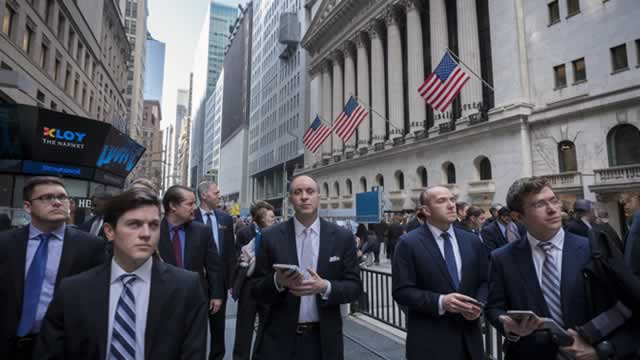
The discussion centers on the July jobs report, which unexpectedly showed a loss of 23,000 nonfarm payrolls and a 4.1% unemployment rate. Despite the weak economic data, stocks are rising as investors anticipate the Federal Reserve may pause or cut interest rates sooner. Panelists debate the accuracy of the data, the bifurcated job market, and the impact of supply shocks on the economy and Fed policy.
- July jobs report: -23k nonfarm payrolls, 4.1% unemployment rate, with prior months revised down significantly.
- Stocks are rising as a weak jobs report eases pressure on the Fed for a September rate hike, potentially leading to earlier rate cuts.
- Discussion highlights a bifurcated job market (blue-collar demand vs. white-collar automation), supply shocks (oil, AI chips), and concerns about data reliability.
- Small business owners are focused on employee retention and consumer spending, while Big Tech is exploring AI for efficiency and cost reduction.
- OpenAI is reportedly developing a new ChatGPT speaker device, sparking debate on AI hardware and privacy.

The US July jobs report revealed a fall in nonfarm payrolls and significant downward revisions for prior months. While the unemployment rate ticked down, it was due to decreased labor force participation, and wage growth slowed. Economists discuss the mixed signals for consumer health and the Federal Reserve's monetary policy decisions.
- US July nonfarm payrolls fell by 23,000, significantly missing estimates, with prior months revised down by 103,000.
- The unemployment rate decreased to 4.1%, but this was accompanied by a decline in the labor force participation rate.
- Wage growth came in soft, which could be negative for consumer spending but might ease inflation concerns for the Fed.
- The data suggests a less overheated labor market, potentially influencing the Federal Reserve towards a more cautious stance on interest rate hikes.

White House National Economic Council Director Kevin Hassett discusses President Trump's frequent economic conversations with Kevin Warsh, a potential Fed Chair nominee. Hassett emphasizes Trump's trust in Warsh to make data-driven decisions and respect for Fed independence, noting that Trump values diverse opinions and doesn't have patience for 'yes men.'
- President Trump and Kevin Warsh (a potential Fed Chair nominee) discuss the economy 'all the time,' according to Kevin Hassett.
- Hassett asserts that Trump is '100% sure' Warsh would make decisions based on numbers and avoid 'partisan games,' while respecting Fed independence.
- It would be 'normal' for Trump to ask Warsh about economic data like job numbers, and the President is open to a 'wide range of opinions.'

Torsten Slok of Apollo Global Management discusses the July jobs report, which showed a disappointing -23K nonfarm payrolls. He notes statistical quirks that might have influenced the number, but acknowledges a general softening in the labor market. The market reacted positively, with stocks rising and Treasury yields falling, as it implies a less aggressive Federal Reserve, pushing out expectations for future rate hikes.
- July nonfarm payrolls were -23K vs. an estimated +83K, with specific negative prints in local government education and leisure/hospitality potentially influenced by seasonal adjustments and the World Cup.
- Average hourly earnings showed the smallest year-over-year gain since May 2021, and household employment declined, indicating a softening labor market.
- The market interpreted the weaker jobs data as a signal for the Fed to potentially slow or delay rate hikes, leading to a rally in stocks and a drop in Treasury yields.
- The next critical data point for the Fed's decision-making will be the upcoming CPI report, and clarity on forward guidance is expected from Jackson Hole.

BlackRock's Rick Rieder describes the July jobs report as 'unremarkable' and sees a 'productivity revolution' driving the economy. He argues that Fed rate hikes are ineffective against current inflation, which is better addressed by fiscal policy. In fixed income, he favors stable yields in European and emerging markets, avoiding excessive credit risk despite high debt issuance.
- The July jobs report is deemed 'unremarkable,' with low job growth and no significant wage growth, suggesting a 'productivity revolution' in the economy.
- Rieder believes the Fed's rate hikes are ineffective against current inflation, which is sticky in services like education and healthcare, advocating for fiscal policy solutions instead.
- BlackRock's fixed income strategy focuses on securing high yields (around high 6s) from A-rated credit in European and emerging markets, while being cautious on US investment-grade credit due to significant supply.

A cyclospora outbreak, the largest ever in the US, is significantly pressuring restaurant stocks, particularly those relying on fresh produce. This food safety scare, coupled with a smaller salmonella outbreak and general customer concerns about raw vegetables, has led to reduced foot traffic and downgraded financial outlooks for several companies in the sector.
- The cyclospora outbreak has caused a 'cloudy restaurant outlook,' with Papa John's (PZZA) down 17% and the Russell 3000 Index for Restaurants & Bars under pressure.
- Sweetgreen (SG) cut its full-year same-store sales growth forecast from down 2-4% to down 7-8%, citing reduced demand due to the cyclospora outbreak, leading to a 12-14% drop in after-hours trading.
- Other companies like Cava (CAVA) and Yum Brands (YUM) have also seen stock declines, and one chain, Salad and Go, filed for bankruptcy, attributing it partly to the outbreak.
The July jobs report indicated a loss of 23,000 jobs, coupled with slowing average hourly wage growth and a drop in the unemployment rate to 4.1%. This data is viewed positively by the market, easing inflation concerns and reducing the likelihood of a September Fed rate hike. Company earnings were mixed, with Airbnb surging on strong results and AI strategy, while The Trade Desk plunged due to a double miss and weak guidance.
- The July jobs report showed a loss of 23,000 non-farm payrolls, with average hourly earnings slowing (0.1% M/M, 3.2% Y/Y) and the unemployment rate dropping to 4.1%.
- This macroeconomic data is interpreted as a positive sign for cooling inflation, leading to higher stock futures and lower bond yields, with September Fed rate hike odds dropping to 40.1%.
- Airbnb (ABNB) surged over 7% pre-market on strong Q2 earnings and raised guidance, attributing success to its AI strategy, while The Trade Desk (TTD) plunged nearly 30% after missing earnings and providing weak Q3 guidance.

The US July jobs report showed an unexpected decline of 23,000 nonfarm payrolls, significantly missing the +80,000 estimate, with previous months also revised lower. Despite the job losses, the unemployment rate fell to 4.1%. Financial markets reacted positively, with equities rising and bond yields falling, as traders pared bets on future Fed rate hikes due to signs of a weakening labor market and disinflation.
- US July Nonfarm Payrolls fell by 23,000, against an estimated gain of 80,000.
- The unemployment rate dropped to 4.1% from an estimated 4.2%, while average hourly earnings rose a modest 0.1% M/M.
- Bond yields (2-year, 10-year, 30-year) fell, and equity futures (S&P, Nasdaq, Russell) rose, indicating market belief in a less aggressive Fed.

Jeffrey Rosenberg of BlackRock discusses the July US jobs report, noting that while the headline unemployment rate fell, the underlying payroll numbers and revisions point to labor market weakness. He highlights that the market is interpreting this data as reducing the probability of a September Fed rate hike, which is seen as a positive development for inflation expectations.
- US July Nonfarm Payrolls fell by 23,000 (vs. est. +80,000), indicating labor market weakness.
- The unemployment rate dropped to 4.1% (vs. est. 4.2%), but this is attributed to a fall in the participation rate, not strong job creation.
- Average Hourly Earnings (MoM and YoY) came in below estimates, suggesting easing wage inflation.
- Traders are paring bets on a September Fed rate hike, with the probability falling below 40%.
- Rosenberg views the easing wage picture as 'helpful' for longer-run services inflation and the overall inflation outlook.
Astris Advisory's Neil Newman predicts a stronger Japanese Yen by year-end, driven by anticipated Bank of Japan rate hikes and a Federal Reserve rate cut. This currency appreciation is expected to lower import costs, boost corporate profitability, and ultimately lead to a positive outlook for Japanese equities and the broader Asian market.
- Expect the Bank of Japan to hike rates twice this year.
- The Federal Reserve is anticipated to cut rates once in September or October.
- A stronger yen will reduce import costs, temper inflation, and support corporate profits in Japan.
- This is expected to lead to a rally in Japanese equities and provide a tailwind for the broader Asian market.
The discussion centers on escalating geopolitical tensions impacting global oil supply. Attacks in the Strait of Hormuz and a significant Houthi attack in Yemen threaten key shipping lanes, leading to uncertainty and driving Brent Crude prices higher. Iran's potential move to bar US and Israeli ships from Hormuz further exacerbates concerns.
- Reports of attacks on ships in the Strait of Hormuz by Iranian media and warnings from the UK Navy are causing supply uncertainty.
- Iran is reportedly considering banning US and Israeli ships from the Strait of Hormuz and implementing a toll system for 'hostile' nations.
- Houthi rebels carried out a large-scale attack in Yemen, posing a new threat to tankers using the Red Sea, an alternative shipping route.
The discussion centers on the cryptocurrency Clarity Act in the Senate, with Coinbase Vice Chair Ryan VanGrack advocating for its passage. He argues that the bill, despite delays, is crucial for establishing federal oversight and clear rules for the crypto industry, which currently lacks comprehensive regulation. The bill is seen as beneficial for both the industry and consumer protection, with support from various stakeholders including major financial institutions.
- The Clarity Act aims to establish clear rules and federal oversight for digital assets, splitting crypto oversight between agencies.
- Coinbase is actively pushing for the bill's passage, viewing it as essential for bringing necessary regulation to the crypto industry.
- Despite political delays and concerns from some traditional banks, the bill is supported by law enforcement, major financial institutions, and millions of crypto users, as it would impose, not remove, regulatory obligations.