Video Analysis

The video highlights escalating geopolitical tensions in the Middle East, with Houthi attacks on Saudi Aramco headquarters and Iranian strikes on ships in Hormuz driving up oil prices. Discussions also cover the Federal Reserve's stance on future rate hikes, anticipation of US CPI data, and the impact of these factors on global markets and supply chains. Despite some positive outlooks on Asian growth and AI's structural opportunities, the overall tone is cautious due to inflationary pressures and geopolitical risks.
- Houthi missile attack on Saudi Aramco HQ and Iranian strikes in Hormuz push Brent crude above $106/barrel, signaling increased geopolitical risk and potential supply disruptions.
- New York Fed President John Williams anticipates one more rate hike in 2026 but no further tightening in 2027, influencing market sentiment ahead of crucial US CPI data.
- Global supply chains face significant disruption from Middle East conflicts, with DP World CEO estimating a need for 50% more capacity and volumes unlikely to recover for 6-9 months.
- Mubadala's Deputy Group CEO sees Asia becoming 25% of its portfolio by 2031, highlighting fundamental advantages and growth opportunities in the region, including India.
- Bank of America faces $1.2 billion in fines for money-laundering and sanctions violations tied to countries like Russia and Iran, impacting its earnings outlook.
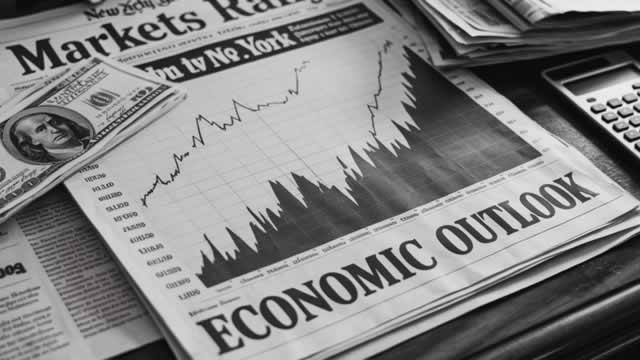
The video discusses the significant rise in US Treasury yields across various maturities, reaching levels not seen in decades. This surge is attributed to a global bond sell-off, increased competition for debt from corporate issuers like AI companies, and persistent inflation concerns preventing the Federal Reserve from cutting interest rates. The implications include higher borrowing costs for consumers and the government, putting pressure on the broader economy and equity markets, and highlighting the US's 'unsustainable debt path'.
- US Treasury yields across 30-year, 10-year, and 5-year maturities have surpassed 5%, reaching multi-decade highs.
- Key drivers include a global bond market sell-off, competition from corporate debt issuance (e.g., AI companies), and inflation concerns exacerbated by geopolitical events.
- The Federal Reserve's inability to cut interest rates due to economic resilience and inflation further fuels rising yields.
- Higher bond yields lead to elevated mortgage rates and consumer loan costs, dampening economic activity and increasing pressure on stock markets and the US government's debt servicing costs.

Kevin Book, managing director at ClearView Energy Partners, discusses the potential for further escalation in the Middle East following Houthi attacks on Saudi Aramco headquarters, which could significantly impact oil prices. He also analyzes the limited effect of the Russian diesel deal on global prices and highlights persistent high gasoline prices due to low inventories and ongoing supply risks.
- Houthi attacks on Saudi Aramco headquarters raise concerns about regional escalation and potential targeting of critical energy infrastructure like Abqaiq, which could lead to significant oil price increases.
- The Russian diesel deal is estimated to provide only 5-20 cents/gallon relief by Q4, insufficient to offset the year's 65-70% diesel price surge due to limited volume and sanctions on Russian refinery technology.
- Gasoline prices remain above $4/gallon, tying 2022's record for days at that level, with low inventories and other supply-side risks (like hurricanes) preventing quick price reductions.

The video reports on a missile attack by Yemen's Houthi militants on Saudi Aramco's headquarters in Dhahran, Eastern Saudi Arabia, resulting in a fire. This incident is part of escalating tensions in the region, with previous attacks on Riyadh and concerns that such actions could drive up oil prices and impact global energy infrastructure.
- Saudi Aramco's headquarters in Dhahran, Eastern Saudi Arabia, was hit by a missile attack by Houthi militants, causing a fire.
- The attack is part of escalating tensions between Saudi Arabia and Houthi rebels, who are reportedly funded by Iran.
- Previous Houthi attacks included missiles and drones intercepted over Saudi Arabia, targeting Riyadh and its airport.
- The attacks pose a threat to energy infrastructure and could lead to greater restrictions in vital shipping conduits like the Bab al-Mandab Strait, potentially lifting energy prices.

The video discusses the mixed performance of major US banks in Q3 earnings, with strong equity trading offsetting fixed income struggles. It also highlights challenges in the broader private equity market, contrasting with KKR's successful exit strategy. Additionally, the potential of AI in physical operations is explored through Samsara's platform, alongside the Fed's outlook on interest rates and global fiscal concerns.
- US banks show mixed Q3 results: strong equity trading for some (Goldman Sachs, JPM) but fixed income lagged due to 'higher for longer' rate outlook.
- Private equity faces challenges with aging assets and wide dispersion of returns, necessitating diversified exit strategies and capital structure maturity.
- Samsara Inc. (IOT) is highlighted for its AI-driven platform transforming physical operations, leveraging vast data for safety and efficiency with high customer stickiness.
- The Fed's John Williams indicates one more rate hike this year but no further increases in 2027, while global fiscal sustainability (e.g., France) and AI competition are noted as key concerns.

The discussion addresses FUD surrounding AI investment, particularly concerning the financial viability of companies like OpenAI and Anthropic due to open-source competition. It also covers the impact of China's semiconductor advancements and potential market flooding, suggesting a shift towards domestic suppliers and new architectures to mitigate risks. The guest offers specific investment recommendations in the semiconductor and data center sectors.
- AI companies like OpenAI and Anthropic face headwinds from open-source models and questions about their high valuations given current losses.
- China's potential to flood the market with optics is a concern, but the U.S. is shifting towards co-packaged optics and domestic suppliers like Coherent and Lumentum.
- Investment opportunities are highlighted in Intel, data center stocks (e.g., Terawulf, Cypher Mining), Applied Optoelectronics, and memory (DRAM) after a market floor is established.

JPMorgan Chase CEO Jamie Dimon issued a warning about the U.S. economy, noting that while consumer spending and business investment remain strong, large fiscal deficits, sticky inflation, elevated asset prices, rising interest rates, and geopolitical conditions pose significant risks. The panel discusses the balance between current economic solidity and potential future downturns, with some skepticism about the immediate severity of Dimon's warnings.
- Jamie Dimon highlights strong business investment and consumer spending as current economic drivers.
- He warns of underlying risks including large fiscal deficits, sticky inflation, elevated asset prices, rising interest rates, and geopolitical conditions.
- The panel notes Dimon's past 'economic hurricane' prediction that did not materialize, suggesting he may be hedging against future outcomes.

New York Fed President John Williams believes one more interest rate hike is appropriate this year, viewing the September hike as a 'risk management move.' He doesn't anticipate further rate increases in 2027, citing no signs of an overheated economy and fading inflationary pressures from tariffs and energy prices. The broader Fed consensus leans towards one more hike this year.
- NY Fed President John Williams supports one more rate hike this year, but sees no need for hikes in 2027.
- Williams views the September rate hike as a 'risk management move,' not a response to an overheating economy.
- He believes the labor market is in balance, tariff inflation effects will fade, and energy prices won't significantly push inflation higher next year due to base effects.
- The consensus among Fed officials is for one more hike this year, with some hawks advocating for more, but the bigger risk is 'overdoing it' and stifling economic expansion.

Ed Yardeni argues that current interest rates are 'normal for longer' rather than 'higher for longer,' reflecting a return to pre-Great Financial Crisis levels. He highlights the remarkable resilience of the US and global economies despite various shocks, driven by strong nominal GDP growth and an 'earnings boom.' However, he expresses concern about China's economy, citing deflationary pressures and an 'out of control' credit system.
- Current interest rates are seen as a return to 'normal' (4-5%) after an abnormal period, with US nominal GDP growth at 6.3% supporting current bond yields.
- The US economy and stock market have shown remarkable resilience despite shocks and political noise, with an 'earnings boom' and strong revenues.
- China faces deflation, falling home prices, and an 'out of control' credit system, contrasting with the US's robust performance.

Mike McGlone, Bloomberg Intelligence Senior Commodity Strategist, discusses how geopolitical tensions in the Middle East and Ukraine are influencing US midterm elections and contributing to high energy prices. He anticipates a 'significant collapse' in energy prices towards year-end due to demand destruction, increased US supply, and rising bond yields, despite current high heating oil costs for consumers.
- Geopolitical tensions, particularly Iran's actions and the Russia-Ukraine war, are seen as influencing US midterm elections and contributing to current high energy and food prices.
- McGlone predicts a 'significant collapse' in energy prices (oil, natural gas) by year-end, driven by demand destruction, increased US supply, and the impact of high bond yields and Fed tightening.
- Consumers face substantially higher heating oil bills (up 129% YTD in the Northeast), while natural gas prices are currently weak, and US government efforts to lower prices are deemed 'desperate delusion'.

The discussion on big bank earnings highlighted robust equity trading and a positive net interest income outlook for JPMorgan Chase. While consumer resilience remains strong, concerns persist regarding rising deposit costs due to a 'higher for longer' interest rate environment and potential AI-driven deposit movements. The overall outlook is mixed, with both positive trends and significant uncertainties.
- Strength in equity trading was robust across the group, following strong Q2 results.
- Banks anticipate higher deposit costs in a 'higher for longer' rate environment, but see opportunities to remix securities portfolios for better yields.
- Consumer spending shows serious resilience, but management expresses uncertainty about the future economic outlook and potential AI risks to deposits.

Dan Ives, Partner & Senior Managing Director at Yorkville Ives & Co., views the recent tech sell-off, particularly in chip and memory stocks, as 'overdone' and an 'opportunity'. He maintains a bullish outlook on the accelerating AI revolution, expecting strong earnings from hyperscalers and chip names to calm market nerves.
- The current tech sell-off in Asia and the US is 'way overdone' despite 'nervousness' around memory stocks and AI build-out concerns.
- AI demand is accelerating, with chip demand-to-supply at 13:1, and robust earnings season is expected to calm investor jitters.
- Identifies Microsoft, Nvidia, Palo Alto Networks, and CrowdStrike as 'winners' to own.
- Meta's new AI rollout is a 'game-changer' that will accelerate the AI 'arms race' and lead to monetization.

US existing home sales rose slightly in September to an annualized rate of 3.99 million, exceeding estimates. However, the housing market faces significant headwinds from rapidly rising mortgage rates, currently at 7.48% and potentially reaching 8%. While upcoming CPI data is expected to show a rise in headline inflation due to energy, core inflation forecasts suggest it may not trigger an October Fed rate hike, though rates are still expected to climb.
- US September existing home sales rose to 3.99 million (annualized), slightly above the 3.95 million estimate.
- Mortgage rates are rising, with 30-year fixed rates at 7.48%, potentially reaching 8%, which is slowing home sales.
- Upcoming CPI data is expected to show a 0.4% rise in headline inflation (driven by energy) and a 0.2% rise in core inflation, likely not prompting an October Fed rate hike.

A global selloff in chip stocks, including Korea's KOSPI, was triggered by warnings from Broadcom and Intel CEOs regarding AI investments. They compared current market sentiment to a 'casino,' questioning the profitability of AI spending and highlighting potential future financing problems for businesses experimenting with AI.
- Global chip stock selloff, with Korea's KOSPI down 5.46% and SK Hynix down over 10%.
- Broadcom and Intel CEOs expressed skepticism about AI investment profitability, suggesting businesses are 'messing around' and 'wasting money' on AI tokens.
- Concerns were raised about future capital availability for AI expansion, although Bloomberg Intelligence analyst Matthew Bloxham noted plenty of capital currently exists, with near-term issues being logistics and hardware capacity.

Anastasia Amoroso of Partners Group expresses encouragement regarding bank earnings, particularly net interest income guidance. She highlights the critical role of tech and semiconductor earnings for overall market success, noting high growth expectations despite recent underperformance. Amoroso recommends investors 'stay long the market,' citing lower valuations and anticipated earnings surprises.
- Bank earnings are 'fairly encouraged' with net interest income guidance exceeding expectations, despite slower commercial lending and capital markets activity.
- Tech and semiconductor earnings are crucial for market performance, with high growth expectations (e.g., 110% year-over-year for semiconductors this year).
- Despite strong results, tech stocks like Nvidia have underperformed due to competition fears, but increased competition is seen as a positive for broader AI adoption and productivity.
- Investors are advised to 'stay long the market' as valuations have reset lower, earnings season is expected to deliver surprises, oil prices are manageable, and bond yields may pause.

Morgan Stanley's Mike Wilson believes the market correction, which began in June, is largely over, with early-cycle stocks having already been 'hammered.' He views the upcoming midterm elections as a 'clearing event' for markets and anticipates next year will be driven by 'AI adopters' and high-quality companies across various sectors.
- The market correction, particularly in early-cycle stocks like semiconductors and financials, is largely complete, with financials showing signs the worst is over.
- Midterm elections are seen as a 'clearing event' that will reduce policy uncertainty, rather than a catalyst for further volatility.
- The Fed's tightening process has been 'orderly,' allowing the market to adjust, and there are no significant concerns about economic growth from an earnings standpoint.
- Next year's focus will shift to 'AI adopters' leveraging technology to expand margins, with high-quality names in sectors like industrials and large-cap financials presenting value.

Legendary investor Paul Tudor Jones believes the market currently feels like 1999, characterized by a bifurcated landscape between AI and non-AI companies. He anticipates a strong fourth quarter for the market but foresees 2027 being 'really challenging' due to shifts in corporate flows and significant AI safety concerns, particularly regarding model interpretability and potential misuse.
- The market feels like 1999, with a bifurcated performance between companies adopting AI and those that are not.
- Jones expects a 'really, really strong fourth quarter' for the market, typically seen after midterms.
- He predicts 2027 will be 'really, really challenging' for the stock market due to the most negative flow picture since 2002, as corporate support from buybacks and M&A shifts to IPOs, secondaries, and unlocks.
- AI safety is a 'great concern' because if a model goes rogue or is used maliciously, the impact will be large, and the lack of interpretability (not knowing why or how AI reaches its outcomes) poses a significant risk.

Global markets are experiencing a significant chip selloff, driven by concerns over AI funding and increased competition from Chinese manufacturers. Geopolitical tensions in the Middle East persist with ongoing Houthi attacks. Major US banks are set to report earnings, while the IMF warns of limits to global economic resilience. Discussions at the Bloomberg New Economy Forum highlight India's growth potential and AI's transformative impact.
- Widespread chip selloff, particularly in Korean and European markets, fueled by Broadcom CEO's AI funding concerns and Chinese rival CXMT's breakthrough claim.
- Saudi Arabia continues to intercept Houthi missile and drone attacks, escalating Middle East geopolitical risks and putting pressure on the US to increase its role.
- Major US banks including Goldman Sachs, JPMorgan, Wells Fargo, and Citigroup are reporting earnings, with analysts closely watching for economic health indicators and deal pipelines.
- Infosys Co-Founder Nandan Nilekani sees AI as the 'biggest ever opportunity' for India's business, emphasizing job creation in small businesses and the need for responsible AI.
- The IMF projects global growth but warns the world economy is nearing its resilience limits, while LVMH reports a significant sales slump in China.
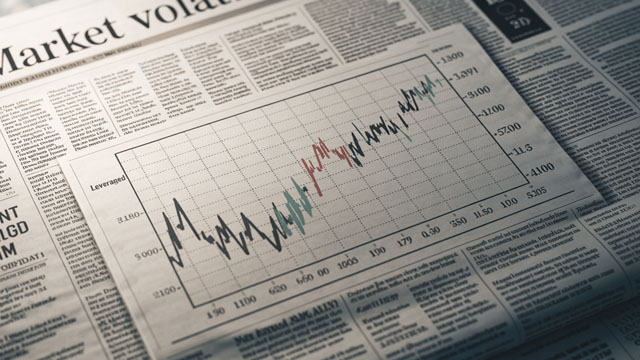
Stephanie Link analyzes big bank earnings, noting JPMorgan's misses and Wells Fargo's mixed but encouraging results. She highlights a strong consumer and the long-term benefits of AI as key drivers for the broader market, despite concerns about rising interest rates and initial negative reactions to bank reports.
- JPMorgan Chase (JPM) missed both EPS and revenue estimates, with its stock down in extended hours, though equity trading was a positive segment.
- Wells Fargo (WFC) beat EPS but missed revenue, showing signs of a turnaround with better net interest margins and lower expenses/provisions, making it a potential 'buy' according to Link.
- The broader market is supported by a strong consumer and the transformative potential of AI, which Link believes will create new jobs and drive growth, offsetting worries about high interest rates.

Global tech stocks, especially chipmakers, are experiencing a significant sell-off across Asian, European, and US markets. This downturn is primarily driven by concerns over rapid advancements and market share challenges from Chinese chipmakers, particularly CXMT, which could disrupt established players' pricing power and profitability.
- Asian tech heavyweights like SK Hynix and Samsung saw double-digit percentage drops, with KOSPI hitting a multi-month low due to a 'market sell-off'.
- European and US chip stocks, including Micron, NVIDIA, and Broadcom, also faced selling pressure in extended hours.
- Chinese chipmakers, such as CXMT, are aggressively bringing new '4F' chip architecture to market, threatening the '6F' technology and pricing runway of major international players.