Video Analysis
Carl Weinberg argues that the global bond sell-off and rising yields are primarily driven by the massive borrowing needs of large-scale AI investment, which now rivals government deficits worldwide. This 'crowding out' effect diverts savings from other sectors, increasing the risk in the global portfolio due to concentrated bets on AI.
- Large-scale AI investment (estimated $500-600 billion last year, with another $200 billion coming) is absorbing a significant amount of global savings.
- This AI borrowing, combined with government deficits, is 'crowding out' other investments, particularly from small businesses, leading to rising bond yields globally.
- The concentration of investment in the AI sector increases the overall riskiness of the aggregate global portfolio, raising concerns about potential market instability if the 'AI trade' falters.

Anthony Scaramucci, SkyBridge Capital founder, discusses Bitcoin's current price stability, attributing it to miners shifting to AI and capital flows. He remains bullish on Bitcoin long-term, expecting it to surpass $100,000 again due to the upcoming halving, but notes a lack of near-term catalysts. The Clarity Act is viewed as a long-term positive for regulatory clarity.
- Bitcoin's price has been stable for nine weeks, its tightest volatility band in five years, due to miners shifting compute power to AI and capital flowing into AI.
- Scaramucci maintains a bullish long-term outlook on Bitcoin, predicting it will move above $100,000 again, driven by the next halving cycle (18-19 months away).
- The Clarity Act is considered a long-term positive for the crypto industry by providing regulatory clarity and banking access, but not a significant near-term price catalyst.
The discussion highlights significant headwinds for equity markets due to rising yields and elevated crude oil prices, exacerbated by geopolitical tensions. Home Depot's earnings beat expectations, but the housing market remains stagnant. Big Tech's substantial off-balance sheet AI commitments are noted as a growing financial obligation.
- Rising 10-year and 30-year Treasury yields, along with elevated crude oil prices, are creating headwinds for equity markets.
- Home Depot (HD) reported better-than-expected 2Q earnings and reaffirmed FY guidance, but the CFO noted 'frozen housing market conditions' due to high interest rates.
- Wall Street Journal reports nine top tech companies have $3T in off-balance sheet AI commitments, growing faster than traditional capex, raising questions about future revenue generation to cover these obligations.

Ed Yardeni discusses rising German and US bond yields, viewing them as a return to a 'normal' 4-5% range and a vote of confidence in the economy's strength. He maintains a bullish outlook on equities, coining 'FEMO' (Fabulous Earnings Momentum) for the current 'Roaring 2020s', and has raised his S&P 500 target to 8,400 by year-end.
- German 30-year bond yield hit a 15-year high (3.779%), and the US 30-year Treasury yield is near a 20-year high (5.330%), which Yardeni considers a return to 'normal' 4-5% levels seen pre-2008.
- Yardeni views rising bond yields as a vote of confidence in the economy's strength, driven by 'FEMO' (Fabulous Earnings Momentum) from strong corporate earnings.
- He is bullish on equities, raising his year-end S&P 500 target to 8,400 (from 8,250) and maintaining a 10,000 target by the end of the decade, suggesting a 'Roaring 2020s' scenario.
- Key concerns include geopolitics, oil prices, and government debt/deficits, but the economy's resilience from hyper-scaler capital spending and baby boomer wealth provides support.

Klay Group's Aadil Ebrahim discusses the tech market, highlighting a constructive view on US hyper-scalers and select software companies due to accelerating growth and future free cash flow. He expresses skepticism about memory margins despite long-term agreements and warns of potential oversupply in Chinese semiconductors, which currently trade at a premium due to government support.
- US hyper-scalers are expected to see free cash flow recovery by 2028, with the market discounting this by late 2026.
- Software businesses like Microsoft with strong moats and accelerating growth are favored, while others may face competitive pressures.
- The market is skeptical about memory margins holding up when spot pricing declines, despite long-term agreements.
- Chinese semiconductor companies trade at a premium due to state investment, but oversupply is a looming risk.
- OpenAI and Anthropic IPOs are crucial to alleviate concerns about future capital expenditure obligations.
Scott Nations discusses rising interest rates, with the 30-year UST yield hitting a 19-year high due to federal borrowing, not economic strength. He suggests rotating from vulnerable AI/tech stocks to 'old economy' industrials that can leverage AI. Market sentiment indicators show increased caution for the broader market but bullishness for NVIDIA ahead of earnings.
- The 30-year US Treasury yield reached a 19-year high (5.311%), driven by federal deficit and borrowing, not robust economic growth.
- Tech and AI names are vulnerable to higher interest rates due to significant borrowing needs for data center buildout.
- Recommends rotating into 'old economy' sectors like industrials (e.g., John Deere, Caterpillar) that can use AI to improve efficiency.
- Nations S&P 500 Riskdex spiked 20%, indicating increased bearish sentiment for the broader market.
- Nations NVIDIA Riskdex is at the 13th percentile, showing decidedly bullish sentiment for NVDA, with options predicting a ~7% move on upcoming earnings.

The video discusses the significant rise in US 30-year Treasury yields to levels not seen since 2007, driven by inflation concerns, government spending, and a robust CapEx cycle. Experts debate whether these rising yields pose a threat to equity markets, particularly Big Tech, or if it's a necessary normalization. While acknowledging potential risks, underlying economic strength and healthy corporate balance sheets are noted as mitigating factors.
- US 30-year Treasury yields have climbed to their highest levels since 2007, reflecting investor demand for higher compensation for risk.
- Drivers include ongoing inflation concerns, increased government spending, and a strong capital expenditure (CapEx) cycle, especially in areas like AI infrastructure.
- While higher yields make borrowing more expensive, experts suggest that current growth and corporate earnings, particularly for hyper-scalers, are helping to offset this pressure.
- A 10-year Treasury yield breaching 5% is identified as a potential 'danger zone' for equities, but for now, a weaker dollar is helping to insulate Asian equities.
The discussion centers on the market's resilience despite rising Treasury yields, with the 30-year yield topping 5.31%. Experts suggest that high yields are now attractive to cash-rich investors, and profit momentum is a key market driver. While some companies face challenges, a 'flock to quality' and risk management are advised, noting that many investors are keen to avoid missing out on further gains.
- The 30-year Treasury yield topping 5.31% is not seen as a market-breaking event, as the market has absorbed previous rate hikes.
- High yields (around 5%) are now attractive to investors, particularly boomers with significant cash in money market funds, offering returns above inflation with minimal risk.
- Profit momentum ('promo') is identified as the primary driver for the current market, making it challenging for bears.
- Risk management and a 'flock to quality' are crucial, especially for highly leveraged companies, while opportunities still exist in undervalued market segments.
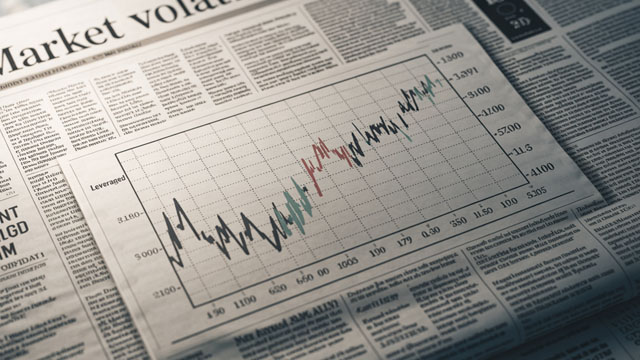
The discussion highlights the fragility of the global bond market, particularly the long end, with US Treasury yields reaching pre-global financial crisis highs. Factors contributing to this include strong equity performance, competition from hyperscalers, and concerns over fiscal policy. The Bank of Japan's potential tightening and its impact on Japanese yields are also noted as significant global drivers.
- The long end of the bond market is fragile due to competition from strong equities, hyperscalers, and fiscal policy concerns, leading to a 'fiscal risk premium'.
- The US Treasury is likely to continue issuing short-term paper (T-bills, 1-2 year) and may reduce ultra-long paper issuance to manage refinancing risk.
- Japan's 10-year yield has risen to a 30-year high, driven by government pressure on domestic investors to buy bonds and the Bank of Japan's potential tightening, which is seen as key to Yen support.

Financial markets are mixed, with the Dow and S&P 500 down, while the Nasdaq shows gains. Major concerns include the US national debt hitting $40 trillion and rising bond yields. Geopolitical tensions between the US and Iran are escalating, impacting oil and shipping, while low water levels in European rivers are disrupting supply chains and affecting German GDP.
- Dow down 139 points, S&P 500 down 11 points, Nasdaq up 13 points; Nike shares fell almost 4%.
- US national debt reached $40 trillion, with 10-year bond yields above 4.7%.
- US-Iran war memorandum expired, Strait of Hormuz shipping halted, and President Trump commented on gas prices and Iran.
- OpenAI's President Greg Brockman addressed executive turnover, and low water levels in the Rhine are impacting German shipping and economy.
- Sony's 'Spider-Man: Brand New Day' grossed $2 billion in three weekends.

The discussion centers on the steepening yield curve, driven by softening short-term yields due to benign inflation and jobs data, and elevated long-term yields influenced by supply concerns in US Treasuries and corporate bonds, as well as global factors like rising Japanese government bond yields. The US economy is viewed as resilient, supporting a 'higher for longer' interest rate environment, with the Fed likely to remain data-dependent.
- Short-term yields are softening due to recent benign inflation and jobs data.
- Long-term yields remain elevated due to US fiscal situation, corporate bond/IPO supply, and global factors like rising Japanese government bond yields.
- The US economy is seen as resilient, supporting a steeper yield curve and a 'higher for longer' period for yields.
- The Fed is expected to remain data-dependent, with current data suggesting no immediate need for rate hikes, despite underlying inflation concerns.

Matt Hougan of Bitwise Asset Management discusses President Trump's upcoming White House meeting with crypto executives, highlighting tokenization as a key topic. He believes the meeting signals continued commitment to crypto, which is positive for Bitcoin and especially for DeFi apps due to their potential to serve traditional financial markets.
- The White House meeting with crypto executives is expected to focus on tokenization, a 'mega trend' transforming how assets are traded.
- This engagement is seen as broadly positive for Bitcoin and a significant opportunity for DeFi applications like Uniswap and Aave to expand beyond the crypto market into the much larger equity and bond markets.
- While the CLARITY Act faces Senate deadlock, its passage would usher in a 'new major bull market' for crypto by providing a clear legal framework, though a more gradual path is expected if it doesn't pass this year.

Steven Major discusses the complex factors driving bond yields, beyond just debt levels. He highlights the role of strong earnings, risk premiums, international influences, and increasing competition for capital from corporates. He notes the US Treasury's challenge in issuing long-dated bonds at high yields, suggesting a need for more fiscal rigor and a clear plan, otherwise the bond market might force action.
- Underlying debt dynamics and strong earnings are dictating the end of central bank rate-hiking cycles, leading to higher risk premiums on bond yields.
- Long-end bond yields (10-year+) are influenced by factors beyond policy rates, including stock performance, international markets, and fiscal risk premiums.
- The US Treasury faces challenges in issuing long-dated bonds at high yields, potentially necessitating reduced supply at the longer end and a clearer fiscal plan.

The market opened mixed with the Dow and S&P 500 down, while the Nasdaq was up. Geopolitical tensions surrounding the US-Iran memorandum and the Strait of Hormuz, coupled with high oil and gas prices, are weighing on investor sentiment. Additionally, low water levels on the Rhine River are impacting European shipping and GDP, contrasting with positive news from the AI sector and film industry.
- Dow down 176 points, S&P 500 down 10 points, Nasdaq up 18 points.
- US-Iran memorandum expired, leading to halted shipping in the Strait of Hormuz and President Trump's comments on gas prices and bombing Oman.
- US crude oil at $83/barrel, national average gas price at $4.06/gallon.
- Anthropic's revenue surged 14-fold, and OpenAI's president is not worried about executive turnover, indicating optimism in the AI sector.
- Low water levels on the Rhine River are causing shipping disruptions and impacting Germany's GDP.

Liz Thomas discusses current market trends, inflation, and Fed policy. She believes inflation is 'warm' but not overheating, and that further rate hikes would be a mistake, potentially harming a stable economy. She suggests existing portfolios need adjustment, possibly including commodities, and expresses hope for no more than one rate hike by year-end, if any.
- Inflation is 'warm' but not 'hot', with promising data last week, but current portfolios are not working.
- Recommends adding commodities as a hedge against geopolitical risk affecting energy.
- Hopes the Fed does not raise rates in September or October, with December being the earliest possibility for one hike, which she still dislikes.
- Argues that hiking rates won't solve supply-side inflation issues (labor, semiconductors, oil) and could harm a stable, not overheating, economy.
The discussion focuses on the escalating US-Iran conflict, with the formal ceasefire agreement ending and the US preparing new 'economic isolation' sanctions against Iran. Despite Iran's struggling economy and existing sanctions, its resilience and China's continued oil purchases complicate the effectiveness of US pressure, leading to a geopolitical stalemate.
- Formal US-Iran ceasefire agreement ends on Monday, though it was already considered 'dead' by both sides.
- US is preparing new, 'undefined economic pressure tactics' and sanctions against Iran, to be announced this week.
- Iran's economy is in rough shape with high inflation, but the regime is unlikely to capitulate easily.
- China buys 90% of Iran's oil exports, complicating US efforts to economically isolate Iran due to broader US-China trade relations.

Steven Major discusses various factors contributing to the 'drip, drip higher' in long-end bond yields, emphasizing that it's more complex than just debt levels. He highlights the role of strong earnings requiring higher risk premiums, worrying fiscal dynamics, and international influences. While short-term yields are policy-driven, long-end yields are influenced by a sophisticated interplay of stock performance, global market conditions, and fiscal risk premium.
- Central banks' rate-hiking cycles are ultimately dictated by underlying debt dynamics.
- Long-end bond yields are rising due to a combination of risk premium, fiscal dynamics, and international factors, not just supply.
- Short-term yields (2-year) are primarily explained by policy rate expectations, but 10-year+ yields are influenced by broader, more sophisticated factors beyond simple supply/demand.

Stephanie Link, Hightower Chief Investment Strategist, maintains a bullish outlook for financial markets, citing a robust economy, strong consumer spending, and broad-based earnings growth. She advises investors to remain fully invested and diversified, anticipating a continued upward trend for stocks into the year-end.
- The economy is 'chugging along' with the Atlanta Fed GDP tracker at 5.8% for the current quarter, driven by AI, the food chain, and a strong consumer.
- Earnings growth is broad-based, with 10 out of 11 sectors showing growth and 7 out of 11 experiencing double-digit growth in the past quarter, alongside expanding gross margins.
- Recommends staying fully invested and diversified, highlighting Amazon (AWS acceleration, strong retail sales), Micron (attractive valuation, $100B bookings), and Nvidia (cheapest since 2019, 'gangbusters' growth) as favorable tech plays, also mentioning a recent purchase of SpaceX.
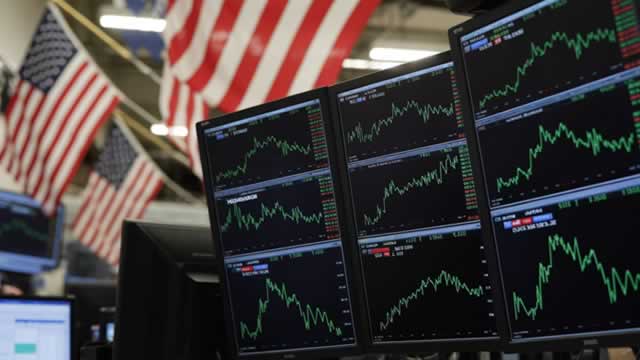
Crossmark Global Investments CEO Bob Doll advises investors to trim risk in the current market, citing growing threats from Middle East tensions, inflation, and rising interest rates. Despite extraordinary earnings growth, he expresses concern about market overconcentration in AI names and the unsustainability of current growth rates. He also notes record high private credit default rates.
- Threats to risk assets are growing due to geopolitical tensions in the Middle East, inflation concerns, and rising interest rates.
- The market is overly concentrated in AI names, and extraordinary earnings growth, while strong, is poised to slow, making current valuations risky.
- Private credit default rates hit a record high in July, weighted towards smaller issuers, though the software sector has the lowest default rate.
The video analyzes a mixed outlook for global financial markets, with European equities poised for gains after a losing streak, while significant concerns persist over upcoming economic data, rising US borrowing costs, and geopolitical tensions. Key developments in the tech sector and climate-related economic impacts in Europe are also highlighted.
- European equities are set to open higher, breaking a four-week losing streak.
- Investors are awaiting crucial UK jobs and inflation data, flash PMIs, and the latest Fed minutes.
- Concerns are growing over US national debt, bond market strains, and foreign exchange market volatility.
- Geopolitical tensions (US-Iran, Middle East conflict) and climate impacts (European heatwaves, low Rhine River levels) are weighing on sentiment.
- Developments in the tech sector include Berkshire Hathaway's stake in Alphabet, Anthropic's revenue surge, and Nvidia scaling back support for OpenAI's data center project.