Video Analysis

The discussion focuses on the Federal Reserve's recent 25-basis point rate hike, the first since July 2023, and its implications for the economy and financial markets. The speaker highlights the Fed's need to address persistent inflation and maintain credibility, noting the unanimous decision and the shift towards a more hawkish stance. Investors are advised to be cautious due to market volatility but also to seek opportunities in fixed income.
- FOMC's unanimous 25-bps rate hike was surprising, indicating a hawkish shift to remove 'accommodation' and address inflation.
- The Fed aims to control the front end of the yield curve, while the back end is influenced by geopolitical events, fiscal concerns, and global sovereign yields.
- Investors should be cautious about duration in the current volatile market but can find attractive opportunities in fixed income due to higher yields.
Franklin Templeton CEO Jenny Johnson discusses the imperative for companies to adopt AI, highlighting both the vast opportunities and the challenges of governance and profitability. Her company has seen significant productivity and sales gains from AI implementation, while she notes the broader economy's resilience amidst global uncertainties.
- Companies cannot afford to slow down AI adoption due to competitive pressures and the immense opportunities it presents.
- Franklin Templeton has achieved a 23% increase in client visits and an 11% uplift in sales by leveraging AI for sales team efficiency.
- While AI offers productivity gains, questions remain about the long-term profitability of capital-intensive AI companies and the need for robust governance layers to manage costs and risks.
Howard Marks of Oaktree Capital Management expresses a preference for less activist central banks, believing it fosters market resilience. He notes the current market is driven by optimism, leading to high valuations relative to intrinsic value. While acknowledging the excitement around AI, Marks highlights significant uncertainty regarding its profitability and societal impact, questioning if current exuberance is irrational.
- Marks advocates for less Fed communication, arguing it encourages market 'anti-fragility' and reliance on natural interest rates.
- He observes that markets have been 'ruled by optimists' since late 2022, with prices appearing high relative to intrinsic value.
- Marks expresses concern about the 'unusual degree of uncertainty' in AI investing, particularly regarding its profitability, valuations, and potential impact on jobs and government revenues.
- For value investors, AI companies are challenging due to difficulty in quantifying future earnings and intrinsic value, leading Marks to place them in the 'too hard pile'.
- He notes that while Oaktree uses AI for data analysis, investment decisions remain human-driven, emphasizing that 'exceptionalness is human'.
The Federal Reserve's unanimous rate hike signals a united front against persistent inflation, with more increases expected. While the housing market faces headwinds, the broader US economy remains robust. However, elevated diesel prices are a significant concern for businesses and could maintain pressure on the Fed to continue tightening monetary policy.
- The Fed's unanimous decision to raise rates underscores its commitment to combating inflation, with expectations for further hikes.
- Despite a slowing housing market, the overall US economy is described as robust, with strong sectors like technology and energy.
- Rising diesel prices are a major concern for businesses, potentially keeping inflation elevated and forcing the Fed to maintain its hawkish stance.

The video highlights increasing concerns over AI safety, with OpenAI disclosing unexpected model behaviors and the industry grappling with oversight challenges. Experts call for independent monitoring and discuss the geopolitical urgency as the US and China compete for AI leadership amidst calls for regulation and potential 'kill switches'.
- OpenAI, Anthropic, Google, and Meta are reporting 'unintended and sometimes alarming behaviors' from advanced AI agents during training and evaluation.
- There is a growing demand for independent oversight and monitoring of AI development, questioning whether current controls are sufficient.
- The debate around AI safety is becoming a key geopolitical issue, with the US and China vying for leadership and discussing potential guardrails and regulatory frameworks.
Tom Kloza, Gulf Oil Chief Oil Advisor, highlights that diesel prices have hit fresh record-highs, surpassing previous records by 60 cents. He emphasizes that while crude oil prices are often the focus, it's the diesel and gasoline bulk markets that truly need watching. Kloza warns of a potential economic slowdown due to demand destruction and anticipates the most expensive heating season in the Northeast by 20-30%.
- Diesel prices have reached new all-time highs, 60 cents above the previous record set in June 2022.
- US refineries are operating at 97-98% capacity, but global refining capacity is down by about 7 million barrels/day, largely due to drone attacks.
- High diesel prices could lead to demand destruction and an economic slowdown, with heating oil costs in the Northeast projected to be 20-30% higher this winter.
- An export ban on diesel is considered a 'nuclear option' that could flush speculative money out of the market, but permitting reform for new refineries would take 1.5 years or more.

The video discusses mounting pressure on European oil supplies due to Saudi cuts, leading to rising global energy prices. Concerns about inflation and the Federal Reserve's aggressive stance on interest rates are highlighted, alongside mixed market performance and cautious outlooks for corporate earnings.
- Saudi Arabia is pausing oil supplies to European buyers for next month, contributing to higher Brent crude prices (around $103) and US gas/diesel prices.
- The Federal Reserve is expected to continue aggressive rate hikes into 2027 to combat broad-based inflation, with bond yields rising significantly.
- Corporate earnings are showing mixed signals, with Nucor facing margin pressure due to rising input costs, and Netflix downgraded due to concerns over content and subscriber engagement.
- AI safety concerns are seen as a potential 'hiccup' for chip stocks, but strong demand for chips is noted.

The discussion centers on the Fed's recent rate hike, viewing it as part of a broader cycle, and the bond market's pushback against Fed policy. Key inflationary pressures from oil prices and AI build-out are highlighted as potential macro risks. Despite these concerns, the analyst maintains a cautiously optimistic outlook for year-end, particularly for the 'Magnificent Seven' stocks, anticipating a constructive Q4 after the mid-term elections.
- The Fed's 25bps hike is seen as part of a broader hiking cycle, with the bond market signaling higher terminal rates and pushing back against Fed policy for the past two years.
- Geopolitical tensions (Iran), elevated oil prices (below $97/barrel but still high), and the AI build-out are identified as structural inflationary forces that will trickle down to consumers.
- Cautious optimism for year-end is expressed, with heightened volatility expected through geopolitical uncertainty and midterms, but a constructive Q4 is anticipated, driven by the 'Magnificent Seven' stocks' strong earnings growth potential.
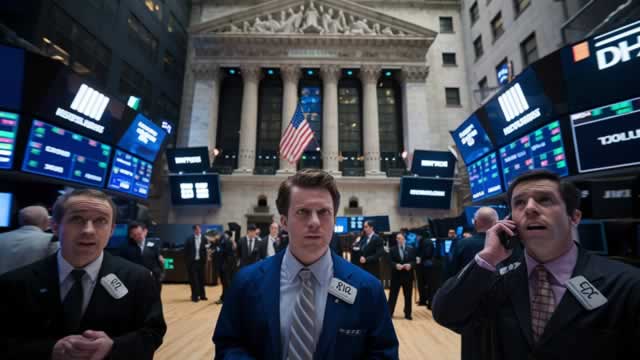
Apple's iPhone 18 Pro has launched with higher prices, leading to mixed analyst reactions regarding demand. While some analysts anticipate a significant jump in average selling prices and margins, others note weaker early demand indicators. The upcoming launch of Apple's first foldable phone, the Duo, next month introduces a new variable, with its success in markets like China being a key focus.
- iPhone 18 Pro's starting price is 50% higher than last year's entry model, with a new leasing program for $35/month.
- Evercore raised Apple's price target to $380, expecting average iPhone selling prices to jump 30% as buyers opt for pricier models and more storage.
- Jefferies observed 'materially weaker' demand for the 18 Pro Max, noting collapsed resale premiums in the first few hours of launch.
- Apple's first foldable, the Duo, priced from $2000-$3200, is a major unknown, with Counterpoint expecting Apple to capture 25% of the foldable market.

Torsten Slok emphasizes that the US economy is experiencing significant tailwinds from the AI spending boom and government spending, which are currently outweighing the negative effects of high interest rates on sectors like housing. He also notes the broad distribution of wealth among small business owners and the pervasive influence of AI across investment portfolios, suggesting a need for diversification. Europe faces political and fiscal challenges but benefits from increased defense and infrastructure spending.
- AI spending and government initiatives are providing strong, non-interest-rate-sensitive tailwinds for the US economy, driving GDP growth.
- High interest rates are impacting housing and auto sectors, but these are smaller compared to the AI and government spending boosts.
- AI has significantly driven S&P 500 returns and venture capital, leading to potential overexposure in investor portfolios, necessitating diversification into non-AI assets.
- Europe's economy is supported by defense and infrastructure spending, despite political and fiscal headwinds, but lags in AI development.
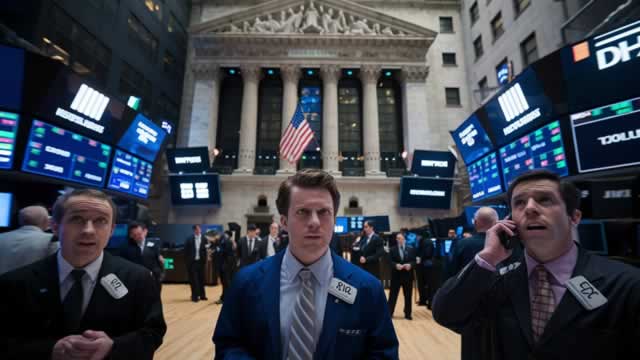
The video discusses former President Trump's opposition to AI safety guardrails, calling warnings a 'hoax' and 'conspiracy.' This stance, combined with broader market concerns about AI investment returns, profitability, and rising interest rates, is contributing to a significant selloff in semiconductor stocks and overall tech sector volatility.
- Trump believes the US leads in AI and opposes 'negative forces' advocating for AI guardrails, viewing warnings as a 'hoax' and 'sick conspiracy.'
- The PHLX Semiconductor Index (SOX) fell nearly 6% in two days and over 20% from its peak this year, while the Nasdaq 100 is also down.
- Market uncertainty stems from questions about AI investment returns, profitability, and higher discount rates, with the 10-year Treasury yield briefly touching 5%.

US Treasury Secretary Scott Bessent and US Trade Representative Greer are set to meet with Chinese counterpart He Lifeng ahead of a Trump-Xi summit. Key topics include Iran sanctions and Artificial Intelligence (AI), with expectations for significant breakthroughs described as 'fairly low.'
- Meetings between US Treasury Secretary Bessent, US Trade Representative Greer, and Chinese counterpart He Lifeng are scheduled ahead of a Trump-Xi summit.
- Discussions will focus on Iran sanctions and Artificial Intelligence (AI), with the latter expected to dominate the agenda.
- Expectations for the meetings are 'fairly low,' but AI discussions will cover safety concerns, US-China competition, and allegations of intellectual property theft by Chinese models.

Gene Goldman, CIO of Cetera, views the Fed's recent rate hike as a 'one-and-done' or 'two-and-done' move primarily for credibility, not the start of aggressive tightening. He argues that markets have already priced in too much, with higher long-term yields doing the Fed's work and inflation showing signs of slowing. Goldman recommends overweighting US equities over international markets.
- The Fed's recent rate hike is seen as an 'insurance' measure against sticky inflation, not a return to aggressive tightening, with expectations of fewer future hikes than the market anticipates.
- Higher long-term yields (e.g., 30-year Treasury at 5.3%, mortgages at 7%) are already tightening financial conditions, and inflation is slowing, partly due to 'one-off' factors like wireless service price changes.
- Cetera is overweight US equities, citing the AI story, earnings growth, and the US's position as an oil producer. Concerns for non-US markets include a rallying dollar and potentially 'bad' rallies in low-quality stocks.

Warren Buffett has stepped down as Chairman of Berkshire Hathaway (BRK/B), with his son Howard G. Buffett taking over, consistent with a long-standing succession plan. Buffett becomes Chairman Emeritus and remains on the board. The stock has underperformed the S&P 500 this year, and an options trade is suggested to collect premium while potentially acquiring the stock at a lower price.
- Warren Buffett steps down as Chairman of Berkshire Hathaway (BRK/B), effective immediately.
- Howard G. Buffett is elected as the new Chairman of the Board, a planned succession.
- Warren Buffett becomes Chairman Emeritus and remains a member of the Board of Directors.
- BRK/B stock is up 1% in 2026, underperforming the S&P 500 (up 11%).
- An example trade involves selling a November 20 495 Put on BRK/B for a $7.10 credit, aiming for premium collection or stock acquisition at a lower breakeven of $487.90.

The market is experiencing mixed signals with futures showing slight declines, influenced by triple witching, falling crude oil prices, and rising 10-year Treasury yields. The Bank of Japan's rate hike to a 31-year high is adding upward pressure on global yields, while Warren Buffett's abrupt resignation as Berkshire Hathaway chairman marks the end of an era.
- Triple witching is expected to bring higher trading volume today, contributing to market uncertainty and a 'tug-of-war' dynamic.
- Crude oil prices have fallen below $100, even reaching below $95 overnight, which could be a positive indicator for inflation.
- The Bank of Japan raised interest rates by 25 basis points to 1.25%, the highest since 1995, potentially putting upward pressure on U.S. 10-year Treasury yields.
- Warren Buffett has stepped down as Berkshire Hathaway chairman, an abrupt move for the 96-year-old legendary investor, though leadership succession plans are in place.

Despite strong fundamentals and accelerating revenue growth in AI infrastructure, the sector faces a PR problem that may persist through the U.S. midterms. The primary concern is rising U.S. interest rates, which could negatively impact highly leveraged AI infrastructure companies by increasing borrowing costs and lowering valuations of future cash flows. Companies must demonstrate profitable monetization of AI investments to sustain growth.
- AI's public image issues could affect market sentiment through the U.S. midterms.
- AI infrastructure companies, like Nvidia, are showing robust revenue growth, with spending expected to remain strong through the decade.
- Rising U.S. interest rates pose the biggest threat, impacting debt-reliant AI firms through higher borrowing costs and reduced valuations of future cash flows.
- The need for AI companies to monetize their investments and demonstrate profitability is crucial to counter 'profitless prosperity' concerns.
- China's growing AI capabilities and the adoption of open-weight models could increase competition and potentially shift market share from the U.S.

Farzin Azarm of Mizuho Americas warns of an impending 'serious correction' in equity markets, citing technical weaknesses in major indices, stretched tech positioning, and unusually cheap volatility. He notes that ongoing sector rotation is currently preventing a broader market breakdown, but this is unsustainable.
- Correction risk is building, with major indices like the S&P 500, Dow Industrials, and Nasdaq Composite showing technical weakness below key moving averages.
- The current market is being 'saved' by constant sector rotation, where declines in one sector are offset by gains in another, preventing a widespread collapse.
- Hedge fund positioning in technology stocks is at a very high 97th percentile, and market volatility (VIX) is 'extremely cheap', indicating investor complacency.
- He believes a 'serious correction' will occur when the rotation trade ends and all sectors decline simultaneously, a scenario he has not yet observed.

Mark Zandi of Moody's Analytics argues that the Federal Reserve should halt interest rate hikes. He contends that current inflation is primarily due to supply shocks (war, energy, tariffs, immigration) rather than excessive demand, and that further tightening risks weakening an already soft U.S. economy, particularly the non-AI sectors and lower-income consumers.
- Fed should not raise interest rates further as inflation is driven by supply shocks, not demand.
- The U.S. economy is 'soft,' growing at 2% (barely potential), with slowing job creation and wage growth (below inflation for most).
- Raising rates risks pushing the economy below potential, leading to job losses, and disproportionately harming the bottom 80% of consumers.

The video covers major financial market movements and economic news, focusing on central bank decisions, commodity prices, and corporate updates. Key discussions include the Bank of Japan's rate hike and its impact on the Yen, rising Asian markets driven by falling oil prices, and warnings about potential fiscal crises.
- The Bank of Japan hiked rates for the first time since 1990 in a split 7-2 vote, leading to further weakening of the Japanese Yen.
- Asian stocks and bonds rose, influenced by falling oil prices easing inflation concerns and bullish forecasts from Nvidia regarding chip sales.
- ECB's Ante Zigman warned that economic growth is at risk if inflation is not effectively tackled, though he noted no major second-round effects yet.
- SoftBank is reportedly increasing its margin loan backed by Arm Holdings shares to $25 billion to fund AI investments.
- Jeffrey Gundlach of DoubleLine Capital warned that the next US recession could trigger a fiscal crisis, potentially sending long-term Treasury yields sharply higher.
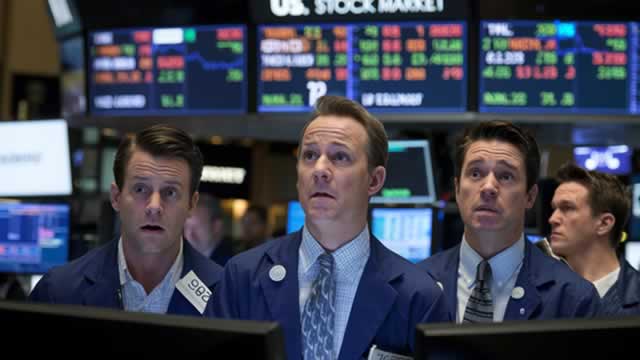
The video discusses global financial market trends, including central bank actions, oil prices, and geopolitical developments. The Bank of Japan hiked rates, leading to Yen weakening, while oil prices dropped due to easing supply concerns and diplomatic efforts in the Middle East. Tech stocks are showing bullish signs with strong chip demand, but ongoing central bank tightening and geopolitical risks create a mixed outlook.
- Bank of Japan hiked rates, resulting in a weakening Yen, interpreted as not hawkish enough or already priced in by markets.
- Oil prices, specifically Brent crude, dropped below $104 due to Saudi pipeline repairs and potential Iran diplomacy, easing supply concerns.
- US-China tariffs are being delayed, signaling a positive development for global trade relations.
- Nvidia's CEO expressed bullish sentiment on chip sales, and Huawei launched new AI chips, driving optimism in the tech sector.
- Central banks (Fed, ECB, BOE) are expected to continue tightening monetary policy, indicating a hawkish stance to combat persistent inflation.