Video Analysis

The panel discusses current market conditions, with a focus on the 10-year Treasury yield hitting 5% and the perception of market bubbles. While some express caution regarding market mechanics and investor awareness of AI exposure, the overall sentiment leans bullish, emphasizing strong earnings and viewing market pullbacks as opportunities.
- The 10-year Treasury yield reaching 5% is discussed, with differing views on its implications for the stock market.
- One analyst argues that the 'bubble is in the bubble talk' and strong earnings growth makes the market resilient to current yield levels.
- Another analyst highlights the importance of market perception, the velocity of yield changes, and concerns about retail investors' understanding of index and AI exposure.

AI agents are creating a significant new attack surface, driving demand for advanced cybersecurity solutions. Established players like CrowdStrike and Palo Alto Networks are leveraging their data and making strategic acquisitions to secure these agents, leading to industry consolidation rather than displacement of legacy companies.
- The proliferation of AI agents in enterprises creates a new attack surface, requiring robust security solutions for identification, tracking, and runtime protection.
- Cybersecurity leaders such as CrowdStrike and Palo Alto Networks are actively developing and acquiring products to address this, integrating AI agent security into their platforms.
- AI is driving consolidation within the cybersecurity sector, favoring large platform players that possess extensive telemetry and data to protect complex infrastructures.
Adam Jonas of Morgan Stanley discusses the transformative economic impact of physical AI and robotics, projecting an 8-10x global GDP multiplier. He highlights the importance of onshoring US manufacturing through robotics, acknowledging China's current lead in deployment and supply chains. Jonas also emphasizes the synergistic potential of Tesla and SpaceX in scaling AI intelligence and the inevitability of widespread robot integration.
- AI and robotics are economically multiplicative, potentially boosting global GDP by 8-10x before current professionals retire.
- Physical AI is crucial for rebuilding US manufacturing resiliency and is expected to create millions of human jobs, despite China's current lead in deployment and supply chains.
- Regulation for physical AI is deterministic and will shape its form and cadence, but not prevent the widespread adoption of tens of billions of robots in daily life within one to two decades.
- Tesla and SpaceX have synergistically linked physical AI capabilities, with Tesla focusing on manufacturing and data collection for robots, and SpaceX on connectivity and AI layers, collectively aiming for 'intelligence at scale'.

CNBC's Rick Santelli discusses a 'poor' US Treasury 5-year note auction, which yielded 5.033% (highest since June 2006) and had a significant 'tail'. Despite the weak auction metrics, Santelli frames rising yields as a 'normalization' after years of manipulation, driven by positive economic indicators like strong PMIs, a stronger dollar, and capital in the system, suggesting that 80% of the interest rate story is good news.
- The US Treasury sold $70 billion in 5-year notes with a yield of 5.033%, the highest since June 2006.
- The auction had a 3.3 basis point 'tail' (auction yield higher than 'when issued' market yield), indicating weak demand.
- Key metrics like bid-to-cover (2.21 vs. 2.34 average) and indirect bid (54% vs. 64% average) were poor, and dealers took a higher percentage (16% vs. 12% average).
- Santelli graded the auction a 'D' but attributes rising yields to market normalization and underlying economic strength (PMIs, strong dollar, AI buildout), rather than a fundamental problem.

Dan Ives contends that efforts to slow AI development in the US are ineffective and would cede technological leadership to China. He highlights the unstoppable nature of AI progress and its positive implications for US software companies, while criticizing 'performative' calls for regulation.
- The US and China will not slow down AI development, making regulatory calls for a slowdown largely performative and potentially detrimental to US leadership.
- Restricting US chip sales to China inadvertently strengthens China's domestic tech ecosystem, helping them narrow the AI gap.
- Meta's AI initiatives, like Muse, are seen as 'phenomenal' and a 'game-changer' for the mainstream, contributing to the company's recent stock performance.

The video highlights significant institutional Bitcoin ETF inflows, totaling $2.3 billion over four days, indicating a sustained floor for Bitcoin. Major news includes SoFi's $25 billion card program moving on-chain with Mastercard using stablecoins, and Binance investing $100 million in Circle for USDC expansion. The speaker also touches on BitMEX's closure and integrity questions surrounding prediction markets.
- Bitcoin ETF inflows hit $715 million in one day, with a four-day streak topping $2.3 billion, showing broad institutional and retail interest beyond just BlackRock.
- SoFi is moving its $25 billion debit and credit card program onto a blockchain using stablecoins in partnership with Mastercard, marking a significant, live integration of stablecoins into traditional payments.
- Binance invested $100 million in Circle and signed a five-year commercial agreement to promote USDC, despite ongoing DOJ probes into Binance's past activities.
- BitMEX, the inventor of the perpetual swap, has closed after 11 years, while prediction markets like Kalshi and Polymarket face integrity questions regarding unusual repetitive trades and alleged fraud.

Tom Nides of Blackstone discusses how global tensions, including US-China trade disputes and political backlashes against data centers, are not hindering capital deployment. He emphasizes Blackstone's continued global investment strategy, highlighting opportunities in Canada, AI, and infrastructure, despite geopolitical 'noise' and low expectations for immediate breakthroughs from high-level meetings.
- US-China leaders' meeting is largely orchestrated, focusing on trade, Iran, and AI, with outcomes likely predetermined.
- Despite 'tariff diplomacy' and geopolitical noise, global capital continues to be raised and deployed, with significant investment opportunities in Canada.
- Blackstone is actively investing in energy, infrastructure, AI, and defense tech, viewing data centers as job creators despite local anxieties.
- Nides advocates for 'guardrails' around AI development, believing smart people will ensure safe and productive technological advancements.

CEOs of OpenAI and Anthropic are briefing the UN Security Council on AI regulation and safety. While acknowledging risks like cybersecurity and bioweapons, they aim for a 'pragmatic middle ground' with common global benchmarks. This contrasts with some tech leaders and the White House, who are wary of extensive global regulation, creating a complex political landscape for AI governance.
- OpenAI's Sam Altman and Anthropic's Dario Amodei are addressing the UN Security Council on AI, advocating for common global benchmarks.
- Amodei has highlighted both AI risks (cybersecurity, bioweapons) and benefits (curing diseases), pushing for international coordination.
- A split exists in Silicon Valley, with some CEOs like Mark Zuckerberg (Meta) and Jensen Huang (Nvidia) opposing regulation, while the White House also rejects a global control system for AI.
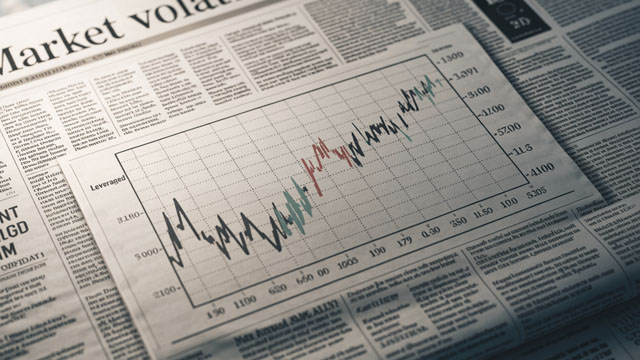
The video discusses the Nasdaq Composite's recent record high, driven by the 'Meta Muse' rally, and features Ray Dalio's stark warning that AI is both a transformative productivity force and a dangerous bubble poised for devastating effects. Brian Sozzi also reviews Dalio's past market warnings against historical charts and touches on AI regulation with Gary Cohn.
- Nasdaq Composite reached a second consecutive record, primarily fueled by the 'Meta Muse' rally.
- Ray Dalio warned that AI represents one of the biggest productivity enhancements but also a bubble with potentially devastating consequences.
- Brian Sozzi presented a historical analysis of Dalio's previous market warnings against actual market performance, and Gary Cohn discussed AI regulation.
Treasury Secretary Scott Bessent held an unscheduled meeting with China's Vice Premier He Lifeng to discuss 'unfinished business' ahead of President Trump's state dinner with Chinese President Xi Jinping. Key topics include potential US tariff exemptions on agriculture and low-tech electronics, while China seeks broader tariff reductions and relaxed export controls on advanced technology. US officials expressed caution regarding providing advanced tech to China.
- Treasury Secretary Bessent met with China's Vice Premier He Lifeng in an unscheduled meeting to discuss 'unfinished business' and strategic stability based on reciprocity and fairness.
- The US is considering new tariff exemptions on agriculture, medical supplies, and low-tech electronics, while China seeks more tariff drops and relaxed export controls on advanced technology.
- US officials, including Commerce Secretary Lutnick and Congressman Moolenaar, expressed reservations about easing export controls on advanced technology to China due to national security concerns.
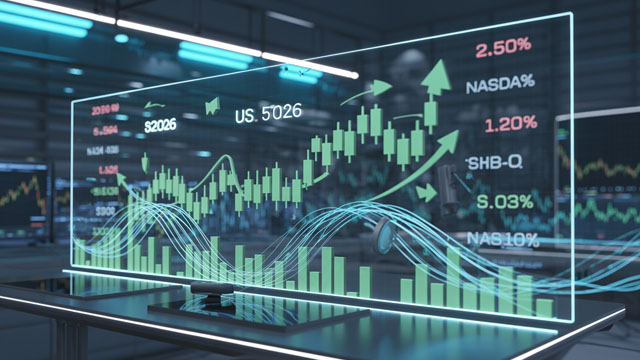
The Bloomberg Brief covers global financial markets, highlighting wavering futures despite the Nasdaq 100's first record high since June, driven by AI enthusiasm. Geopolitical tensions surrounding US-Iran talks and the upcoming Trump-Xi meeting are key concerns, alongside the OECD's raised global inflation forecasts, prompting calls for further central bank tightening. Individual stock movers reflect mixed sentiment, with AI-related companies rallying while others face headwinds.
- US equity futures are wavering, but the Nasdaq 100 reached its first record high since June, fueled by AI enthusiasm and semiconductor stocks.
- Brent crude is fluctuating near $100/barrel, while US-Iran talks are described as 'very good' by Trump, despite Iran's firm stance on the Strait of Hormuz.
- Asian stocks are mixed, with KOSPI up but China AI stocks (e.g., Alibaba down 3%) falling due to regulatory probes, and the Yuan and Yen weakening.
- The OECD raised its 2027 global inflation forecasts for most G20 economies (e.g., US 2.6%, Euro-area 2.9%), urging central banks to tighten monetary policy further.
- The upcoming Trump-Xi meeting in Washington has lowered expectations, with discussions expected on AI, trade, and Taiwan.

Mona Mahajan of Edward Jones discusses the Fed's recent quarter-point rate hike, viewing it as a mid-cycle adjustment rather than a full hiking cycle. She believes the economy can handle further modest rate increases, citing healthy GDP and labor market projections. While acknowledging a K-shaped economy and bifurcated earnings growth, she remains optimistic about the stock market's potential for continued returns.
- The Fed's recent rate hike was a unified move to establish credibility in fighting inflation, leading to an immediate rollover in inflation expectations.
- The current rate hiking cycle is seen as a 'mid-cycle adjustment' with potentially 2-3 more hikes, which the economy is expected to handle without derailing broader economic or earnings narratives.
- S&P 500 earnings growth is projected at 30% this year, primarily driven by tech and related sectors, with a more modest and balanced 15% growth expected next year.
- Treasury yields have risen due to solid economic growth and inflation uncertainty, but core inflation remains contained, and a wage-price spiral has been avoided, which is crucial for the Fed.

Franklin Templeton CEO Jenny Johnson discusses the market's resilience despite geopolitical risks and Fed rate hikes, attributing current strength to strong corporate earnings and consumer spending. She believes AI's full productivity impact is yet to come, but other technological advancements are already contributing. While acknowledging concerns about tech valuations, she maintains a positive outlook based on underlying fundamentals.
- Markets are showing resilience, with strong corporate earnings and consumer spending, despite geopolitical risks and sticky inflation.
- Current productivity gains are primarily driven by existing digital and cloud computing technologies, with the full impact of AI still years away.
- The regulatory environment is perceived as friendlier, contributing to business confidence.
- Concerns about the concentration and valuation of 'Mag 7' tech stocks are acknowledged, but tight credit spreads suggest no immediate default risks.
Mark Cudmore discusses the recent decline in Brent crude prices, attributing it to diplomatic optimism and potential increased oil flows. He notes that lower oil prices are positive for stocks and treasuries, leading to a 'very bullish' market outlook. Despite this, he struggles to identify significant new risks, suggesting that investors might aggressively chase the year-end rally if no negative catalysts emerge soon.
- Brent crude prices are lower for the sixth consecutive day, the longest streak in over a year, driven by diplomacy hopes and potential supply increases.
- Lower oil prices are seen as positive for global bond markets and stocks.
- Cudmore expresses surprise that markets aren't even higher given the bullish outlook, struggling to find new or significant bearish catalysts.
- He anticipates investors may aggressively chase the market higher into October if no negative events occur.
The video discusses a range of global financial market topics, including crude oil prices, US-Iran relations, upcoming US-China trade talks, and the role of AI in technology. Analysts provide insights into equity market performance, interest rate outlooks, and the economic resilience of Europe, particularly France, amidst inflationary pressures and geopolitical tensions.
- Crude prices retreated following a three-hour meeting between US and Iranian officials at the UN, despite President Trump's strong rhetoric.
- Uncertainty surrounds Chinese President Xi Jinping's upcoming visit to Washington, including whether he will bring a corporate delegation.
- AI is a central theme at the UN, with Open AI and Anthropic CEOs addressing the Security Council on safety debates.
- France is increasing support measures due to rising energy prices, with discussions on the country's fiscal outlook and debt-to-GDP ratio.
- Analysts from Goldman Sachs and BNP Paribas offer perspectives on equity market performance, inflation, interest rates, and the profitability of tech and banking sectors.
Corey Ranslem, CEO of Dryad Global, discusses the impact of ongoing conflicts in the Middle East on shipping routes and oil pipelines. Despite reports of Saudi Arabia restarting its East-West pipeline, vessel traffic through the Bab el-Mandeb Strait remains significantly reduced, and full pipeline capacity recovery will take time. Insurers and crews are hesitant to return to pre-conflict levels without a sustained peace deal.
- Vessel transits through the Bab el-Mandeb Strait are down to an average of 30 daily, from a normal 70-90, due to Houthi attacks.
- The East-West pipeline restart is expected soon but at only 30-40% capacity, with full recovery estimated at 6-8 weeks or longer due to damage.
- Insurance premiums and crew willingness to transit high-risk regions will take weeks or months to normalize, requiring a solid, sustained peace agreement rather than temporary ceasefires.
Financial markets are navigating mixed signals, with oil prices falling amid diplomatic overtures between the US and Iran, while European central bankers warn of further rate hikes impacting economic growth. Geopolitical tensions persist, and regulatory changes for major banks like UBS add to market uncertainty.
- Oil prices slide, with Brent crude on track for its longest losing streak in a year, as US-Iran talks show mixed signals and Saudi Arabia restarts a key pipeline.
- ECB officials warn of potential rate hikes that could stifle economic growth, with Eurozone PMI data due to provide further insights.
- UBS faces a crucial Swiss parliamentary vote on capital requirements, with the bank advocating for less stringent options, impacting its profitability outlook.
- Asian stocks show a mixed performance, with chipmakers rising but Hong Kong tech shares, including Alibaba, trading weaker.
- The upcoming Trump-Xi summit agenda includes critical discussions on the Iran war, Taiwan, trade, and AI, with preliminary talks showing some positive signs on AI.
The video discusses a mixed bag of market drivers including renewed US-Iran diplomacy, upcoming US-China talks, and a tech rally fueled by AI optimism. Oil prices are falling due to hopes of de-escalation and Saudi pipeline restarts, while Asian stocks show cautious gains. Geopolitical tensions and regulatory concerns for AI and Chinese tech companies remain key factors influencing investor sentiment.
- US-Iran diplomacy revives hopes, with President Trump hailing 'very good discussions' despite prior threats, leading to a drop in Brent Crude prices.
- President Xi Jinping's upcoming US visit is met with a 'red carpet' welcome from Trump, but expectations for a major trade breakthrough are limited, and Chinese tech shares are down amid LMM probe reports.
- Asian stocks are generally rising, driven by a tech rally that pushed the Nasdaq 100 to a fresh record high, reflecting renewed investor appetite for AI-linked stocks.
- Saudi Arabia is restarting its East-West pipeline, contributing to oil price declines, while Abu Dhabi's XRG seeks to expand its global gas portfolio, eyeing a stake in LNG Canada.
- Nigeria surprises markets with a deep interest rate cut, while South Africa is expected to increase rates, and Africa's ETG Group weighs a $500 million Eurobond.

The Fox Business segment discusses record-high diesel prices in California and nationwide, highlighting the severe impact on businesses and consumers. It explores political blame and proposed solutions, including a potential ban on diesel exports, while also addressing the broader inflationary pressures caused by rising fuel costs across various sectors.
- Nationwide average diesel prices hit a new all-time high of $6.52 per gallon, with California reaching $8.43 per gallon.
- Businesses like moving companies report fuel bills doubling, and high diesel costs are expected to drive up prices for food, transportation, and agricultural harvests.
- Republican lawmakers are urging a temporary ban on diesel exports, but experts warn this could shatter the U.S.'s reputation as a reliable energy investment and discourage future production.
The discussion highlights the nascent stage of AI development and a significant, prolonged chip shortage (GPUs, ASICs) expected to last until 2030. It emphasizes the growing importance of Small Language Models (SLMs) for broader AI adoption beyond data centers and identifies upstream semiconductors and hardware as key investment opportunities due to the persistent supply-demand imbalance.
- AI chip supply is currently 73% undersupplied, with the shortage projected to last until 2030, challenging earlier predictions of a peak in 2028.
- Small Language Models (SLMs) are catching up to LLMs and are expected to drive wider AI adoption, extending demand beyond traditional data centers.
- Upstream semiconductor and hardware companies offer the best investment value due to the deep and worsening supply shortage in AI compute.