Video Analysis

The market is experiencing a broad sell-off, with the Nasdaq Composite leading declines, down over 2%. Rising oil prices and a significant jump in the VIX indicate increased market volatility and investor concern, particularly impacting tech, software, and semiconductor stocks. The speaker notes a 'bull trap' pattern emerging in tech.
- Major US indices are down, with Nasdaq Composite falling 2.37% and S&P 500 down 1.31%.
- The CBOE S&P 500 Volatility Index (VIX) surged over 24% intraday to 20.41, and is up over 36% year-to-date, signaling heightened fear.
- Crude Oil Futures (WTI) are up 2.55% intraday, nearing $100, and up 5.57% for the week.
- The Technology Select Sector SPDR Fund (XLK) is down 3.04% intraday and 7.7% for the week, exhibiting a 'bull trap' pattern.
- The iShares Semiconductor ETF (SOXX) is down 3.67% intraday, falling below the $500 level.

Dan Ives discusses the AI market, viewing current concerns around CoreWeave as a 'false narrative' and a buying opportunity. He highlights strong demand in memory and chips, indicating the AI game is still in its early stages. He sees significant upside for companies like Apple and Microsoft due to their positions in consumer and enterprise AI, respectively, despite potential data center backlashes.
- CoreWeave's stock volatility is seen as a 'false narrative' and a buying opportunity due to strong demand and backlog, similar to the 'SaaS apocalypse' earlier this year.
- Memory chip demand is accelerating significantly (30-40% in 60-90 days), with a 13:1 demand-to-supply ratio, indicating robust AI growth.
- The overall AI market is only in the 'third inning,' with substantial growth and capital expenditure multipliers expected, despite potential political pushback on data centers.
- Apple is positioned as the 'toll collector' for the consumer AI highway, with significant upside potential (e.g., $400-450 price target), while Microsoft dominates enterprise AI.
The discussion highlights persistent elevated energy prices, particularly for diesel and heating oil, driven by global geopolitical tensions and critically low inventories. While gasoline prices have seen minor relief from state tax suspensions, the outlook for diesel and heating oil is grim, with potential for significant price increases and multi-decade low storage levels as winter approaches.
- Gasoline prices have slightly declined due to state tax suspensions, but diesel prices remain elevated and are expected to rise further.
- Geopolitical tensions (US/Iran, Houthi attacks, Ukraine/Russia) are major factors contributing to energy market instability and potential supply disruptions.
- Diesel storage levels are threatening multi-decade lows, with predictions of $7/gallon diesel and $8/gallon heating oil possible this winter.
- The 'heating oil crack' (refinery margin for diesel) is over $100, an unprecedented level, indicating severe supply tightness.
Federal Reserve Chairman Kevin Warsh discusses the global economy with IMF Managing Director Kristalina Georgieva. He highlights the US's structural growth and a massive investment surge, viewing AI as the most consequential economic change of his lifetime with long-term positive supply shock potential. He emphasizes global economic resilience despite synchronous policy tightening.
- Warsh notes the US is experiencing structural economic growth and a massive investment surge, which is broadening beyond just AI.
- He identifies AI as the 'most consequential economic change' in his lifetime, predicting it will first impact demand before becoming a positive supply shock in the medium term.
- Warsh states that synchronous global monetary policy tightening is a positive development, and the global economy is showing more resilience than expected.
- He emphasizes the importance of institutional credibility for central banks and the need to 'interrogate reality' and adapt to new information for effective policy-making.
Energy Secretary Chris Wright announced a $50 million investment from the Defense Production Act to enhance Virginia's power grid reliability, particularly for military installations and data centers. This initiative aims to deliver reliable, affordable, and secure electricity, addressing years of underinvestment and anticipating a 32% increase in energy demand by 2030. The Secretary also clarified that the U.S. is not removing sanctions on 'shadow fleet' oil tankers but is exploring transferring these ships to legitimate carriers to boost oil capacity and potentially lower prices.
- Energy Department announces $50 million investment from the Defense Production Act to boost Virginia's power grid reliability.
- Energy Secretary Chris Wright emphasizes the need for reliable, affordable, and secure electricity for American consumers, moving past 'climate change politics.'
- Experts predict a 32% increase in energy demand by 2030, with new projects aimed at lowering utility rates.
- Secretary Wright clarifies that the U.S. will not remove sanctions on 'shadow fleet' tankers but is exploring transferring sanctioned ships to legitimate carriers to increase oil flow.

Despite a 'hot' PPI report and non-committal remarks from Kevin Warsh, bond yields surprisingly fell, boosting market expectations for a Fed rate hold in October. This has led to speculation among investors about whether peak interest rates have been reached and if bonds are now an attractive investment.
- Kevin Warsh's comments (or lack thereof) at the IMF meeting increased market bets on a Fed rate hold in October.
- Despite a 'hot' PPI report, 10-year Treasury yields dropped significantly, from 5.35% to 5%.
- Investors are increasingly viewing the bond market as offering value, prompting the question of whether 'peak yields' have been observed.
The video discusses the ongoing Houthi attacks on Saudi Arabia, highlighting the Houthis' increasing capabilities with support from Iran and potentially China. The analyst notes that while Iran backs the Houthis, they maintain a degree of independence. He suggests that direct US involvement is unlikely before the midterm elections but could resume afterward, emphasizing that air strikes alone won't resolve these complex conflicts.
- Houthis have significantly built up their arsenal, utilizing drones and ballistic missiles, with support from Iran and potentially China.
- Iran backs the Houthis, but the Houthis exercise a certain amount of independence in their actions.
- Direct US military involvement is less likely before the November 3rd midterm elections, but a resumption of strikes against Houthis and potentially Iran could occur afterward.
Jay Clayton, Chairman of the Super Intelligence Force, discussed the task force's inaugural meeting, focusing on managing critical tech and infrastructure risks associated with AI. Key actions include implementing accords with leading companies, conducting risk studies, and establishing committees for reporting, critical infrastructure assessment, and law enforcement. He emphasized the need for the U.S. to lead in AI development to counter adversaries and address potential risks.
- The Super Intelligence Task Force held its first meeting, initiating a 120-day countdown to address critical tech and infrastructure risks.
- Four key actions were taken: establishing protocols for implementing accords with tech companies, tasking PCAST with a risk study, and forming three committees on reporting/response, critical infrastructure assessment, and law enforcement/responsibility.
- Clayton stressed the importance of U.S. leadership in AI development, acknowledging dramatic changes and risks from foreign adversaries and open-source models, while also highlighting the need for responsible innovation and robust enforcement of laws.
Kevin Warsh, former Federal Reserve Chairman, describes AI as the most consequential economic change in his lifetime. He views it as a positive supply shock that will fundamentally alter monetary policy and boost productivity and wealth, though the short-term path will be bumpy with unknown effects on employment.
- AI is considered the 'most consequential change' to the US and global economy in his lifetime.
- AI will initially impact the demand side of the economy before the supply side, eventually acting as a 'positive supply shock' in the medium term.
- It will fundamentally change the conduct of monetary policy by providing better data and analytical tools, and will make economies more productive and create more wealth.
- The transition will be 'bumpy' due to uncertainties in technology understanding, market structures, and its future effect on employment.

Kevin Warsh, identified as Federal Reserve Chairman, expresses a bullish outlook on the US economy, citing 'structural growth' and a 'massive investment surge' driven by effective macroeconomic policies and strong microeconomic foundations. He notes this positive development as a key upside for the global economy, while also acknowledging a 'surge in prices'.
- The US economy is experiencing 'structural growth' and a 'massive investment surge'.
- This growth is attributed to good macroeconomic policy and strong microeconomic foundations, demonstrating that 'policy matters'.
- The investment surge is considered 'the most important thing that's happening in the global economy on the upside'.
- He also notes a 'surge in prices' from discussions with central bankers, indicating an awareness of inflationary pressures.
Rick Wurster, CEO of Charles Schwab, discusses strong client engagement across equities and fixed income, successful strategies to attract younger investors, and the firm's approach to AI. Schwab is blocking unauthorized AI agents to protect clients, while developing its own AI assistant, 'Charlie,' and creating secure pathways for client-approved AI tools, emphasizing the continued importance of human advisors.
- Schwab reports record client engagement, with strong interest in tax-aware strategies, fixed income, and advice, alongside continued high equity investment and trading activity.
- The firm is attracting younger generations (Gen Z, Millennials) through social media and educational content, noting that these demographics are investing earlier and are highly engaged in stocks.
- Schwab is blocking unauthorized AI agents from accessing client accounts due to liability and control concerns, but is developing its own AI assistant, 'Charlie,' and will create secure pathways for authorized AI agents, while emphasizing that over 90% of clients still desire human involvement in their financial lives.
Andrew Balls of Pimco anticipates 1-2 more Federal Reserve rate hikes to achieve the 2% inflation target, noting current market pricing for future hikes. He identifies 'good value' in the long end of the Treasury yield curve (10-year and 30-year), suggesting potential for capital gains driven by uncertainty surrounding the AI sector.
- Pimco expects 1-2 additional Fed rate hikes to meet the 2% inflation target.
- The market currently prices a low probability for an October hike, with later hikes closer to 50/50.
- Good value is seen in the long end of the Treasury yield curve (10-year and 30-year).
- Uncertainty in the AI sector could lead to flows into fixed income, creating potential for capital gains in longer-duration bonds.
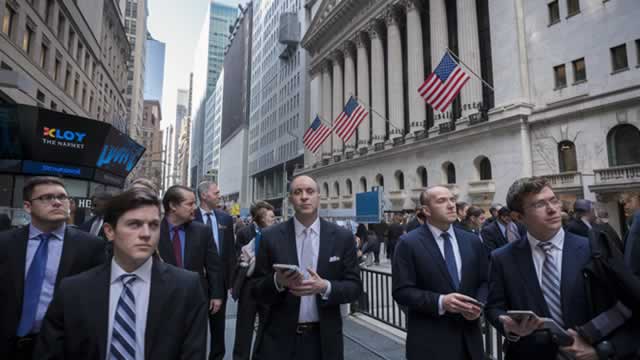
The discussion highlights a muted start to Friday's trading after recent volatility, with mixed equity futures. Fed Chair Warsh's comments suggest AI could be disinflationary long-term, but immediate-term AI spending is inflationary. Rising import/export prices confirm persistent inflation, while oil prices remain elevated due to geopolitical tensions. Certain tech sectors like memory are facing significant pressure.
- Fed Chair Warsh indicates AI could be a 'positive supply shock' long-term, reducing prices, but short-term AI spending is inflationary.
- Import prices rose 1.1% M/M (8.1% Y/Y) and export prices rose 2.2% M/M (11.6% Y/Y), exceeding estimates and confirming inflationary trends.
- Crude oil remains elevated around $95, with geopolitical tensions between the US and Iran escalating, not de-escalating.
- Memory and cloud sectors, including companies like CoreWeave and Micron, are experiencing significant pressure and volatility, with CoreWeave down 15% for the week.

We're entering a 'very healthy' stage in the next chapter of the AI story: JPMorgan's Stephen Parker
Stephen Parker of JPMorgan Private Bank discusses the current state of the AI market, viewing recent weakness as a healthy stage of investor selectivity. He maintains a bullish outlook on semiconductors due to sustained AI-driven capital expenditure and sees buying opportunities in financials and emerging markets for diversification.
- AI market is in a 'healthy stage' with investors becoming more selective; weakness in speculative AI parts is seen as positive.
- Semiconductors are a high-conviction idea, with recent weakness presenting a buying opportunity due to a longer, more sustainable AI earnings super cycle.
- A 'barbell' investment strategy is favored, focusing on the US for AI growth and emerging markets (Asia, Latin America) for diversification and natural resources.
- Financials are also considered a buying opportunity, offering diversification against tech concentration, despite some mixed recent results.

The video covers a range of global economic and market topics, including Fed Chairman Kevin Warsh's optimistic view on global economic resilience but vague stance on interest rates. Discussions also touch on geopolitical tensions affecting energy prices, the luxury sector's 'difficult phase,' Tesla's new Roadster, AI's long-term potential versus near-term job impact, Poland's defense spending, and challenges in the UK's personal wealth and pension landscape.
- Fed Chairman Kevin Warsh praises global economic resilience but avoids committing to future interest rate paths, emphasizing data-driven decisions.
- President Trump is reportedly considering easing restrictions on 'shadow fleets' tied to Russia and Iran to lower energy prices, potentially straining ties with Europe.
- LVMH's Antoine Arnault acknowledges a 'difficult phase' for the luxury sector but dismisses 'catastrophic' claims, while Tesla unveils its 'next-generation' Roadster using SpaceX technology.
- AI is seen as a long-term productivity booster but faces a 'bumpy' path with uncertain near-term impacts on employment and market structures.
- Poland is increasing defense spending to 5% of GDP due to the Russian threat, while the UK faces challenges in personal wealth and pension savings due to government policies and financial illiteracy.

The video explores whether AI capital expenditure is a 'gamble' or 'jackpot,' with many experts expressing caution. Concerns include the speculative nature of investments, lack of clear ROI, and the financial sustainability of massive spending, despite some acknowledging AI's efficiency benefits.
- Broadcom CEO warned about people 'gambling' in AI due to a lack of visibility and speculative spending, leading to derating of some AI stocks like Nvidia and Broadcom.
- Key questions remain unanswered regarding the ultimate market size, unit economics, and potential competitive advantages (moats) in the AI sector.
- Analysts are scrutinizing free cash flows and the financing of large AI expenditures, noting some major tech companies (Alphabet, Amazon, Oracle) have seen negative free cash flows.
- While AI offers efficiency gains in operations, it also introduces new costs, particularly for cybersecurity, and requires financial institutions to assess its impact on loan portfolios.

Reflection AI's CEO, Misha Laskin, discusses their new open-source AI model, Beam, positioning it as America's answer to China's DeepSeek and a challenger to other US AI giants. He emphasizes Beam's reasoning efficiency and the rapid iteration cycle for future advancements, highlighting the emergence of a robust open-source AI ecosystem in America.
- Reflection AI's Beam model is an open-source AI model designed for coding and agentic tasks, aiming to compete with China's DeepSeek and US players like OpenAI and Anthropic.
- Laskin states that Beam is within 'shooting distance' of the Chinese open-weight frontier and expects subsequent iterations to close the gap within months, emphasizing rapid development.
- The CEO highlights the benefits of an open-source AI ecosystem in America, fostering competition, providing choice for customers and developers, and preventing a single point of failure in the rapidly growing AI market.

Adam Lynch discusses Bitcoin's recent rebound above $80K after a volatile month, noting its 5% year-to-date decline compared to Ethereum's 21% drop. He highlights strong fundamental demand for Bitcoin, evidenced by nearly $60 billion in inflows to Bitcoin ETPs since January 2024. Regulatory progress is observed from agencies like the CFTC and SEC, with hopes for continued advancement despite legislative setbacks, while the tokenization of stocks is seen as the future of finance.
- Bitcoin experienced a volatile month, dipping below $80K before rebounding to $82K, while Ethereum was hit harder.
- Despite price fluctuations, the fundamental outlook for Bitcoin remains strong, with Bitcoin ETPs attracting nearly $60 billion in assets since January 2024.
- Regulatory bodies like the CFTC and SEC are making progress on crypto frameworks, though legislative efforts have faced setbacks; midterm elections could influence future policy.
- The tokenization of stocks is identified as a fascinating and mindful step towards the future of finance, enabling faster, 24/7 settlements.
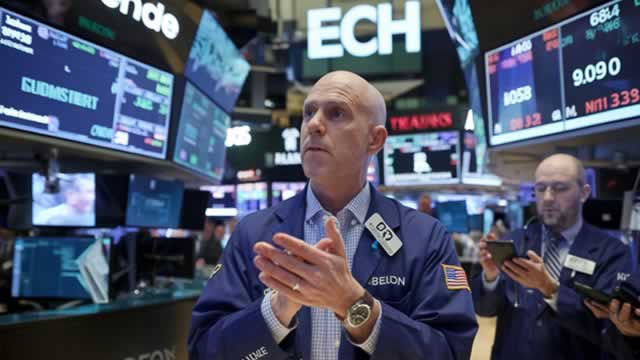
The market is in transition with rapidly souring investor sentiment, particularly in AI and tech stocks. Despite recent sell-offs, Roundhill Investments CEO Dave Mazza highlights underlying value in memory (DRAM) and neo-cloud (NCLD) ETFs, dismissing some negative news as unsubstantiated. He also discusses Rocket Lab's (RKLB) delayed launch and Anthropic's strong revenue ahead of its IPO.
- Investor sentiment has soured rapidly in a transitioning market, impacting AI and tech stocks.
- Elon Musk's comments on Chinese RAM production are unsubstantiated and not a near-term threat to established players.
- Roundhill Memory ETF (DRAM) and Roundhill NeoCloud ETF (NCLD) are oversold, presenting buying opportunities due to strong fundamentals and revenue growth.
- Rocket Lab (RKLB) faces a launch delay, but its existing technology is performing well, and the long-term growth story remains intact.
- Anthropic shows strong quarterly revenue and compute commitments, indicating robust growth despite high investor expectations for its IPO.
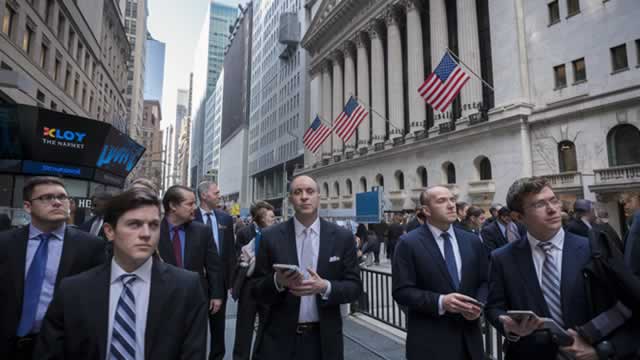
The session highlights hotter-than-expected PPI data, indicating persistent inflation, while retail sales growth was largely driven by higher gas prices, masking softer underlying consumer demand. This creates a dilemma for the Federal Reserve. Memory chip stocks are falling due to increased competition from China's CXMT and concerns about future oversupply, despite strong AI demand. Regional bank earnings are also under scrutiny amid macroeconomic pressures.
- Producer Price Index (PPI) surged 1.3% in September, exceeding expectations and marking the largest monthly jump since March 2022, driven by energy and services prices.
- Retail sales beat expectations but were primarily boosted by higher gas prices; core retail sales (excluding gas) showed weaker-than-expected consumer demand.
- Memory chip stocks (SK Hynix, Samsung, Micron) experienced significant declines due to concerns over China's CXMT advancing new chip architecture, intensifying competition, and a potential memory glut by 2029.
- Regional bank earnings are anticipated to be 'lackluster' amidst macroeconomic pressures, with investors closely watching for signs of credit stress.