Video Analysis

This video is a promotional announcement for Schwab Network's special coverage of an upcoming FOMC interest rate decision and Fed Chair Kevin Warsh's press conference. It highlights current market conditions, including spiking oil prices and multi-year high interest rates, and emphasizes the potential impact of the Fed's decision on inflation, the economy, and markets.
- Schwab Network will provide live coverage and analysis of the FOMC interest rate decision.
- The broadcast will feature Fed Chair Kevin Warsh's live press conference and full market reaction.
- Current economic conditions include spiking oil prices and multi-year high interest rates, making the Fed's decision highly anticipated.

The video discusses rising US Treasury yields, with the 10-year nearing 5% and 30-year bonds reaching a 25-year high, despite a disappointing Treasury debt buyback. Concerns are amplified by renewed inflation pressures and increased bets on a Fed rate hike. President Trump's proposed $1.3 trillion 'dividend' further rattles bond investors, raising fiscal deficit concerns.
- US 10-year Treasury yield creeps closer to 5%, highest in nearly three years.
- Treasury's debt buyback operation of $5.2 billion (out of a maximum $6 billion) failed to impress, with investors holding long-term bonds.
- A 30-year bond auction sold $22 billion in debt at 5.308%, the highest yield since 2001.
- US Producer Price Inflation rose the most in three months in August, spurring bets for a Fed rate hike (75% probability according to CME FedWatch Tool).
- President Trump's proposal for a $1.3 trillion 'Trump dividend' ($5,000 per adult citizen) if Republicans win the midterms is seen as stoking fiscal deficits and rattling bond investors.
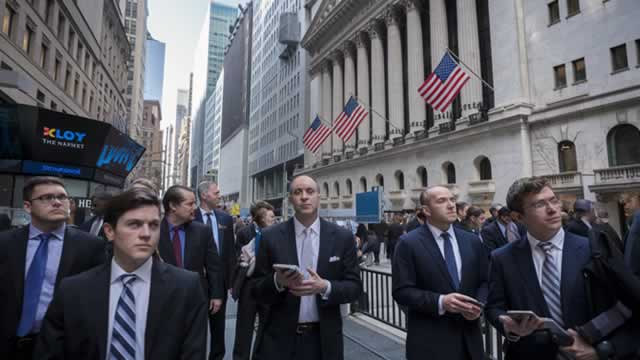
NYSE President Lynn Martin discusses the new competitive landscape with the Texas Stock Exchange (TXSE) and the overall health of the US capital markets. She highlights NYSE's strong presence in Texas and the rebound in global IPO activity, while also reflecting on the resilience of the US economy and the spirit of New Yorkers 25 years after the 9/11 attacks.
- NYSE President Lynn Martin acknowledges competition from the newly launched Texas Stock Exchange (TXSE), which recently secured its first major corporate listing.
- She highlights the strength and resilience of US capital markets, noting a significant rebound in global IPO proceeds this year, with more companies looking to go public.
- The discussion includes a remembrance of 9/11, emphasizing the enduring spirit of New Yorkers and the US economy's recovery and growth since the attacks, with the Dow opening significantly higher than on September 10, 2001.
Financial markets are showing caution ahead of the crucial US CPI data release, with Treasury yields remaining elevated and global bonds experiencing a sell-off. Persistent inflation concerns, exacerbated by record-high US diesel prices, are driving expectations for further central bank rate hikes. While some tech stocks are seeing gains, the overall macro outlook remains challenging.
- US CPI data is highly anticipated, with the 10-year Treasury yield hovering near 5% and global bonds selling off.
- US diesel prices hit a record $6/gallon, fueling inflation concerns and prompting the IEA to warn of potential demand destruction.
- Asian markets experienced declines due to inflation and oil worries, while European markets showed mixed performance.
- Analysts expect further Fed rate hikes, with one suggesting 'probably three hikes' starting next week, reinforcing a hawkish monetary policy outlook.
- Oracle (ORCL) and ACV Auctions (ACVA) saw significant premarket gains, but Adobe (ADBE) faced pressure due to AI impact fears.
The August CPI report showed headline inflation in line with expectations, but core CPI month-over-month was slightly higher. However, year-over-year core CPI reached a five-year low. Analysts believe the Fed will likely hold interest rates next week, as energy prices are the primary driver of headline inflation, which rate hikes cannot directly address.
- August CPI: Headline M/M and Y/Y were in line with estimates (0.4% and 3.4% respectively).
- Core CPI: M/M was slightly higher than expected (0.3% actual vs 0.2% estimate), but Y/Y was in line and at a 5-year low (2.4%).
- Energy prices, particularly gasoline and fuel oil, were the main drivers of the headline inflation increase.
- Analysts predict the Fed will hold interest rates next week, arguing that rate hikes won't solve energy supply shocks and core inflation is showing signs of cooling.
Jeff Currie discusses the 'dangerous phase' of the commodities rally, driven by escalating global shortages and returning Chinese demand. He highlights record US diesel prices and the potential for $5 gasoline, emphasizing that crude oil is now the primary signal, with product shortages moving upstream. Currie advocates for owning commodities as a hedge against scarcity and currency debasement.
- US diesel prices have reached a record $6/gallon, with gasoline potentially hitting $5 before the midterms.
- Shortages are moving upstream from refined products to crude oil, exacerbated by global supply chain disruptions and renewed Chinese demand.
- Commodities are identified as the best-performing asset class this year and decade, fueled by a 'toxic combination' of scarcity and currency debasement.

Komal Sri-Kumar argues the Fed should hike rates by 50 basis points to combat inflation, despite believing they might only do 25 bps or pause due to political pressure. He emphasizes the critical role of long-end Treasury yields on the economy and warns of significant headwinds for markets if yields continue to rise.
- Komal Sri-Kumar advocates for a 50 bps Fed rate hike, stating that even 25 bps would not be a 'big thing' for the market, but no change would lead to sharply rising long-end yields.
- He highlights that long-end yields (30-year, 10-year Treasuries) are more crucial for mortgages and government debt than the federal funds rate.
- He suggests the Fed chairman might be influenced by political considerations regarding rate cuts, and dismisses immediate productivity gains from AI as an inflation offset.
- He points to rising oil prices and increasing tariffs as fundamental inflationary pressures that should not be overlooked by a single CPI report.
- He warns that if the 10-year Treasury hits 5% and the 30-year hits 5.75%, it would create significant headwinds for equities, referencing past crises from unexpected rate hikes.

The video discusses rising global bond yields, with the U.S. 10-year Treasury nearing 5% due to a disappointing buyback and concerns over increased fiscal spending. Volatile oil prices, Middle East tensions, and ECB rate hikes further complicate the inflation outlook. The conversation also touches on the dual nature of AI, presenting both significant risks and economic opportunities in defense and space technology.
- U.S. 10-year Treasury yield is approaching 5%, driven by a smaller-than-expected buyback and proposed large fiscal spending.
- Oil prices remain volatile, with WTI hitting triple digits since May, fueled by Middle East refinery attacks and shipping route fears.
- The ECB hiked interest rates by 0.25%, but surging energy prices continue to worsen the inflation picture for Europe.
- AI is seen as both an existential risk and a massive economic opportunity, particularly in defense and space technology, attracting significant early-stage investment.

The discussion highlights significant fiscal risks on Europe's horizon, driven by rising bond yields and political uncertainty. France is identified as a key concern due to its high and increasing debt-to-GDP ratio and upcoming elections, leading to renewed pressure on European countries to manage their fiscal health. Higher borrowing costs are seen as a potential drag on investment.
- Long-term bond yields in Europe are expected to continue rising, impacting borrowing costs.
- France is singled out as 'the problem child' or 'the new Italy' due to its 117% debt-to-GDP ratio and upcoming elections.
- While some Eurozone countries like Italy and Spain have strengthened their fiscal outlooks, the overall sentiment for European fiscal stability is negative, potentially hindering investment.
The discussion centers on escalating Middle East tensions, particularly Houthi-Saudi fighting and its impact on Red Sea shipping. This geopolitical instability is driving oil prices higher, with Brent crude well over $100 a barrel, and there's little expectation of a diplomatic resolution or de-escalation in the near term.
- Escalating Houthi-Saudi fighting is intensifying risks to shipping in the Red Sea and Bab el-Mandeb Strait.
- The increased geopolitical risk is causing oil prices to rally, with Brent crude trading above $108 and NY crude above $103.
- Diplomatic efforts are stalled, leading to a 'neither war nor peace' scenario and expectations of a protracted period of low-intensity hostilities, which is disruptive for business and energy flows.

The discussion covers deteriorating market breadth, investment opportunities in AI infrastructure, and the implications of rising Treasury yields. Experts suggest taking advantage of market dips for AI-related stocks and highlight that higher bond yields reflect structural factors and fiscal deficits, not just inflation. The market is expected to remain choppy but with potential for modest gains post-midterms.
- Market breadth is deteriorating, with over 60% of S&P 500 constituents declining, but overall earnings growth remains strong.
- AI infrastructure presents investment opportunities, with specific recommendations including United Rentals (URI), Quanta Services (PWR), and Lincoln Electric (LECO).
- Rising 10-year and 2-year Treasury yields are attributed to structural factors like fiscal deficits and competition for capital, which could reduce the present value of future earnings and pressure valuations.
- Historically, markets tend to sell off before midterms and rebound afterward; experts anticipate a similar pattern with modest gains into 2027, provided economic growth remains strong.

Despite current risk-off sentiment driven by inflation, Bitcoin and Ethereum have seen healthy inflows this month. The potential passage of the Clarity Act and Nasdaq's investment in Payward are significant catalysts for crypto market structure. Bitcoin's recent 'Golden Cross' technical signal historically indicates strong upward momentum.
- Bitcoin and Ethereum experienced risk-off sentiment today due to inflation, but have seen healthy inflows this month ($700M for BTC, $150M for ETH products).
- The Clarity Act, facing a procedural vote on September 15th, is not yet priced in and could provide crucial regulatory framework for crypto.
- Nasdaq's $100M investment in Payward (Kraken's parent) is seen as strengthening the market infrastructure for tokenized products.
- Bitcoin's 50-day moving average crossing above its 200-day ('Golden Cross') is a significant bullish technical signal, historically leading to average 1-month returns of 9% and 3-month returns of 30%.

The video highlights August's Producer Price Index (PPI) exceeding expectations, signaling persistent inflation and increasing the likelihood of a Fed rate hike. Rising crude oil prices, driven by geopolitical tensions, further exacerbate inflation concerns, leading to pressure on stocks and bond yields. Tomorrow's CPI data is anticipated to reinforce these inflationary pressures.
- August PPI came in slightly hotter than expected (0.4% MoM, 5.4% YoY), with goods prices and energy costs as major drivers.
- This has raised investor expectations for a Fed rate hike next week to about 70%, pushing Treasury yields higher.
- Crude oil prices (Brent and WTI) rose above $100/barrel due to US-Iran tensions, sparking concerns about global energy supplies and potential further inflation.
- Tomorrow's August CPI data is a key watch, with economists expecting annual headline inflation around 3.4% and core inflation near 2.4%, both above the Fed's 2% target.
Goldman Sachs' Daan Struyven discusses the potential for Brent crude prices to reach $120 per barrel, citing escalating geopolitical risks in the Middle East. While continued Persian Gulf oil exports remain the base case, intensified attacks on shipping and energy infrastructure could lead to supply stagnation, pushing prices higher amid already low global inventories and refining bottlenecks.
- Goldman Sachs raises Brent/WTI price forecasts to $85/80 per barrel for December and $80/75 per barrel for 2027.
- The firm views $120 Brent crude as 'plausible' if shipping attacks intensify and Middle East energy exports stagnate.
- Current low OECD SPR inventories (at 1980s levels) and refining bottlenecks make the market highly vulnerable to further supply shocks.

Jeremy Siegel discusses the Federal Reserve's difficult decision regarding interest rates next week, noting that market signals (like the 10-year Treasury nearing 5%) suggest a rate hike is needed. He anticipates an initial market 'shudder' if the Fed raises rates, but believes it would ultimately lead to a recovery as it establishes the Fed's credibility in fighting inflation. Rising oil prices and seasonal weakness are also highlighted as current market headwinds.
- The Fed faces a 'damned if you do, damned if you don't' situation regarding rate hikes next week.
- Siegel believes the Fed will 'bite the bullet' and raise rates, which he expects will cause an initial market sell-off but then a recovery due to increased Fed credibility.
- Rising oil prices (WTI Crude above $102) and diesel prices are negative for consumer sentiment.
- Seasonal weakness, buyback blackout windows, and option expiry contribute to a challenging September for markets.
Elon Musk's Boring Co. has successfully raised $3 billion in Series D funding, pushing its valuation to $23 billion. This significant investment, backed by the UAE, quadruples its previous valuation, despite slow progress on its ambitious underground tunnel projects in cities like Las Vegas and Nashville.
- The Boring Co. secured $3 billion in Series D funding.
- The company's valuation has quadrupled to $23 billion after the latest funding round.
- Current operational tunnels include an 11-mile network in Las Vegas, with plans for a 60-mile expansion and a 10-mile 'Music City Loop' in Nashville, though completion dates seem unrealistic.
- Elon Musk's direct involvement in Boring Co. is noted to be less compared to his other ventures, relying more on an established team.

The discussion centers on the Federal Reserve's upcoming interest rate meeting, with a strong expectation for a hike. Liz Ann Sonders highlights that fast hiking cycles historically lead to weaker equity market performance. The focus is on inflation data (CPI, PPI) and the 10-year yield as key drivers for market direction, with a cautious outlook for equities if rapid hikes continue.
- The Fed is expected to hike rates at its next meeting, with high probabilities for further hikes into early next year.
- Historically, fast-paced Fed hiking cycles have been associated with weaker equity market performance over the subsequent 6-12 months.
- CPI and PPI data are crucial for market movement, as they influence the Fed's preferred PCE measure and the 10-year yield, which has an inverse correlation with the equity market.

The video highlights three significant market surprises in 2026: the unexpected joint rally of tech and small value stocks, primarily fueled by AI's demand for energy and semiconductors; the less-than-stellar performance of the SpaceX IPO, impacting funds like Ark; and the return of legendary value investor Chuck Bath to Diamond Hill Large Cap after his successor's underperformance.
- Tech and small value funds are both performing strongly due to the AI boom, which drives demand for technology and energy/utility/semiconductor companies found in small value portfolios.
- SpaceX's IPO did not deliver the anticipated 'pop', resulting in 'midling' returns for early investors (Baron funds) and placing Cathie Wood's Ark fund in the bottom quartile for the year.
- Legendary value investor Chuck Bath has come out of retirement to manage Diamond Hill Large Cap, following the resignation of his successor due to slumping performance.
The video highlights the return of triple-digit oil prices (Brent and WTI) and the broadening inflationary pressures across various economic sectors, including diesel, jet fuel, and freight. Analysts discuss the Federal Reserve's challenging dilemma, suggesting that more aggressive rate hikes might be necessary to combat demand-side inflation, which disproportionately affects lower-income consumers. The pass-through of producer price index (PPI) increases to consumer price index (CPI) is a key concern.
- Oil prices (Brent and WTI) have returned to triple digits, a level not seen since May, indicating persistent supply concerns.
- Inflation is spreading beyond energy to other areas, with diesel fuel prices up 24% and truck transportation freight up 2%, suggesting broader economic impact.
- The Federal Reserve faces a tough decision on rate hikes, with the current inflationary environment making it difficult to avoid further tightening, potentially beyond 25 basis points.
- Lower-income consumers relying on credit are disproportionately impacted by rising prices, while inflation-protected income for retirees could benefit from higher interest rates.
- PPI is seen as a strong indicator for future CPI, and there is still room for higher prices to be passed through to consumers, particularly in the goods sector.
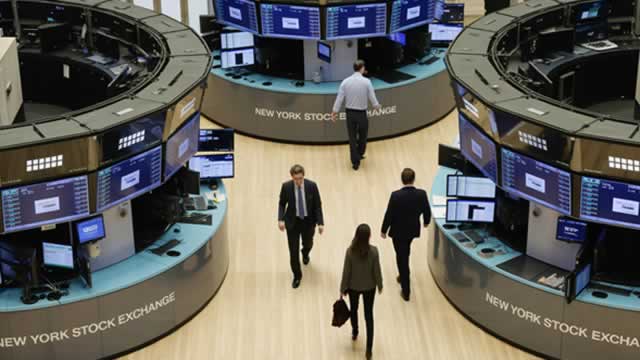
The video discusses August PPI data, which showed wholesale prices rising, largely driven by energy costs, putting pressure on the Federal Reserve for potential rate hikes. Crude oil hitting $100 further exacerbates inflation concerns, while jobless claims remain strong. Apple's new product launch is also highlighted, with its stock showing pre-market recovery.
- August PPI (Producer Price Index) rose 0.4% M/M and 5.4% Y/Y, largely in line with estimates but higher than prior, primarily due to energy prices.
- Crude oil prices hit $100, contributing to inflationary pressures and market heaviness, with high probabilities for Fed rate hikes in upcoming months.
- Initial jobless claims came in at 206K, a strong number, indicating a robust labor market. Apple's new product launch (iPhone 18 Pro/Max, foldable iPhone Duo, Apple Watch, AirPods 5) saw its stock up pre-market.