Video Analysis
The market is facing a 'gut check' due to rising oil prices and Treasury yields, leading to low dispersion and fewer safe havens. The analyst suggests hedging strategies to mitigate downside risk, noting that interest-rate sensitive sectors are underperforming. He anticipates continued market choppiness and a potential pullback before a year-end bounce, likely after the midterms.
- Rising oil prices and Treasury yields are key drivers causing a market 'gut check'.
- Low dispersion in the market means fewer places for investors to hide from a sell-off.
- Hedging strategies using index or ETF options are recommended to protect against downside risk.
- Interest-rate sensitive sectors like utilities, real estate, industrials, and technology are underperforming.
- Expects continued market chop and a potential pullback, with a bounce opportunity likely after the midterms.

Chris Versace expresses caution for September trading due to geopolitical risks and rising energy prices, but sees potential buying opportunities. He anticipates a Fed rate hike in September based on current inflation data, while closely monitoring upcoming economic reports. Key technical levels for the S&P 500 and a leadership transition at Apple are also discussed, alongside favored tech and non-cyclical sectors.
- Market opens lower in September due to geopolitical tensions (US-Iran) and rising oil/gas prices.
- Fed is likely to deliver a rate hike in September, but August PMI and JOLTS data will be critical for confirmation.
- 10-year yield could reach 5%; S&P 500's 50-day and 200-day moving averages are key support levels for potential buying opportunities.
- Apple's upcoming product event and new CEO John Ternus (a 'product guy') present a chance to reshape the company, with cautious optimism.
- Favored sectors include tech (chips, networking, AI data center infrastructure like Eaton) and non-cyclicals (Boeing, Paccar, healthcare, robotics), with a strategy to buy on weakness.

Jain Global's multistrategy hedge fund, which generated $1.8 billion in gross trading profit over two years (41% gross, 8% net for investors after expenses), is transitioning to manage capital exclusively for Millennium Management. This move highlights the high costs of running multistrategy funds and Millennium's evolving role as both a hedge fund and a capital allocator, offering infrastructure support but also introducing concentration risk for managers.
- Jain Global's fund generated $1.8 billion in trading profit over two years, translating to a 41% gross return but only an 8% net return for investors after accounting for high operational expenses.
- The fund is shifting to Millennium-only capital, with Millennium replacing $5 billion in client cash, and Jain will return client cash by October.
- Millennium's model involves providing consistent capital and infrastructure (trading assistance, data, AI) to external managers/businesses like Jain's, which can increase cost-effectiveness but introduces concentration risk for the managers.
JPMorgan's Kevin Foley discusses the robust state of AI financing and the broader IPO pipeline. Despite some widening spreads in AI-related debt, he emphasizes the deep pool of capital and astronomical returns driving continued investment. The IPO market is also showing strong engagement, with appetite extending beyond just AI-native companies, benefiting from a reduction in public companies and overall market growth.
- AI financing is tapping into a deep pool of capital (north of $80 trillion) across various debt markets, with higher spreads but not deterring projects due to astronomical returns.
- The IPO market is incredibly engaged, driven by a reduction in public companies and significant growth in global equity markets (from $70T to $160T in 10 years).
- The IPO pipeline is widening beyond just AI, with a broader appetite for diverse companies, indicating AI is not crowding out other sectors.
Shein's shares experienced a challenging debut in Hong Kong, falling by as much as 10% before settling at a 7% decline. This performance reflects investor concerns about the company's growth, profitability, valuation, and external factors like US tariffs, European regulations, and competition from Temu.
- Shein shares fell by up to 10% on its Hong Kong debut, currently down around 7%.
- Key investor concerns include growth, profitability, valuation, US tariffs, and European regulatory changes.
- The company reported $99 million in losses for Q1 this year, a reversal from $400 million gains a year ago.
- Sustainability of the business model, labor practices, and competition from Temu are also weighing on the stock.
Financial markets are starting September with a bearish tone, driven by rising global bond yields, elevated crude oil prices due to geopolitical tensions, and increased expectations for a Fed rate hike. The semiconductor sector is experiencing a significant pullback, and Amazon faces a major FTC lawsuit, adding to the negative market pressures.
- Equity futures are lower, with September historically being the worst month for market performance.
- US 10-year Treasury yield is at its highest level since January 2025, with global yields also rising significantly.
- Crude oil prices are at five-week highs near $88/barrel, fueled by geopolitical tensions in the Middle East.
- Semiconductor stocks are broadly falling, with higher yields stunting gains in the tech sector.
- Amazon is being sued by the FTC and 22 states for allegedly deceiving advertisers and inflating prices.

Global bond markets are experiencing a significant sell-off, with US 10-year Treasury yields hitting a 20-month high and Japanese yields reaching a 30-year high, driven by inflation fears and geopolitical tensions. US Treasury Secretary Scott Bessent downplayed concerns, while Shein's Hong Kong IPO struggled, reflecting a substantial valuation drop. Apple faces new challenges with a CEO transition and the need for a clear AI strategy.
- US 10-year Treasury yields are at a 20-month high, and Japanese 10-year yields hit a 30-year high, indicating a broad global bond sell-off.
- US Treasury Secretary Scott Bessent sees no issue with the bond market and stated no sanctions relief for Russia until the war in Ukraine ends.
- Fast fashion giant Shein's Hong Kong IPO was priced at a valuation significantly lower than its 2022 private market peak, highlighting investor caution.
- Apple is transitioning CEOs, with John Turnus replacing Tim Cook, and faces the challenge of defining its AI strategy and next big product.
- Anthropic reportedly signed a $35 billion deal with Lambda for a data center in Texas, while US politicians express concerns over AI data center construction and energy demands.
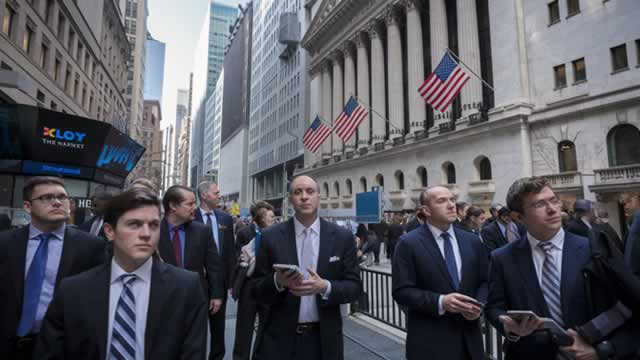
Ed Yardeni anticipates a likely 25 bps Fed rate hike in September, arguing the Fed should have acted sooner to address persistent inflation. He believes the stock market will quickly absorb this move and highlights Treasury Secretary Scott Bessent's role in stabilizing bond markets, which he sees as crucial given the Fed's missed inflation targets.
- The market is pricing in a 66% probability of a 25 bps Fed rate hike in September.
- Yardeni agrees with a September rate hike, stating the Fed should have acted in July to mitigate commotion.
- He expects the stock market to 'get over' the rate hike 'pretty quickly'.
- Yardeni suggests Treasury Secretary Scott Bessent is now responsible for stabilizing the bond market.
- The Fed has missed its 2% inflation target for over five years, with the PCE deflator running over 3%.
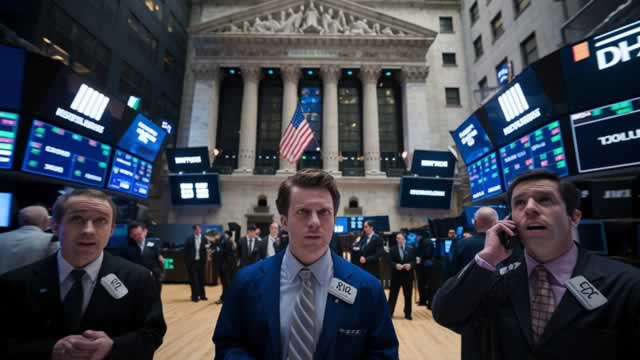
The discussion focuses on the global bond sell-off, noting rising yields across major economies like Japan and Australia, driven by inflation fears and government spending. The analyst suggests this reflects an acceptance of a 'higher yield environment' where central banks must act to maintain credibility, and while higher borrowing costs will slow growth, a gradual increase in yields is manageable for equity markets.
- Global bond yields are rising, with Japan's 10-year yield reaching 3% for the first time in decades and Australian yields at 2011 highs.
- The sell-off is attributed to inflation risks, supply/demand dynamics, and concerns over government spending, signaling an acceptance of a higher neutral rate environment.
- Central banks are expected to raise interest rates to restore credibility, and governments need clear plans for growth and debt management to stabilize bond markets.
- While higher borrowing costs may slow growth, a slow and steady rise in yields is considered manageable for equity markets, unlike rapid hikes.
The discussion centers on former President Trump's proposed deal for a US stake in Venezuelan oil reserves, highlighting significant uncertainties and historical challenges. The analyst expresses skepticism about the deal's short-term viability and its ability to deliver promised benefits like lower gasoline prices or replenished strategic reserves, citing political instability and operational difficulties.
- The proposed deal involves a 35% passive US stake in a private Venezuelan company, granting preferential rights to buy 20% of oil production at cost.
- Major hurdles include Venezuela's history of nationalizing assets and political instability, which could unravel any agreements.
- Venezuelan oil is difficult and costly to produce, making immediate benefits from new investments unlikely.
T. Rowe Price CEO Rob Sharps outlines the firm's strategy to adapt to industry shifts, including the rise of passive investing and fee pressure. The company is diversifying into ETFs, SMAs, fixed income, and private markets through organic growth and strategic partnerships. Sharps also emphasizes AI adoption for enhanced investment insights and the firm's long-term commitment to Baltimore.
- T. Rowe Price is diversifying its offerings into ETFs, SMAs, and trusts to counter outflows from traditional active equity mutual funds.
- The firm is growing its fixed income business and leveraging its strong target-date fund franchise.
- T. Rowe Price is expanding into private markets through acquisitions (OHA) and partnerships (Goldman Sachs), with private assets slowly moving into 401(k) plans.
- AI tools are being integrated across investment professionals to enhance insight generation and drive efficiency.

Blerina Uruci, T. Rowe Price Chief US Economist, expresses confidence that inflation will reach the Fed's 2% target, primarily driven by resilient productivity gains and the disinflationary effects of AI. She acknowledges the Fed's current hawkish stance and anticipates continued market volatility due to mixed data and lack of clear forward guidance.
- The Fed's reaction function, particularly under Kevin Warsh, is now clearer, indicating a strong commitment to the 2% inflation target, even if it means acting like a 'single mandate' central bank temporarily.
- Uruci is optimistic about inflation falling to 2% due to productivity gains, especially from AI adoption, which she believes will be disinflationary in the near and medium term.
- She anticipates more volatility in rates due to a lack of forward guidance from the Fed, volatile economic data, and cross-currents in the labor market and inflation.
The discussion centers on escalating US-Iran tensions, their impact on crude oil prices, and the resilience of US financial markets. Speakers highlight the effectiveness of economic sanctions on Iran and strong US corporate earnings, while also noting rising Treasury yields. The segment concludes with a look at Apple's historical performance and future leadership.
- US-Iran trade strikes are discussed, with President Trump vowing a hard response to Iranian attacks on US bases in Jordan.
- Crude oil prices (WTI and Brent) are up, but not spiking significantly despite geopolitical tensions, indicating market desensitization.
- US markets show resilience with strong earnings growth (52% for S&P 500, 32% excluding Mag 7) and robust industrial performance.
- Treasury yields are at multi-year highs, with the 10-year at 4.769% and 30-year at 5.265%, raising concerns about global supply and debt.
- Apple (AAPL) has seen massive growth under Tim Cook, with market cap increasing from $350 billion to over $4 trillion, and services revenue growing significantly.
Joe Tigay views potential September market pullbacks as buying opportunities, maintaining a long-term bullish outlook driven by significant AI infrastructure spending from large tech companies. He acknowledges short-term risks like inflation and market complacency but advises investors to be tactical and patient in deploying capital into quality names.
- September pullbacks are seen as buying opportunities, not the end of the AI rally, with a long-term bullish view on the market.
- Inflationary pressures (oil prices above $90) and the upcoming jobs report are critical short-term factors influencing interest rate expectations.
- A low VIX (around 15) indicates market complacency, suggesting investors should consider adding downside protection.
- Top picks include Alphabet and Amazon, which are seen as key infrastructure players in the AI space, while Palantir's current valuation makes it less attractive than in March.
Wells Fargo analyst Timna Tanners expresses caution on the outlook for steel prices, noting that current high prices are difficult to sustain due to import attraction and increasing domestic capacity. She views Canada's retaliatory tariffs as largely symbolic. For aluminum, she sees a more tentative market but expects stronger prices longer-term due to energy costs, and finds aluminum stocks offer better value than steel.
- Steel prices are at elevated levels ($1,200 for Hot Rolled Coil) due to past tariffs and demand, but further upside is limited, and sustaining these prices is challenging.
- Canada's retaliatory tariffs on US steel are considered 'irrelevant' as Canadian prices have already risen, and countries are becoming less dependent on each other.
- Nucor and Steel Dynamics are preferred steel stocks due to their resilience during price retreats and upcoming free cash flow inflection as capex rolls off.
- Aluminum market is more muted, but higher energy prices (electricity is 30% of cost) are expected to keep aluminum prices stronger for longer, offering better value in aluminum stocks.
Goldman Sachs CEO David Solomon provides a constructive outlook for the U.S. economy, highlighting consumer resilience, strong corporate earnings, and a significant investment cycle. He expresses optimism about AI driving a long-term productivity boom and higher growth rates, while noting that current debt-fueled AI investments from large companies do not pose immediate credit risks. Solomon also discusses the long-term trend of rising Treasury yields, attributing it to fiscal policy, inflation, and growth, rather than just interventions.
- U.S. economic outlook is 'pretty constructive' due to resilient consumers, strong economy, and significant investment cycle.
- Corporate earnings growth has been 'extraordinary,' acting as a major tailwind for the market and economy.
- Artificial intelligence (AI) is expected to lead to a 'productivity boom' and 'fundamentally higher growth rate' over the next 5-10 years.
- Current debt-fueled investments in AI, largely by strong, large companies, do not present immediate credit risks to the system.
- Rising Treasury premiums are a long-term trend driven by fiscal spending, embedded inflation, and higher growth, with a 5% yield not being a 'calamity'.
The discussion covers the implications of Kevin Warsh's hawkish Jackson Hole speech, suggesting likely Fed rate hikes with the speed being critical for equity markets. Global inflation threats from geopolitical tensions and trade wars are highlighted as supply-side issues. Yen weakness is expected to persist, and China's economy faces challenges with tech progress not translating to earnings. Broadcom's earnings report is identified as a key catalyst.
- Fed is likely to hike interest rates, with the pace of tightening being a significant factor for equity market performance.
- Geopolitical tensions (e.g., US-Iran conflict) and trade wars are inflationary supply-side threats that Fed rate hikes cannot directly resolve.
- Yen weakness is expected to continue due to yield differentials and fiscal policy, despite past interventions, as markets remain unconvinced.
- China's economic progress in technology is not translating into earnings growth, with banks reporting higher credit impairment losses and overall earnings estimates declining for the 18th consecutive month.
- Broadcom (AVGO) earnings report this week is a crucial bellwether for the tech sector and the broader market, following strong performances from other 'Neural Nine' companies like Nvidia and Microsoft.
The discussion revolves around market reactions to Federal Reserve Chairman Warsh's speech, which fueled rate-hike bets, and the impact of strong corporate earnings. It also addresses rising oil prices due to geopolitical tensions and their implications for inflation and consumer spending, leading to a nuanced outlook on the Fed's next steps.
- Warsh's speech was perceived as forward guidance, increasing speculation about a September rate hike, despite earlier concerns about his stance on inflation.
- Strong corporate earnings, particularly from tech companies like Nvidia, and robust cash flow are currently supporting the market, making valuations appear 'benign'.
- Rising oil prices, driven by geopolitical tensions, pose an inflation challenge, especially for consumers and transportation sectors, but raising rates may not be the most effective solution and could harm employment.

Treasury Secretary Scott Bessent discusses the G20 Finance Ministers meeting, emphasizing US growth drivers like deregulation and tax certainty. He outlines the US strategy to pressure Iran through economic sanctions, aiming to bring them to the negotiating table to address their nuclear program and regional destabilization. Bessent expresses confidence in the effectiveness of sanctions, even without explicit public support from China, citing shared interests.
- US growth agenda focuses on deregulation, energy certainty, and tax certainty, similar to European recommendations.
- Sanctions on Iran ('Operation Economic Outcast') are intended to create conditions for the regime to negotiate, citing currency collapse and high inflation.
- Bessent believes China shares common interests with the US regarding Iran's nuclear program and freedom of navigation in the Strait of Hormuz, despite public resistance to sanctions.
Geopolitical tensions in the Middle East, particularly around the Strait of Hormuz, are causing significant disruptions to global oil and LNG traffic. Tanker transits are down, war risk insurance premiums have surged to 8.5%, and shipping costs are increasing, leading to higher prices for buyers, especially in Asia, and creating persistent market volatility.
- Oil traffic through the Strait of Hormuz has significantly decreased, with many tankers untracked due to heightened tensions.
- War risk premiums for shipping have risen astronomically to around 8.5%, adding substantial costs to oil transport.
- The simultaneous pressure on both the Strait of Hormuz and the Suez Canal creates a highly volatile and uncertain environment for global energy markets.